
Share this @internewscast.com
The initial wave was one of panic, swiftly followed by embarrassment.
For years, I had confidently doled out health advice to colleagues, friends, and family, convinced of my expertise in various medical fields.
Yet there I sat, at my desk as the Health Editor for the Daily Mail in New York City, receiving the news that I had cancer.
This diagnosis was particularly difficult to absorb because being healthy was central to my identity.
I was dedicated to martial arts, adhered to a strict workout regime, meticulously tracked my diet, and, truth be told, frequently boasted about my healthy lifestyle.
Friends often sought my counsel on health matters: Should I eat this? Will that cause cancer? What supplements do you recommend? How can I get abs?
In fact, my unusual eating habits were a running office joke: six boiled eggs for lunch, yoghurt parfaits mixed in giant baking bowls, and my infamous popcorn that would stink out the newsroom every afternoon.
So getting diagnosed with cancer at 29, when I was seemingly in perfect health, felt not only deeply unfair, but a little like some kind of cosmic payback for being so confident in my own good health.

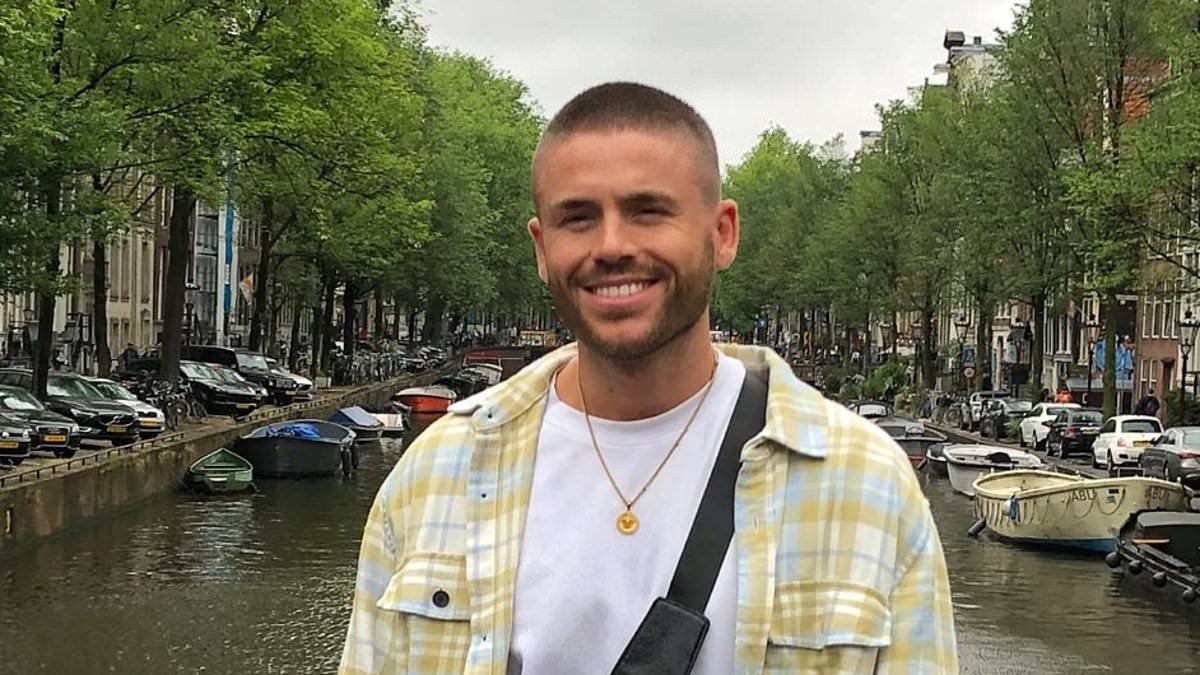
To my utter shock, I was diagnosed with testicular cancer at 29 (author pictured)

A forced smile barely hides my nerves as I prepare for my first CT scans, which will reveal if the cancer has spread
That said, however, the diagnosis didn’t come entirely out of nowhere.
The day before, after putting it off for months, I’d finally had an ultrasound on an almond-sized lump in my left testicle.
The scan was meant to take 30 minutes, but dragged on for an hour and a half.
The technician muttered about ‘poor visibility’ and ‘protocol’ requiring clear images of every region.
Now I realize what was really happening: she was taking as many images as possible, knowing – or strongly suspecting – it was cancer.
I didn’t get out until 3pm, and assumed I’d hear back in a few days.
But the next morning, at 9.03am exactly, my phone lit up. Most offices open at 9am, I thought, so clearly this was urgent.
I shot out of my chair and raced across the newsroom floor as the person on the phone told me to find a private room and turn my camera on. The doctor needed to speak to me urgently.
I propped my phone up in front of me and sat awkwardly as the doctor connected and said, ‘I’m so sorry – we’re fairly confident you’ve got cancer.’

I trained in martial arts (pictured in my uniform) and worked out multiple times a week – being fit and healthy had become part of my identity

Pictured: I wear a sheepish look as I wait to hear what stage the cancer has reached
As she delivered the hammer blow, I felt utterly numb. I was listening to every word, but they weren’t registering.
It was as if she was describing someone else, maybe one of the hundreds of patients I’d written about, but not me.
Then she added, ‘There’s good news… and bad news.’
The bad news: they were confident it was cancer.
But the doctor told me that if you had to pick a cancer, this is one of the most treatable forms (which didn’t feel very reassuring at the time).
But she was right. Testicular cancer has a five-year survival rate above 95 percent – and it doesn’t take a health journalist to know how good that is.
The overall five-year survival rate for all cancers is roughly 69 percent, but many types which are increasingly common in young people are far deadlier, such as pancreatic (12 percent) and liver (21 percent).
Testicular cancer is uniquely treatable for a few reasons.
First, the tumors are extraordinarily sensitive to chemotherapy, which can melt away cancer cells even if the disease has spread to other parts of the body.
And it usually strikes men in their 20s or 30s, whose bodies handle aggressive treatment well.

In my mind I had prepared to do chemotherapy – after all, the doctor told me there was a 40 percent chance of the disease returning

Pictured: The joy on my face after learning the cancer was contained to the testicle and I didn’t need to have chemo
Removing the testicle is also fairly straightforward – you’re in and out of hospital in hours.
And because lumps appear early, surgeons often remove the entirety of the cancer, reducing the risk of spread.
Still, I was told I needed surgery immediately.
After hanging up with my doctor, I was struck by a blizzard of emotions. Looking back, I now recognize it as 10 minutes of sheer panic.
My eyes filled with tears as visions flashed through my mind of the worst-case scenario: bald, weak, dying young, not fulfilling my ambitions or dreams.
I tried calling my mom, who was at work, and Googled survival statistics, which calmed me a little.
Then, strangely, something switched in my mind.
I became intensely practical, with absolute focus on the next appointment, scan or blood test.
That focus lasted throughout my fight and I haven’t been emotional about my cancer since then.
A lot of that is down to how efficient my treatment plan was. From diagnosis to surgery was less than two weeks – startlingly fast.
As a Briton whose grandfather had to wait six months to start treatment for stage 3 prostate cancer on the National Health Service, the speed of American healthcare, despite its flaws, felt surreal.

The timing of the cancer was terrible – I’d been due to move apartments. Pictured: I was fresh out of surgery and unable to lift heavy items, so I recruited the help of friends to move a sofa into my new home

When I visited my oncologist at Memorial Sloan Kettering – a surreal experience, given I’d spent years writing about the hospital
Of course, it was reassuring to be treated so quickly. But the worst part of a cancer diagnosis is one that nobody talks about: when the doctor says ‘you have cancer,’ you still don’t know your chance of survival.
Not until they figure out how big the tumor is, whether it has spread to nearby lymph nodes or organs and exactly what type of cancer it is.
Only then can doctors give an accurate picture of your outlook and the treatment you’ll need.
My blood tests came back the next day: no tumor markers. A feeling of shattering relief.
CT scans followed a few days later – chest, abdomen, pelvis – to see if it had spread.
It was a testament to the speed of the US health system that, later that day, I received the results: negative again. Another hurdle cleared.
Only after surgery could they confirm whether it was stage 1 – easily treatable, no chemotherapy required. It was looking good.
Based on the negative blood tests, scans and size of the tumor, my doctors had been confident I had a single ‘seminoma,’ a slow-growing tumor that develops over years.
Instead, they found two tumors: one seminoma and one embryonal carcinoma – a far more aggressive type that can spread in weeks or months.

Pictured: A post-surgery thumbs up. The moment I woke from the operation, my years-long back pain was gone. It never returned

When I go out, I now try to stick to a two-drink max rule. The ‘alcohol guilt’ after cancer has been one of many surprises post-diagnosis
There were also early signs cancer cells had started migrating toward the bloodstream.
Tiny cells may have leaked into the blood which can, over time, raise the risk of growing new tumors.
When I visited my oncologist at Memorial Sloan Kettering – a surreal experience, given I’d spent years writing about the hospital – he told me plainly that with this combination, I had about a 40 percent chance of the cancer returning.
To my surprise, despite the risk, my doctors advised against chemotherapy, even though it would reduce the risk to just one to three percent.
As they told me, doctors are now rethinking the old blanket-chemo approach because the treatment is brutal – hospitalizations, infections, sepsis, even a small risk of secondary cancers.
For young, otherwise healthy patients, they said it was sometimes worth playing the odds.
I was skeptical.
It was tempting to just get it over with, to never have to worry about the cancer again, and I’d mentally prepared myself for chemo.
I sought a second opinion at Mount Sinai. To my surprise, the oncologist there also recommended surveillance only.
With two of the world’s top cancer doctors in agreement, I felt I needed to be humble and listen.
And as vain as it sounds, what unsettled me most was the thought of losing my hair.
The chemotherapy used for testicular cancer almost guarantees hair loss – even eyebrows.
It’s a brutal prospect, though many would feel it’s a price worth paying for survival.


I am now closely monitored with blood tests, scans and X-rays every few months. If the cancer returns, I’ll need chemo. Pictured: Me at my latest checkup in November 2025 (left) and returning to work in September 2025 (right)

My mindset is: If it can happen to me, it can happen to anyone. I now urge all my male friends to check for lumps regularly and stay vigilant
So what’s the next step?
I am now closely monitored with blood tests, scans and X-rays every few months. If it returns, I’ll need chemo.
The cancer also affected my hormones.
My testosterone crashed to the level of a 70-year-old, causing overwhelming fatigue.
I now inject medication three times a week and feel stronger all the time.
After two months off training, I’m back to working out five times per week, including three martial arts sessions.
While I’m eating the same, something curious has happened with my weight.
I’ve shot up more than 10lbs in three months without gaining much, if any, new fat – almost certainly the result of my testosterone bouncing back.
I now drink far less alcohol, and when I do, I stick to a two-drink maximum.
One of the more surprising psychological changes is the guilt I feel after drinking.
Knowing alcohol is a class 1 carcinogen – and that I’m in a critical period where my cancer could return – it just feels reckless.
By reading this, you know I haven’t kept my cancer a secret. I decided long ago I wanted to be an advocate. My mindset is: If it can happen to me, it can happen to anyone.
I now urge all my male friends to check their testicles regularly and stay vigilant.

Curiously, my weight has shot up 10lbs since returning to work and exercise – almost certainly a result of my testosterone bouncing back

Pictured: On vacation in October 2025, trying to reclaim what I can of the summer I missed
I mentioned embarrassment I felt when I received the diagnosis.
Well, the second wave of it hit when I realized my symptoms had been there all along.
Two major health issues I’d battled for years – excruciating back pain and chronic fatigue – were almost certainly caused by the tumor.
For two years, I’d suffered pain I attributed to slipped discs and jiu-jitsu. On surgery morning, I could barely walk, yet the moment I woke from surgery, the pain was gone. It never returned.
Doctors now think the tumor caused inflammation that radiated through my pelvis, irritating the nerves around my discs.
I also spent years chronically exhausted, no matter how much I slept. I blamed the move to America, stress and long hours, despite fatigue being one of the most common symptoms of cancer that shows itself before a diagnosis.
Yet I, the person leading the Daily Mail’s coverage of cancers in young people, had somehow missed my own.
I initially thought my body had failed me, but perhaps it was my mind that had failed to listen.
Testicular cancer appears to be one of those genetic lottery diseases – I was probably born with a defect in the cells that form the testicles, called germ cells.
These are the cells that eventually develop into sperm, but if they go awry during development, they can later turn cancerous.
We still don’t fully understand what sparks the cancerous change, but we know testicular cancer is rising among young men.
Studies show its incidence has nearly doubled in the past 40 years in American men aged 20 to 34. It is now the most common form of cancer for men under 35.
So, I urge anyone who notices anything unusual, no matter how small, to get it checked. It could save your life – I’m hoping it’s saved mine.