
Share this @internewscast.com

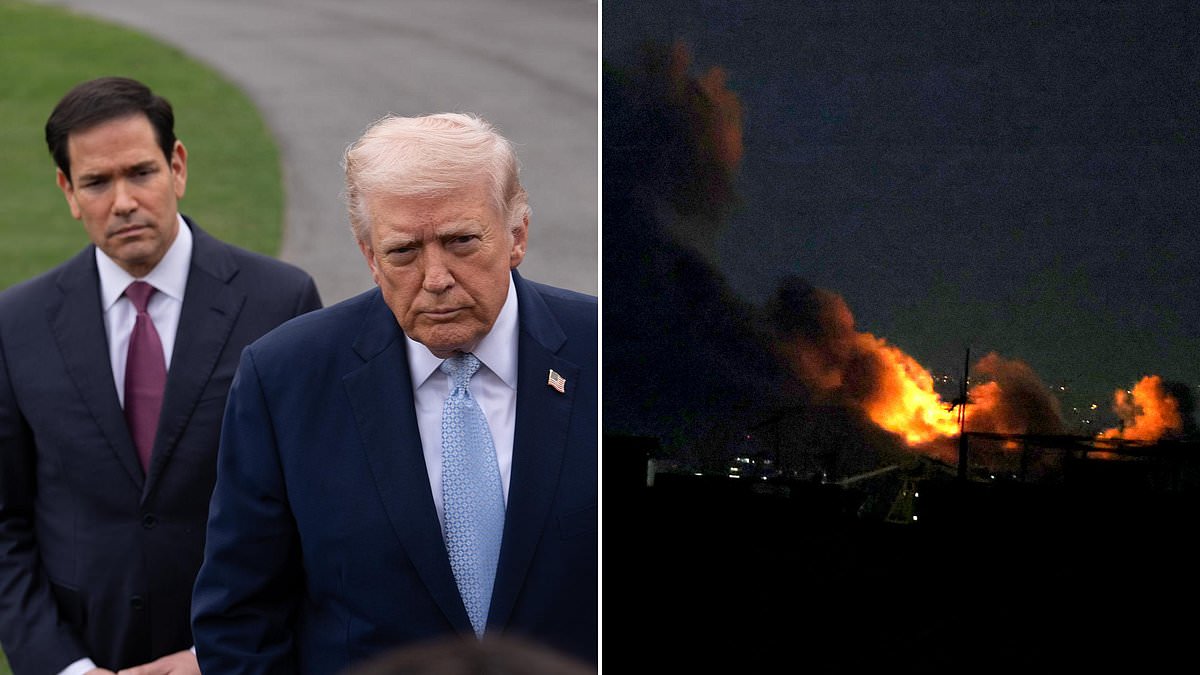
John Bolton, former national security adviser under President Trump, has a pointed message for the current administration: Senator Marco Rubio’s simultaneous roles as Secretary of State and National Security Adviser are detrimental. According to Bolton, such a dual appointment has led to suboptimal war planning within the administration. “These are two distinct roles, and having one individual manage both results in inadequate focus on each,” Bolton remarked in an interview with the Daily Mail. While he refrained from giving specific instances, Bolton described the situation as a “general collapse of coordinated decision-making and implementation.” His advice was straightforward: “Rubio should decide which position he prefers and let someone else handle the other.”

This power consolidation began in May 2025 after Mike Waltz abruptly left his position as National Security Adviser. Waltz, who held the role for slightly over 100 days, was reassigned as the U.S. Ambassador to the United Nations after a security mishap involving the “Signal” messaging app. In response, President Trump announced via Truth Social that Rubio would temporarily assume the role of National Security Adviser, in addition to his duties as Secretary of State. Attempts to obtain comments from Rubio’s team were unsuccessful. Meanwhile, Bolton faces his own legal challenges as he battles 18 criminal counts related to mishandling classified information. The 76-year-old has pleaded not guilty, arguing that the charges are politically driven, as he continues his legal fight against the Justice Department.

Shifting focus from his legal struggles to international diplomacy, Bolton criticized possible plans for Vice President JD Vance to engage with the Speaker of the Iranian Parliament, under a summit facilitated by Pakistan. “If JD Vance is sent as the U.S. negotiator, there’s a risk of miscommunication,” Bolton cautioned. “I doubt any meaningful agreement could be reached, a view reportedly shared by Gulf Arab states.” He suggested that Vance might prioritize his political ambitions over U.S. strategic goals. Requests for comments from Vance’s team were not answered. Additionally, Bolton criticized President Trump’s approach to the Iran crisis, especially his acceptance of Iranian oil, labeling it as “crazy” and expressing doubts about the administration’s capacity to effectively negotiate with Iran’s regime.
![The hawkish diplomat also tore into the President's transactional foreign policy, warned of imminent terror attacks on Western soil and slammed the chaotic state of Trump's National Security Council. The broadside comes days after Trump revealed at a cabinet meeting that Iran had offered the US a 'gift' of eight large boats of oil — a move Bolton says plays into the regime's hands at the expense of American lives. 'I think it's the transactional side [of him]. He thinks this will help bring global oil prices down, which may result in a decrease of a few cents at the pump in the price per gallon of oil in America,' Bolton said. 'But if the purchasers of that oil are sending money to Tehran, then we are helping finance the regime's war against American service members, which is crazy.'](https://i.dailymail.co.uk/1s/2026/03/30/21/107514007-15692635-The_hawkish_diplomat_also_tore_into_the_President_s_transactiona-a-113_1774901092939.jpg)
The hawkish diplomat also tore into the President’s transactional foreign policy, warned of imminent terror attacks on Western soil and slammed the chaotic state of Trump’s National Security Council. The broadside comes days after Trump revealed at a cabinet meeting that Iran had offered the US a ‘gift’ of eight large boats of oil — a move Bolton says plays into the regime’s hands at the expense of American lives. ‘I think it’s the transactional side [of him]. He thinks this will help bring global oil prices down, which may result in a decrease of a few cents at the pump in the price per gallon of oil in America,’ Bolton said. ‘But if the purchasers of that oil are sending money to Tehran, then we are helping finance the regime’s war against American service members, which is crazy.’

Instead of accepting the oil, Bolton argued the US needs to shut down Tehran’s economic lifeline entirely. ‘I think if no Gulf Arab oil is leaving, going through the Straits because of the danger, we should blockade and not have any oil from Iran go out either. Let them consider that as the consequence,’ he added. Despite the bloodshed, Trump has signaled a desire to bring the Ayatollahs to the negotiating table. It’s a strategy Bolton fundamentally views as delusional, rooted in the President’s inability to understand the fanatical nature of his enemies. Trump has already eliminated two top layers of Iran’s leadership, raising fears that the cornered regime could target the President himself. Bolton, who confirmed he is still under an active assassination threat from Iran, issued a chilling warning about what Tehran will do next.

‘I think the regime is losing its military capabilities very rapidly, and I think their use of asymmetric warfare is nearly certain, and I think that would include terrorist attacks in Europe and North America, including assassinations,’ Bolton warned, when asked about the President’s safety. ‘So, I think people should really be sensitive to that, and I hope our intelligence agencies are focused on it.’ For Bolton, there is only one path forward in Iran: total overthrow of the Islamic Republic from within. Asked whether he supported arming Iranian citizens to rise up against the regime, he didn’t hesitate. ‘Yeah. I think you have to ask the opposition, what are you prepared to do?’ Bolton said. ‘Right now, the government and the police are armed, and the citizens are not. It’s a matter of deciding how much they want to overthrow the government.’ On the logistics of smuggling weapons into Iran at scale, Bolton suggested a coalition approach – Arab countries and Israel could help bring them in.

He also defended his support for the People’s Mojahedin Organization of Iran, an exiled opposition group once designated a foreign terrorist organization by the State Department – until Hillary Clinton removed it from the list. ‘The worst thing the Iranian diaspora can do is fight over who the successor is going to be,’ Bolton said. ‘There’s no point fighting over it until there’s a need for a successor regime and we’re not at that point yet.’ His message to his former boss: ‘You need to spend a lot more time, effort and resources with the opposition inside. That’s what’s going to make the difference ultimately in regime change.’ Bolton served as Trump’s National Security Advisor in 2018 and as UN Ambassador under George W. Bush. A foreign policy hawk, he has held senior roles in every Republican administration since Reagan.