
Share this @internewscast.com

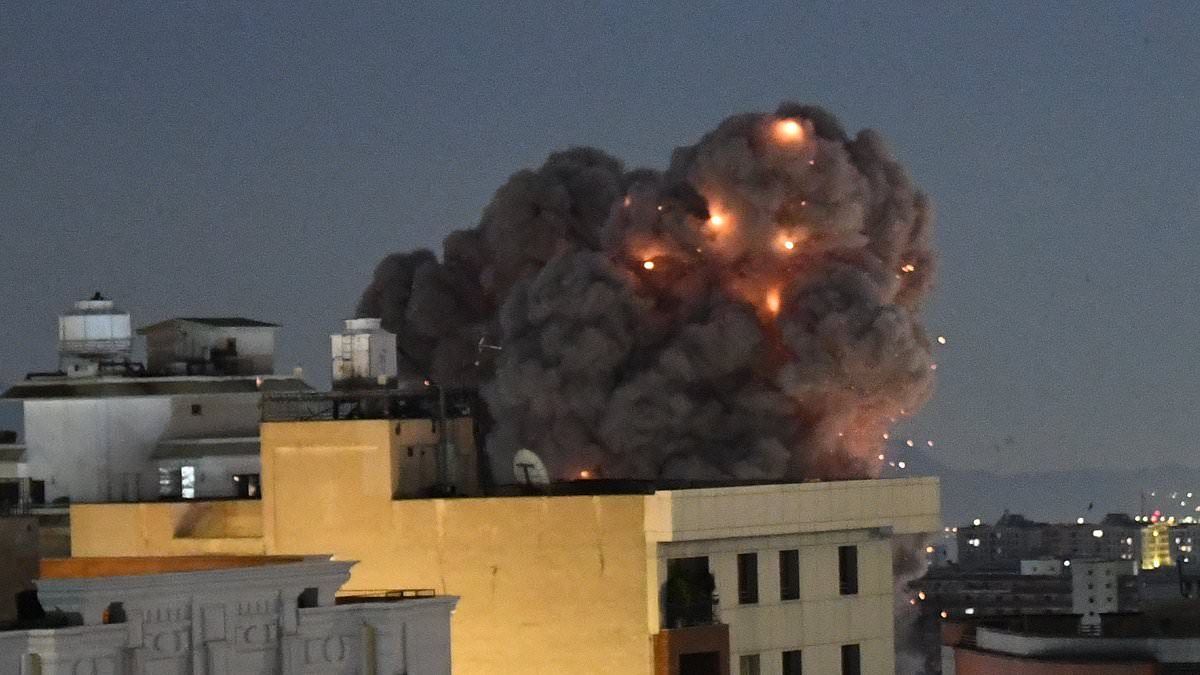
Iran has issued a warning to American educational institutions in the Middle East as a reaction to US-Israeli military actions against its own universities. The Islamic Revolutionary Guard has set a deadline for the US administration to denounce the attacks on Iranian universities by noon on Monday. Failure to comply, they say, will lead to retaliatory actions against US students studying in the region. Iranian authorities have advised individuals connected to American educational institutions to maintain a distance of at least one kilometer from their campuses. Over the past weekend, strikes reportedly hit Tehran University of Science and Technology, causing structural damage but no reported injuries.
Iran Issues Threat Over University Attacks

The Iranian regime communicated via local media that, to prevent retaliatory actions against its regional campuses, the US government must issue a formal condemnation of the recent university bombings by midday on Monday, March 30, Tehran time. Numerous American universities have established campuses abroad, offering educational opportunities to many students with funding from the host countries. Prominent examples include New York University’s campus in Abu Dhabi and the Qatar-based branches of Georgetown, Carnegie Mellon, Northwestern, and Texas A&M at Education City in Doha.

In response to the escalating conflict, Texas A&M has shut down its Qatar campus, transitioning to online classes, with most international faculty members returning to their home countries. According to the State Department, approximately 5,000 Americans pursued studies in the Middle East and North Africa last year, with about half based in Israel and nearly 1,000 in the UAE. The ongoing conflict has seen Iranian educational institutions suffer significant damage, including a tragic missile strike on an elementary school in Minab on February 28, which resulted in the deaths of 175 individuals, predominantly children.
US Investigation into Controversial Airstrike

The attack sparked a US military investigation with preliminary findings concluded that American forces were likely responsible due to outdated intelligence. The building was once part of a regime naval base. Reports have also emerged suggesting that a newly made US missile was used in an attack on a sports hall and a nearby elementary school in southern Iran, according to The New York Times. Local officials have told Iranian media that the strike in the city of Lamerd killed approximately 21 people.

The recent threats to attack US schools in the region comes as Trump weighs greenlighting a highly complex and potentially explosive military operation to send US special operations forces deep inside Iran to seize its stockpile of enriched uranium. The move could drag American troops into hostile territory for days – or even a week – and risk a dramatic escalation of the war. It was reportedly one of many being proposed by the Pentagon. US officials say the stealth plan would target nearly 1,000 pounds of uranium at either one or two nuclear sites in Natanz and Isfahan. The objective would be to remove the radioactive substance entirely from Iranian control, eliminating any pathway to a nuclear weapon.

The proposal remains under review, and Trump has not signed off on it. But officials told The Wall Street Journal he is seriously considering the option, even as advisers warn of the dangers to American forces and the possibility of a broader conflict. Military experts say the operation would be among the most difficult missions the US could undertake. American forces would likely need to fly into heavily defended territory, potentially under fire from Iranian air defenses and drones, before securing the nuclear sites believed to house the material.

Once on the ground, combat troops would be tasked with locking down the perimeter while specialist teams locate, secure and prepare the uranium for transport. ‘This is not a quick in and out kind of deal,’ retired Gen. Joseph Votel, a former commander of U.S. Central Command and U.S. Special Operations Command, told the Journal about the potential mission.