
Share this @internewscast.com

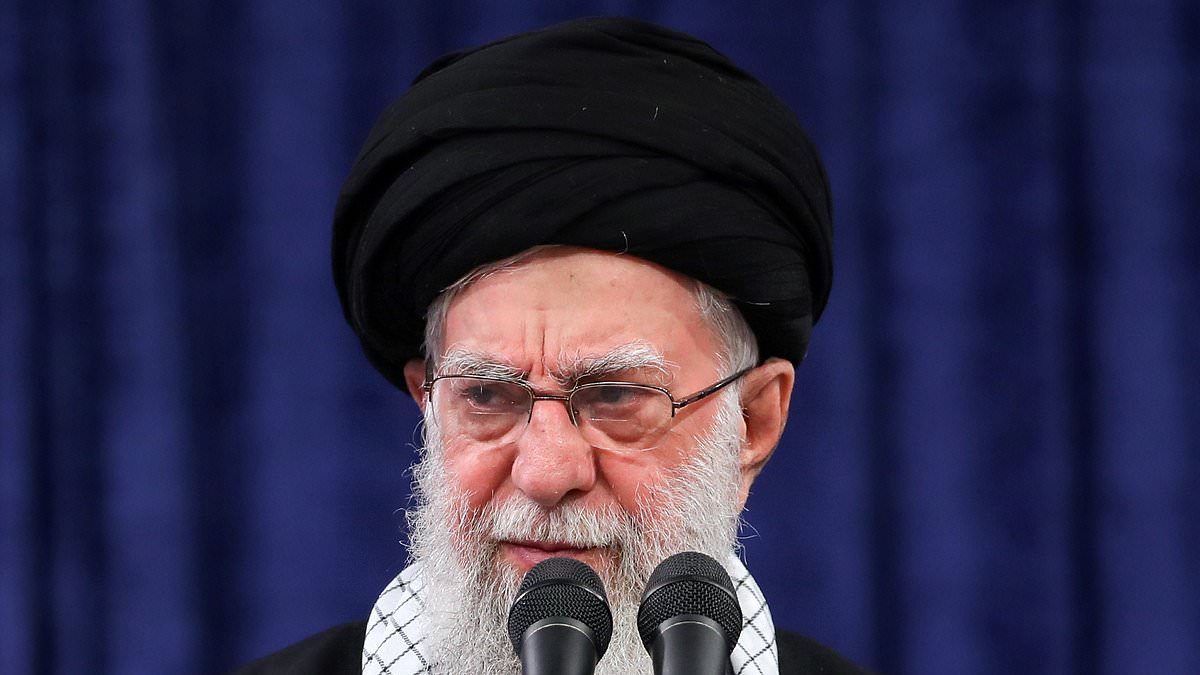
Amid escalating tensions between the United States and Iran, Supreme Leader Ayatollah Khamenei is reportedly preparing for a worst-case scenario as President Donald Trump imposes a new deadline for nuclear deal negotiations. High-profile U.S. negotiators, including special envoy Steve Witkoff and Trump’s son-in-law Jared Kushner, are scheduled to engage with Iranian officials in Geneva this Thursday to explore the prospects of a revamped nuclear agreement. Meanwhile, President Trump has not dismissed the possibility of military strikes against Iran within the next 10 to 15 days. Ali Larijani, a prominent Iranian national security figure and advisor to Khamenei, expressed confidence in Iran’s preparedness during a recent interview with Al Jazeera in Qatar, stating, “We are ready in our country. We are definitely more powerful than before. We have prepared in the past seven, eight months. We found our weaknesses and fixed them. We are not looking for war, and we won’t start the war. But if they force it on us, we will respond.”
Trump warns of aerial strikes at board of peace debut

At the inaugural session of his Board of Peace on Thursday, President Trump issued a stark warning that military action against Iran could be imminent if a diplomatic breakthrough is not achieved within 10 days. A regional official suggested this maneuver might lead Iranian officials to withdraw from negotiations for a considerable duration. Should this strategy fail, Trump might consider targeting regime facilities to destabilize Iran’s leadership. Despite senior advisors frequently presenting this plan, discussions within the Oval Office have largely focused on broader strategic options. In Washington, resistance to further military interventions is mounting, with prominent lawmakers criticizing Trump’s recent military actions as potentially unlawful.
Evil unchecked

In response, Congressman Thomas Massie of Kentucky and Congressman Ro Khanna of California are preparing to introduce a War Powers Resolution in the House of Representatives. This legislative move aims to assert Congressional authority and discourage military strikes without legislative approval. Conversely, Senator Lindsey Graham remains a staunch supporter of military intervention, stating to Axios, “I understand concerns about major military operations in the Middle East given past entanglements. However, the voices who counsel against getting entangled seem to ignore the consequences of letting evil go unchecked.” Meanwhile, according to the New York Times, Khamenei has established a robust line of succession, ensuring continuity in key military and government roles under his oversight.
The silent war room at the governors’ dinner

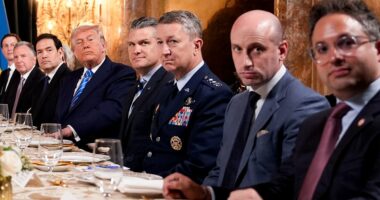
During President Trump’s governors’ dinner on Saturday, Secretary of State Marco Rubio slipped out of the East Room of the White House twice, per reports. He was also seen talking with CIA Director John Ratcliffe at the event. Protests within Iran have escalated since the New Year, and the regime, led by Ayatollah Khamenei, has sought to limit its citizens’ access to the West by cutting off internet connection as well as telephone lines. Protestors have, however, still been able to get information out of the country through the use of Elon Musk’s Starlink satellite technology. Trump has intensified his public statements since the protests began, warning Iranian authorities against using force and repeatedly expressing support for what he has described as a push for freedom.

‘Iran is looking at FREEDOM, perhaps like never before,’ the president noted in a post to his Truth Social account, adding that ‘the USA stands ready to help!!!’ The State Department has echoed a hardline tone, pointing to previous US actions against adversarial governments as evidence that Trump follows through on his warnings. ‘Do not play games with President Trump. When he says he’ll do something, he means it,’ a January social media post from the State Department read.

Back in June, Trump directed the US military to deploy a dozen 30,000-pound ‘bunker buster’ bombs that ‘obliterated’ Iran’s three largest nuclear facilities in what the administration later dubbed ‘Operation Midnight Hammer .’ ‘The strikes were a spectacular military success,’ Trump said in a late-night address to the nation from the White House the day after the operation. The US military joined forces with Israel to launch military strikes against Iran at the time using B-2 ‘bunker bomber’ planes. Trump later indicated that his decision to authorize the strikes was influenced by the possibility of renewed diplomatic engagement with Tehran.