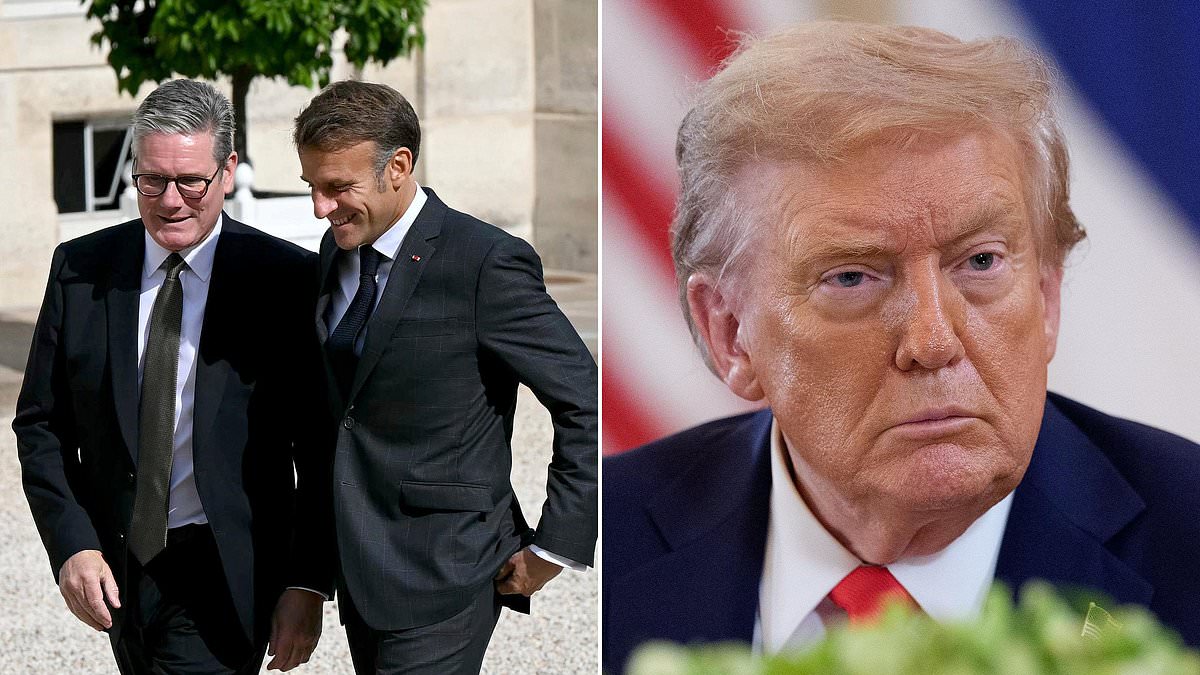
French President Emmanuel Macron revealed plans for France and the United Kingdom to organize a diplomatic summit in Paris this Friday to tackle the crisis in the Strait of Hormuz. Notably, U.S. President Donald Trump will not be part of the discussions.
Macron took to X to emphasize the urgency of reopening the strait “at the earliest opportunity.”
His declaration followed talks with Iranian President Masoud Pezeshkian. Macron elaborated that the gathering will include “non-belligerent nations willing to join us in a multilateral, purely defensive mission to restore safe navigation in the strait, once security conditions permit.”
The term “belligerent” likely alludes to nations such as Israel, the United States, and Iran.
This initiative coincides with a trend among European countries to sideline Trump from post-conflict planning in the Middle East. This emerging alliance aims to allocate military resources and aid in demining efforts to safeguard commercial ships traversing this critical maritime passage.
In a Wednesday morning interview, Trump proclaimed the Strait of Hormuz “permanently open” following undisclosed negotiations with Xi Jinping, asserting that the Chinese leader had consented to cease arms supplies to Iran.
But the White House told the Daily Mail later contradicted the claim from the President, saying the blockade continues.
‘The United States doesn’t need help from any other country – the blockade is working perfectly, implemented by the greatest Navy in the world, while Iran’s navy is at the bottom of the ocean,’ White House spokeswoman Olivia Wales responded.

French President Emmanuel Macron announced Tuesday that France and the United Kingdom will host a diplomatic event in Paris this Friday to address the crisis in the Strait of Hormuz, notably excluding President Donald Trump from the proceedings

NATO leaders held. a two–day summit on June 24 and 25 in The Hague. According to a Daily Mail/JL Partners flash poll of over 1,000 registered voters, the nation is split on whether the US should withdraw from NATO following the refusal of other member states to contribute military support for reopening the Strait of Hormuz

A view of the vessels passing through Strait of Hormuz following the two–week temporary ceasefire reached between the United States and Iran on the condition that the strait be reopened

Trump talks with British Prime Minister Keir Starmer next to French President Emmanuel Macron, Italian Prime Minister Giorgia Meloni, European Commission President Ursula von der Leyen and NATO Secretary General Mark Rutte back in August of 2025. French diplomats believe Trump’s participation in their strategy plans for the Strait would make their proposals less attractive to Tehran and jeopardize diplomatic progress, sources familiar with the matter told the Wall Street Journal
French diplomats believe Trump’s participation would make their proposals less attractive to Tehran and jeopardize diplomatic progress, sources familiar with the matter told the Wall Street Journal.
However, British officials have reportedly expressed concern that sidelining the US leader would enrage Trump and create further diplomatic obstacles.
British Prime Minister Keir Starmer has indicated he wishes to remain distanced from the ongoing friction between Washington and Tehran.
‘We’re not supporting the blockade,’ Starmer told the BBC. ‘My decision has been very clearly that whatever the pressure, and there’s been some considerable pressure, we’re not getting dragged into the war.’
The coalition’s primary objective is to ensure shipping companies feel confident in safe passage through the Strait of Hormuz once active hostilities end. The strategy includes plans to rescue stranded ships, execute de-mining operations to remove Iranian mines, and establish a program for military personnel.
French Foreign Minister Jean–Noel Barrot noted Tuesday that the mission is contingent on regional stability.

Oil tankers and cargo ships line up in the Strait of Hormuz as seen from the United Arab Emirates. According to a Daily Mail/JL Partners flash poll of over 1,000 registered voters, the nation is split on whether the US should withdraw from NATO following the refusal of other member states to contribute military support for reopening the Strait of Hormuz

British officials have reportedly expressed concern that sidelining the US leader would enrage Trump and create further diplomatic obstacles

The two leaders met after Trump ripped into NATO allies for doing ‘nothing’ to help secure the Strait of Hormuz amid his war on Iran – and has threatened to pull the US out of the alliance

Trump meets with NATO Secretary General Mark Rutte in the Oval Office of the White House in October of last year
‘The mission we are referring to could only be deployed once calm has been restored and hostilities have ceased,’ Barrot said.
Germany is likely to join the operation and could officially commit to the plan as early as this week, according to the Journal.
The White House did not immediately respond to a request for comment.
President Trump has often ripped into NATO allies for doing ‘nothing’ to help secure Hormuz during his war on Iran – and has threatened to pull the US out of the alliance.
During a high–stakes encounter hours after a closed–door meeting with the President, the Daily Mail cornered NATO Secretary–General Mark Rutte with several inquiries.
Rutte was asked by the Daily Mail whether he truly believes Trump will maintain America’s commitment to NATO after their meeting.
Rutte said last week that member countries are doing everything Trump had requested to strengthen the military alliance, even if some were initially ‘a bit slow’ to provide support to the US amid its war with Iran.
‘Some allies were a bit slow, to say the least,’ Rutte said. ‘In fairness, they were also a bit surprised.’

The move comes as several European nations have started to exclude Trump from post–war Middle East planning. This blossoming coalition intends to deploy military resources and assist in mine–clearing operations to protect commercial vessels passing through the vital waterway
Rutte described a ‘mindset shift’ in Europe which he claimed was evidenced by the UK leading a coalition of countries to help reopen the Strait of Hormuz.
Trump told Rutte that words from NATO allies are no longer enough – he wants action.
Writing on Truth Social, Trump said last week: ‘None of these people, including our own, very disappointing, NATO, understood anything unless they have pressure placed upon them!!!’
During his speech, Rutte heaped praise on Trump as he admitted Europe must step up its spending on the alliance.
He said: ‘We must applaud Trump for his bold leadership and vision’.


