Share this @internewscast.com
The leader of the Senate Intelligence Committee recently disclosed that the contentious U.S. military action against a supposed Venezuelan narco-terrorist vessel involved a total of four distinct strikes.
Admiral Frank Bradley, who oversaw the operation, appeared on Capitol Hill this Thursday to provide lawmakers with a detailed account during private meetings with both the House and Senate committees.
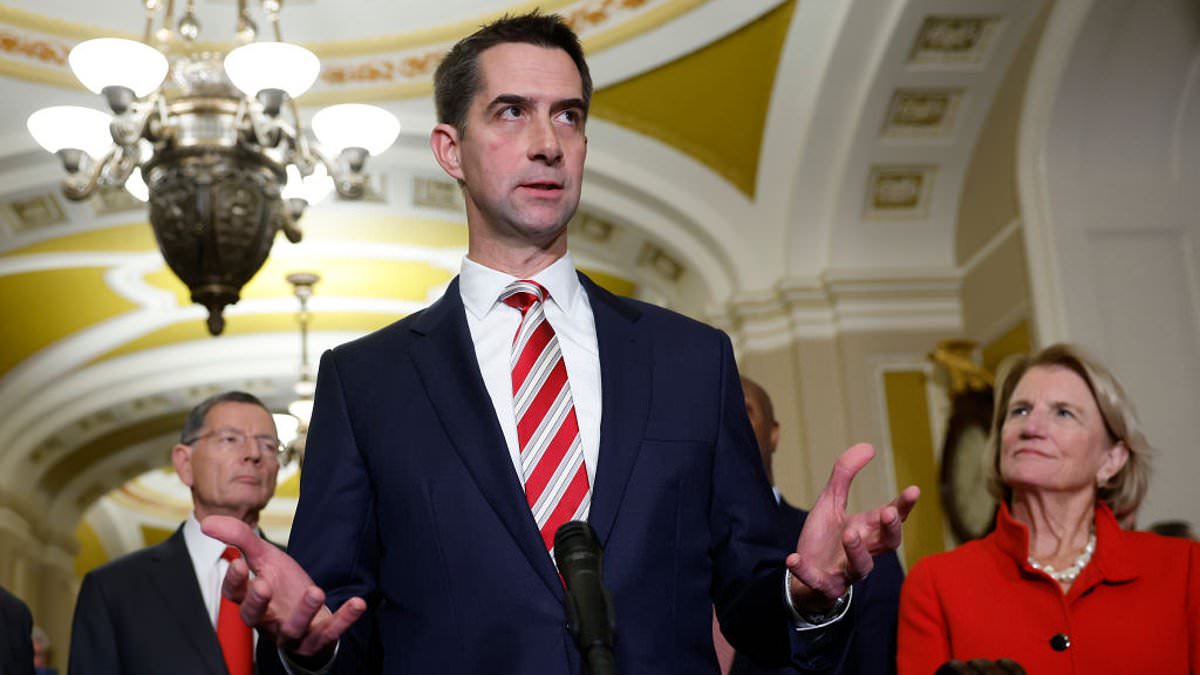
Senate Intelligence Chairman Tom Cotton, representing Arkansas, spoke to reporters after the briefing, stating, “The September 2 strikes were justified. These individuals were narco-terrorists trafficking drugs intended for the U.S., posing a lethal threat to thousands in Arkansas and millions across the country.”
Cotton further clarified, “Each strike on September 2—the first, second, third, and fourth—was conducted lawfully and was necessary considering the circumstances.”
The events of September 2, 2025, have sparked controversy for the White House, following revelations that two individuals onboard the vessels survived the initial assault. The subsequent strikes resulted in the deaths of these survivors.
Amidst strict international regulations on follow-up military actions, Democratic lawmakers have accused Secretary of War Pete Hegseth of potentially authorizing what they argue could be deemed a “war crime.”
A report from last week indicated that Hegseth ordered his officers to kill all the individuals aboard the boats and leave no survivors, but the secretary and the White House refute the allegation. Still, questions have swirled over whether the follow-up attacks were necessary or lawful.
Cotton, after seeing the military’s video of the operation, said Thursday that the four strikes were necessary.

Senate Intel Committee Chairman Tom Cotton said the US struck a Venezuelan narco-terrorist boat four times in the controversial September 2 strike. He said he would’ve taken the same actions had he been the commander

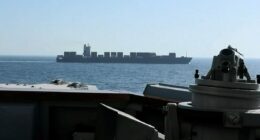
The US conducted a deadly military strike against an alleged drug boat tied to the cartel Tren de Aragua, President Donald Trump said in early September. The president said 11 people were killed in the strike in ‘international waters.’ Secretary of State Marco Rubio described the ‘lethal strike’ as taking place in the ‘southern Caribbean’ against ‘a drug vessel which had departed from Venezuela
‘I saw two survivors trying to flip a boat loaded with drugs bound for the United States back over so they can stay in the fight,’ Cotton said. ‘We heard of other narco-terrorist boats in the area coming to their aid to recover their cargo and recover those narco-terrorists.’
If the men were still actively trying to pursue their drug-running mission, as the Pentagon and Cotton claim, there is leeway in accepting that they are lawful targets for a secondary engagement.
The top Democrat on the House Armed Services Committee, however, was not so optimistic.
‘This briefing confirmed my worst fears about the nature of the Trump administration’s military activities,’ Senator Jack Reed said in a statement after the briefing.
The senator wrote he was ‘deeply disturbed’ by the video of the operation and called on the Pentagon to release it for public consumption – something President Donald Trump has also backed.
House Intelligence Committee Ranking Member Jim Himes, a Democrat, emerged from Bradley’s briefing and told reporters he was deeply disturbed as well.
‘What I saw in that room was one of the most troubling things that I’ve seen in my time in public service,’ Himes said.
‘You have two individuals in clear distress, without any means of locomotion, with a destroyed vessel, who were killed by the United States.’
Reed said the Senate’s ongoing investigation into the strikes will continue.
Admiral Bradley was well within his jurisdiction in ordering follow-up strikes, Cotton said.
In fact, if Cotton, an Army veteran, were in Bradley’s shoes, he would’ve taken the same shot, he told the Daily Mail.
‘If I was Adam Bradley and I’ve been delegated that authority, absolutely,’ he said.