Share this @internewscast.com

As the world anxiously watched the clock tick toward President Donald Trump’s 8 p.m. Eastern deadline for Iran to engage in negotiations, a wave of panic swept over the nation. The looming threat of severe military strikes led to a frenzy among civilians, who shared with the Daily Mail their desperate efforts to flee major cities and bid farewell to loved ones. Meanwhile, in a bold move, Iranian government leaders urged citizens to take a drastic step by acting as human shields. An official, in a video clip captured by the Associated Press, called upon ‘youth, athletes, artists, students, and professors’ to gather at power plants, hoping their presence would position any U.S. attack as a war crime.
‘Bring Your Children’

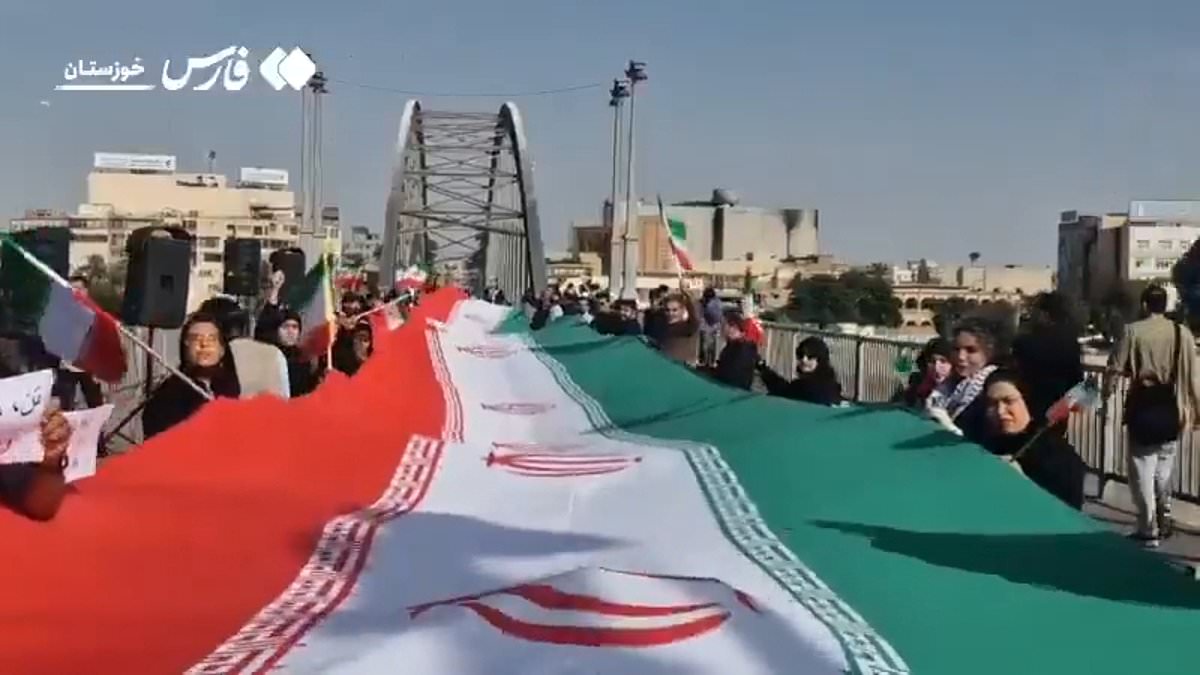
This extreme plea came on the heels of President Trump’s ominous message on Truth Social: “A whole civilization will die tonight, never to be brought back again. I don’t want that to happen, but it probably will.” With the President’s declaration of a ‘Power Plant Day’ and ‘Bridge Day’ aimed at dismantling Iran’s infrastructure, chaos erupted in cities like Tehran and Isfahan. Roads were clogged with traffic, mass evacuations ensued, and state television shockingly directed citizens to rally around critical sites with their children in tow. “They are announcing on national TV—come to the streets and bring your children,” one source with family in Iran conveyed to the Daily Mail. “It’s a tactic to use people as human shields, much like in Palestine. Rather than surrendering or negotiating, they resort to this.” The source further noted, “Government loyalists will go. They are barbaric, believing that dying for Islam, even if it means the death of their children, leads to Heaven. My mother witnesses nightly chants of ‘death to America, death to Israel,’ continuing until midnight.”
Strait Reopened

In a surprising turn of events, President Trump announced late on Tuesday night that Iran had agreed to a two-week ceasefire and would reopen the Strait of Hormuz after presenting a 10-point peace plan. Despite the prevailing fear, some anti-regime citizens found a glimmer of hope, believing the new Ayatollah’s grip on the country might finally weaken, if not be entirely broken. “Toward the end of Trump’s message, he clearly stated that 47 years of death and corruption will end, suggesting an end to Islamic tyranny,” the source added. However, Trump’s ultimatum appears to focus explicitly on Iran’s blockade and nuclear program, rather than a full-scale regime change. His public communication suggests that a successful resolution would prioritize denuclearization over dismantling the entire Islamic Republic.
Empty Shelves and Digital Silences

Trump’s rhetoric has left many Iranians conflicted. One points to the tension at the heart of his message: ‘It’s paradoxical – he says a whole civilization will die tonight, but also blesses the great people of Iran.’ Across the country, citizens are bracing for the worst. Supermarket shelves are being stripped bare as people stockpile ahead of threatened rolling blackouts and severed supply chains. One Iranian says he and his family have already stocked up on water and supplies – but fear cuts both ways. ‘They are very stressed,’ the source says, ‘but at the same time, if this war ends now, it would literally be a living hell – because the government would retaliate.’ For many, the regime is as frightening a prospect as American airstrikes. The government’s crackdown on communications has prompted a wave of digital self-erasure: two Iranians – one in Tehran, one in Isfahan – are already saying their goodbyes and frantically deleting message threads with contacts abroad.

‘My internet connection keeps cutting out for long periods. If our chat stays on Instagram, it could put me in serious danger – the regime randomly connects people’s phones to the internet in the streets and checks their apps. I have to delete our chat. Wishing you a path full of success.’ That was Bahareh’s last message. She asked that her surname not be published. For those with the means, leaving the city is the only option. Major roads are jammed with families fleeing to remote areas, far from the power grids and military installations likely to be in the crosshairs. One Iranian says his entire family has relocated to his uncle’s villa in the countryside. ‘They are safer there, it is a pretty calm and peaceful place,’ he said, declining to say where. With hours left until the 8 p.m. deadline, the world is watching to see whether last-minute diplomacy can pull back from the brink – or whether Iran goes dark tonight.