
Share this @internewscast.com

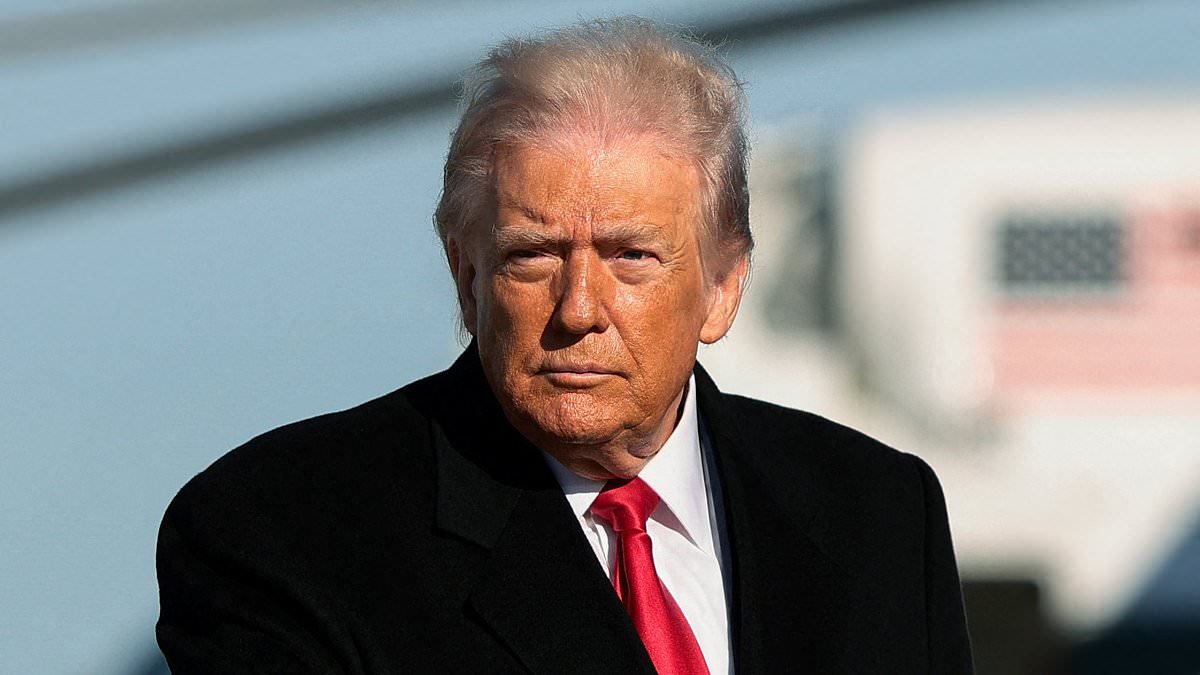
In a surprising turn of events, Iran reopened its airspace on Thursday morning, following a temporary shutdown that lasted over four hours. This decision came as former President Donald Trump seemed to move away from the brink of military action against Tehran. The airspace closure, which ended slightly after 7 a.m. local time, saw several domestic flights taking to the skies. Despite the ongoing tension between the United States and Iran, Trump struck a cautious tone during a press conference in the Oval Office on Wednesday, suggesting that Iran had halted the execution of protesters. This development hints at possible influence from pragmatists within the administration, arguing against the high risks of military intervention. “We’ve been told that the killing in Iran is stopping, and it’s stopped and stopping, and there’s no plan for executions or an execution,” Trump informed reporters.
Trump puts military strikes on hold following secret assurances

The president’s remarks, thin on specifics, followed his recent messages of support to Iranian protesters, assuring them that “help is on the way” and that the administration would “act accordingly” in response to Tehran’s actions. However, Trump remained vague on how the U.S. might proceed, leaving unclear whether his Wednesday comments meant a delay in military action. Despite stepping back from a previously drawn red line, Trump signaled that military strikes against Iran’s leadership remained on the table. He emphasized that his administration was closely watching the violent crackdown, which has reportedly claimed at least 2,500 protesters’ lives. “We’re going to watch and see what the process is. But we were given a very good, very good statement by people that are, aware of what’s going on,” Trump said when questioned about potential military measures against the Middle Eastern nation. His remarks were met with swift criticism from anti-regime activists on social media, accusing him of backtracking on earlier vows to act if protesters were harmed.
Activists accuse Trump of ‘chickening out’ on Iran

Outraged anti-regime activists accused Trump of betraying the protesters, interpreting his words as offering Iran a way out without consequences. “If you TACO now Trump, then you have just thrown all those protesters under the bus #FreeIran,” posted a user on X following the press conference. The term “TACO,” meaning “Trump Always Chickens Out,” was coined by Wall Street traders in May after the president’s repeated indecision over tariffs. Throughout the preceding week, Trump had frequently threatened intervention if protesters were injured and had promised “strong action” against any executions by Iran. Initially, Iran’s Civil Aviation Organization had issued a Notice to Air Missions (NOTAM) at 5:19 p.m. EST, restricting its airspace to essential international flights, a measure that remained effective for over two hours.
How a two-hour lockdown signaled imminent conflict

Flight radar data showed very few aircraft over Iran as the order went into effect. International carriers diverted north and south around Iran, but after one extension, the closure appeared to have expired. The order came amid heightened tensions over its bloody crackdown on protesters during nationwide protests and the possibility of American strikes in response. The flight-tracking website FlightRadar24.com noted the order closed Iran’s airspace for a little more than two hours. The decision to close commercial airspace came after it emerged a 26-year-old shopkeeper was set to become the first alleged protester to be hanged in the crackdown.

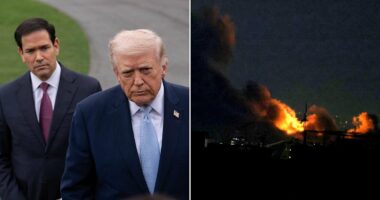
However, in news that may come as a sign Tehran is backing down, Erfan Soltani’s (pictured) family confirmed that he was not executed on Wednesday. Soltani, a clothing shop employee, was among the thousands of Iranians who were rounded up in the last week after nationwide protests sparked by economic distress turned into days of deadly anti-government unrest. Somayeh, a 45-year-old close relative of Soltani who is living abroad and asked to be identified by first name only for fear of government reprisal, told The Associated Press on Wednesday that his family had been told his execution would be set for Wednesday but it was postponed when they got to the prison in Karaj, a city north-west of Tehran. The relative said that his family has spent the last six days in agony over what could happen to him and now are left with even more uncertainty. Trump on Tuesday consulted with his national security team about next steps after telling reporters he believed the killing in Iran was ‘significant.’ Vice President JD Vance, Secretary of State Marco Rubio and key White House National Security Council officials began meeting last Friday to develop options for Trump, ranging from a diplomatic approach to military strikes.

The Iranian security force crackdown on the demonstrations has killed at least 2,586, the US-based Human Rights Activists News Agency reported. On Wednesday, Iranian officials signaled that suspects detained in nationwide protests would face fast trials and executions while the Islamic Republic promised a ‘decisive response’ if the US or Israel intervene in the domestic unrest. The threats emerged as some personnel at a key US military base in Qatar were advised to evacuate by Wednesday evening.

Mohammad Pakpour, commander of Iran’s paramilitary Revolutionary Guard, reiterated Iranian claims, without providing evidence, that the US and Israel have instigated the protests and that they are the real killers of protesters and security forces who have died in the turmoil, according to Iran’s state news agency. He added that those countries will ‘receive the response in the appropriate time.’ In a direct challenge to Trump earlier Wednesday, Iran’s judiciary chief urged the government to act quickly to punish 18,000 people detained during the protests.

Gholamhossein Mohseni-Ejei comments about rapid trials and executions were made in a video shared by Iranian state television online. ‘If we want to do a job, we should do it now. If we want to do something, we have to do it quickly,’ he said. ‘If it becomes late, two months, three months later, it doesn’t have the same effect. If we want to do something, we have to do that fast.’