
Share this @internewscast.com
In a unique episode of the Daily Mail’s podcast titled Queens, Kings and Dastardly Things, historian Alice Loxton joins host Kate Williams to delve into the life of Eleanor of Castile. This Spanish queen, through her marriage to England’s King Edward I, left a lasting impact on the city of London.
Eleanor was born in 1241 in Castile, now part of modern Spain. At the tender age of 12, she was wed to Prince Edward of England, a figure so tall he earned the moniker Longshanks.
Despite the nature of their arranged marriage, Eleanor and Edward shared a deep bond that lasted 36 years. Throughout Edward’s reign, Eleanor stood by him as they embarked on Crusades and weathered civil conflicts. She also played a pivotal role in introducing English society to Spanish innovations like forks, carpets, and ornate gardens.
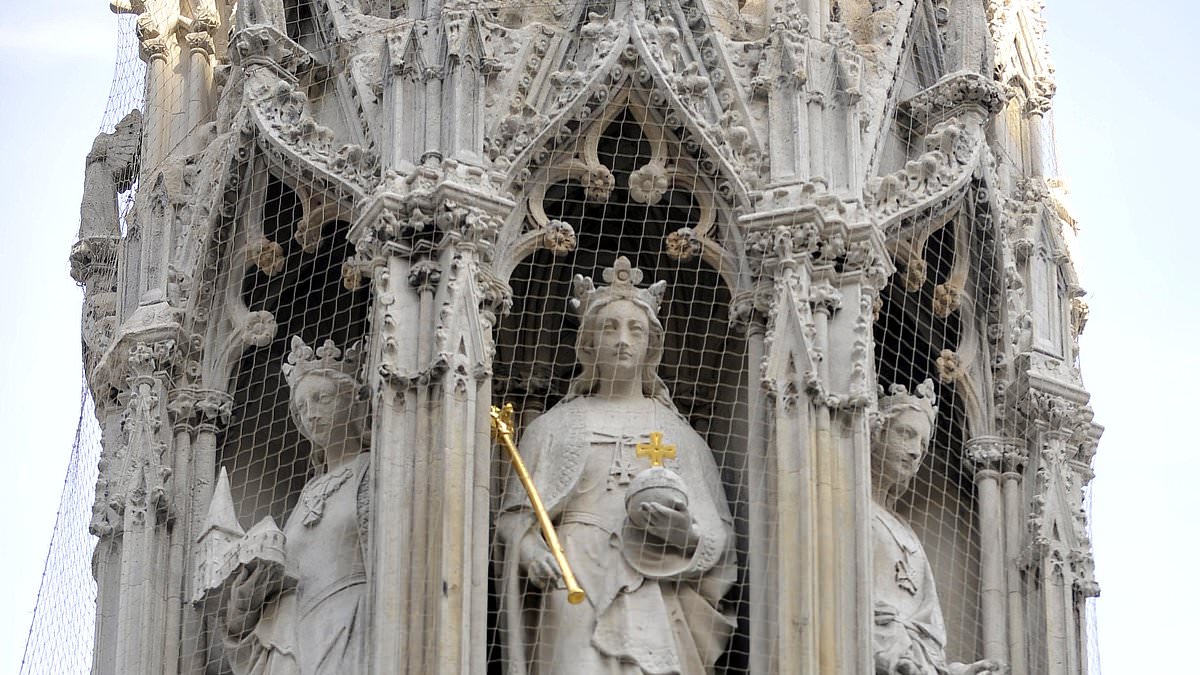
Following Eleanor’s death from illness in 1290, a heartbroken Edward commissioned 12 memorials, known as the Eleanor crosses, to mark her funeral procession from Lincoln to her final resting place at Westminster Abbey.
Loxton, in her latest book, revisits this nearly 200-mile funeral journey, exploring the fate of these crosses, many of which were lost to the destruction of the English Civil War.
Apart from her writing, Loxton captivates an audience of over 1.8 million Instagram followers, using the platform to vividly bring medieval history to life.

On a special episode of the Daily Mail’s Queens, Kings and Dastardly Things podcast, historian Alice Loxton (L) joins Kate Williams (R) to discuss Eleanor of Castile

Eleanor was born in Castile, modern day Spain, in 1241. At just 12 years old, she was married off to Prince Edwardof England

Loxton has written a new book about the forgotten Queen, retracing her 200-mile funeral route
Eleanor of Castile and Charing Cross
The Eleanor Crosses were elaborate stone monuments, likely topped with a crucifix. Useful for travellers in a time before maps, they stood along major roads leading into London.
Many of the original crosses were torn down during the English Civil War by Parliamentarians who saw them as symbols of the monarchy. Today, several towns have erected replicas marking where the monuments once stood.
Only three original crosses survive: in the villages of Geddington, Hardingstone and Waltham Cross.
The most famous cross stood at what would become the centre of London, marking the final stop before Westminster Abbey.
‘The last of the crosses that was built was known as Charing Cross’, Loxton told the podcast.
‘The name was taken to be from a bend in the Thames, known as a Charing and the Eleanor Cross that stood there.

After Edward I became King, Eleanor accompanied him on Crusades and survived civil wars by his side

The most famous cross stood at what would become the centre of London, marking the final stop before Westminster Abbey
‘The location of the original cross, which was just in front of Trafalgar Square, marked the point where all measurements to London are made.
‘If you type in London on Google Maps, it will take you to the original site of the Eleanor Cross.’
The Charing Cross monument was among the first to be destroyed during the civil war, due its geographic and cultural significance.
Raging between 1642 to 1651, the English Civil War saw supporters of the monarchy and parliament battle it out over control of the country.
The conflict resulted in King Charles I’s public execution and the temporary abolition of the monarchy.
Loxton explained how the populace was none too pleased with the Parliamentarians’ destruction of Charing Cross.
She explained: ‘One of the first instructions of the Parliamentarians was to tear down the cross. They saw it as this great symbol of Royalism.
But then this ballad came about which said: ‘Undone, undone – the lawyers cry. They ramble up and down. They know not the way to Westminster, now that Charing Cross was taken down.
‘Interestingly, it was at that location that Charles I’s death warrant was signed. When the monarchy returned, where the original cross stood, a statue of Charles I was erected to hammer home the point.’
To learn more about Eleanor of Castile and Edward I, listen to Queens, Kings and Dastardly Things now, wherever you get your podcasts – or watch on YouTube.