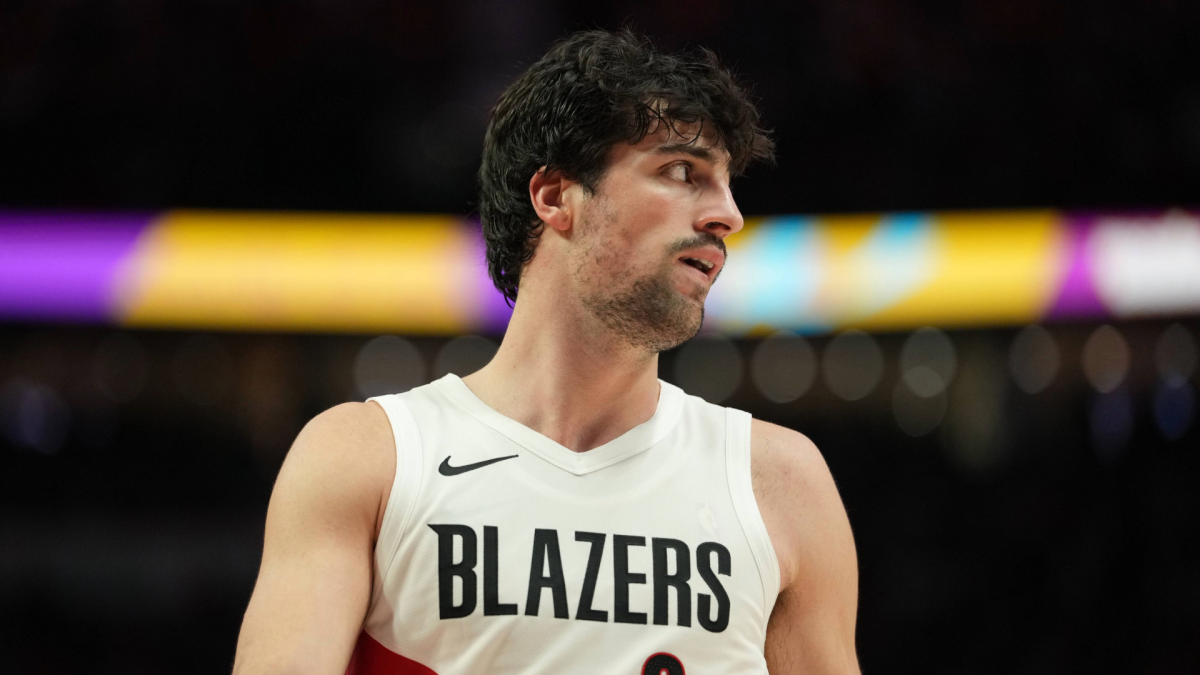

The Portland Trail Blazers are currently in a promising position for the future, a status they haven’t enjoyed since their 2019 Western Conference finals appearance. Leading this hopeful outlook is Deni Avdija, a 25-year-old All-Star known for his playoff performances. Adding to the team’s potential are recent lottery picks Scoot Henderson and Donovan Clingan, who have shown significant promise. Furthermore, the Blazers have a wealth of draft capital, holding Milwaukee’s first-round picks from 2028 to 2030, acquired without sacrificing much. Ironically, Damian Lillard, the player traded to secure those picks, is back on the team.
While the Blazers aren’t yet on par with powerhouses like the San Antonio Spurs—who ousted them in Game 5 of the first playoff round—the framework for success is in place. Over the past three years, they have meticulously constructed a team poised for future contention. Though not title contenders just yet, they possess the youthful talent, valuable assets, and the flexibility needed to become one. Proper management of upcoming transaction periods will be crucial to their progress.
This brings us to a point of uncertainty: the leadership guiding these transaction cycles remains unclear.
How will Tom Dundon’s ownership affect the team’s future?
On April 6, the NBA officially ratified Tom Dundon’s acquisition of the Trail Blazers. Within weeks, stories of his cost-cutting measures have circulated widely. As chronicled by our John Gonzalez, some actions are minor, like the absence of free T-shirts at home playoff games, but others raise red flags. For instance, Dundon’s reported intention to pay his forthcoming head coach a salary between $1 million and $1.5 million contradicts industry standards, where even newcomers typically earn more than double that. This unconventional approach extends to the ongoing search for a head coach, conducted while Tiago Splitter is still actively coaching the team.
Dundon may sidestep criticism given Splitter’s interim status, yet The Athletic reports he is also evaluating candidates for the general manager position. Current GM Joe Cronin, who played a pivotal role in acquiring the team’s young talent and draft picks, is not serving in an interim capacity, making this move particularly concerning.
While hypothetically, the Blazers could enhance their leadership roles, the reality is that financial constraints make this unlikely. This situation prompts further questions about the team’s investment in basketball operations. What caliber of assistant coaches can they hire? How extensive will their analytics and scouting teams be? While NBA player salaries are capped, spending on other areas is not. The most successful teams invest heavily in seeking any competitive edge.
Think about the Lakers for a moment. For years under the Buss family, they were thought of as “a family business.” They’d spend money on players and coaches, but were considered thrifty in other ways. Then Mark Walter bought the team, and the prevailing opinion around the sport has been that it made them substantially more dangerous. Walter’s Dodgers are known for aggressive spending in just about every area that affects the on-field product, and his NBA team has already begun the process of overhauling its scouting department. The Lakers had institutional advantages that allowed them to get away with spending less. The Blazers don’t play in Los Angeles.
What would new leadership mean for the incumbent players? Portland has quite a few substantial financial decisions to make over the next few offseasons. Henderson, for instance, is eligible for a rookie extension this summer. His first two years were disappointing. He missed most of his third season. He flashed stardom at the end of this season. Measuring his worth is going to be tricky. It will also directly affect Avdija, whose situation is a bit more complicated.
Deni Avdija’s contract situation could complicate things
Avdija will technically be eligible for a contract extension next summer. Functionally, the Blazers won’t be able to give him one without further moves. His current deal is so far below market value that the 140% raise he’s allowed by the CBA simply won’t cut it. Portland would have to clear out actual cap space to renegotiate and extend his contract next offseason.
Paying Henderson makes that harder, perhaps even impossible, depending on what else the Blazers do. One would imagine Cronin has a plan to address the situation or, failing that, enough of a relationship with Avdija and his representatives after helping turn him into an All-Star that they’d be able to go into 2028 free agency with a layer of trust.
Would that evaporate with new leadership in place? We can’t know for sure, but Portland’s financial advantage in free agency is minimal. If he isn’t renegotiated and extended in 2027, he effectively needs to be recruited internally in 2028. Players are focused on their own salary first and foremost, of course, but when there’s a market full of teams eager to pay you, you have a bit more room to consider the state of the teams that might employ you. We don’t know if the Blazers will pay what it takes to maintain a top-notch organization. We know other teams already do.
Portland has a viable path to winning
There’s no point in gaming out Portland’s 2026 offseason at this stage, no hypothetical trades to consider or free agents to pursue, because we just don’t know who’s going to be making these decisions beyond Dundon and what that person’s priorities will be.
The Blazers might trade for a star this offseason. They might stay the course. They might make a drastic and completely unforeseeable directional shift.
There’s a path to sustainable winning here, but it’s precarious. They’re not the Spurs team that just beat them. Their asset advantage and lottery luck have not been so overwhelming that future championship contention is close to a guarantee. They’ve laid a strong foundation that will need to be maintained and expanded in the years to come, and until we know who will be guiding that process, there’s no way to know where it might go.


