
Share this @internewscast.com
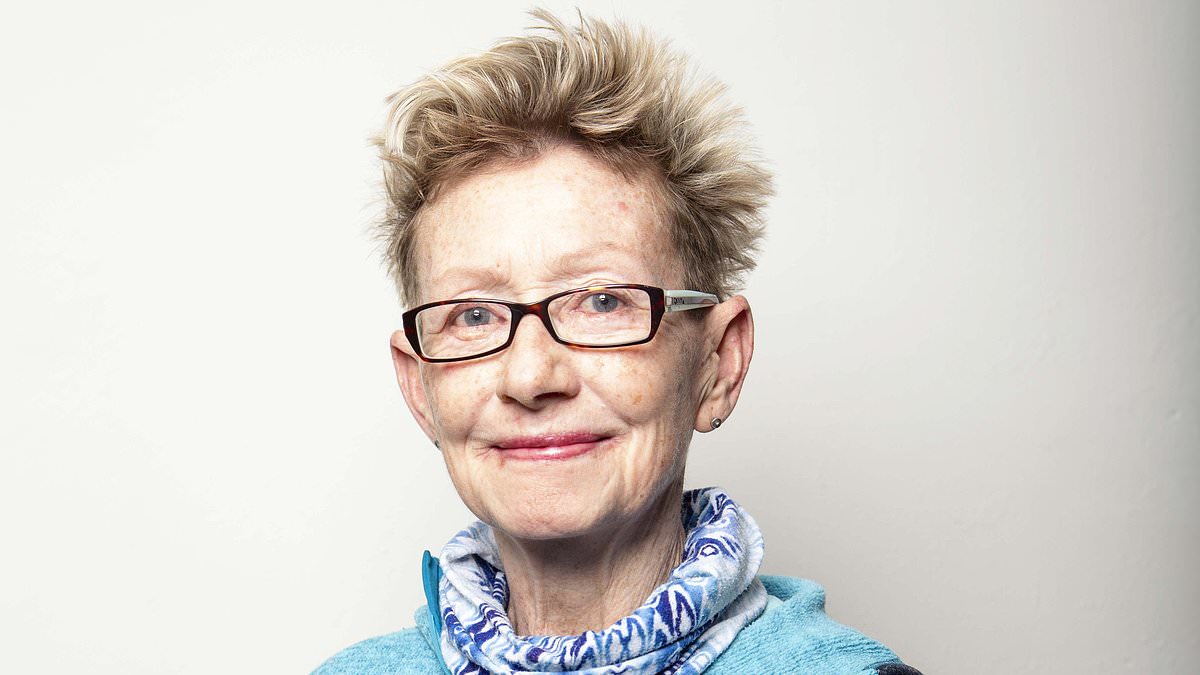
For Tracy Owen, eczema was far more than just a case of dry skin; it seeped into every facet of her life, influencing her relationships and even her choice of attire.
At 61, the sports therapist from Eastbourne reflects on her lifelong battle with eczema, stating, “I was born with it.” Over the years, she tried a range of treatments, from creams and oils to medications, sunbed UV light, and steroids. Despite these efforts, the eczema never fully disappeared, but at least it was under control.
However, as she approached her late fifties, her condition worsened significantly. “Menopause was a nightmare,” Tracy confides.
The natural aging process and reduced oestrogen levels weakened her skin’s protective barrier. This led to a host of problems, as Tracy explains, “I developed fungal infections on my feet, my scalp became scaly with patches of dried skin, and I faced continual skin infections across my body.”
“I was perpetually cold because my damaged skin couldn’t maintain my body temperature. My skin was constantly painful, bleeding, burning, and despite my determination not to scratch, it remained raw and fragile.”
The strain took its toll on her personal life, leading to the end of a five-year relationship. Tracy shares, “I spent much of my time sleeping, trying to conserve energy by staying warm under a duvet rather than socializing. There were moments of sheer despair.”
Today things are very different. Two years ago, Tracy started a drug called dupilumab – and within two weeks she saw a remarkable shift. Not only did her raw skin begin to heal, she says: ‘My mood lifted. I felt completely different.’
It may seem obvious that symptoms as severe as Tracy’s would affect her mental wellbeing and improving her skin would make her happier. But new research suggests the link between skin disease and mental health is more than psychological. The evidence shows skin diseases such as atopic dermatitis, the most common form of eczema, may share biological roots with mental illnesses.
Increasingly studies show that treatments targeted at the underlying cause of a skin complaint may also lead to improvements in the underlying cause of mental health conditions, such as depression.

After struggling with eczema for years, two years ago, Tracy started a drug called dupilumab – and within two weeks she saw a remarkable shift
Atopic dermatitis, which affects up to 25 per cent of children and 10 per cent of adults, is often genetic and linked to allergic disorders such as hay fever and asthma. It’s associated with high levels of inflammatory proteins called cytokines that are released by white blood cells as part of the immune response.
These cytokines can breach the blood-brain barrier and have been found to trigger harmful changes in the brain, including lowering levels of the chemical messenger serotonin, which is implicated in depression.
‘If you suffer from depression, pro-inflammatory cytokines in the body increase by about 30 per cent, so we know they’re involved in mental health,’ says Dr Padma Mohandas, a consultant dermatologist at the Royal London Hospital, who has a special interest in psychodermatology – the study of links between the skin and mental health.
Eczema, in particular, is linked to two cytokines: interleukin-4 (IL-4), which activates immune cells that cause inflammation, and interleukin-13 (IL-13) that hits afterwards, causing more inflammation, itching and damage to the skin barrier.
Dr Mohandas says: ‘IL-4 and IL-13 are known to be linked with suicidal ideation and anxiety behaviours, separately to their role in the skin.’
By blocking interleukins and reducing inflammation with drugs such as dupilumab, some scientists believe they can treat and even prevent mental illnesses in people with skin diseases – and possibly those without them.
There is no doubt that people with inflammatory skin diseases are more vulnerable to mental illnesses.
Around 20 per cent of those with moderate to severe atopic dermatitis develop depression – twice as many as the general population, according to a 2024 review in the Journal of Clinical Medicine. They were also 44 per cent more likely to feel suicidal and 36 per cent more likely to attempt suicide than people without the disease.
Mental health is often a factor in severe skin problems – as Dr Mohandas observes daily in her clinic. She says: ‘We see patients who are restless, irritable, uncomfortable and socially withdrawn. Their skin becomes infected, and they feel self-conscious. They are driven to distraction with itching and are unable to work or sleep, and relationships suffer.’
She adds that it’s common for these patients to need mental health treatment, including counselling and antidepressants.
In 2018 dupilumab (brand name Dupixent) became the first ‘biologic’ drug available on the NHS for atopic eczema. It is given as an injection every two weeks.
Biologic drugs block specific proteins or chemical pathways involved in skin disease (and, it now appears, mental illnesses), making them more precise than conventional drugs – such as methotrexate – which suppress the entire immune system.
The results appear striking. Data from more than a million adults with atopic dermatitis showed that those who used biologics experienced bigger drops in anxiety, depression and sleep problems than people on older drugs such as methotrexate, reported the journal Nature in 2024.
And mood often gets better before the skin does, suggesting this may be more than improved mood brought about by less itching, redness and pain.
It’s not just those with atopic dermatitis who appear to benefit as people with psoriasis – another inflammatory skin disorder – reported being less anxious and depressed within weeks of starting the biologic secukinumab, which blocks IL-17A, a protein linked to psoriasis and depression, says Gil Yosipovitch, a professor of dermatology at the University of Miami.
This, he says, happens even before their skin clears up.
In a 2024 study published in the Journal of Investigative Dermatology, Professor Yosipovitch reported that brain scans showed psoriasis patients treated with secukinumab had positive changes to areas associated both with itching, and depression and anxiety.
Recent research also indicates that biologic drugs might even help prevent mental illness developing in the first place.
A study published in Frontiers in Immunology last year followed adults with moderate to severe atopic dermatitis for three years. Those on dupilumab were 24 per cent less likely to develop anxiety and 30 per cent less likely to develop depression than those using older drugs.
While researchers said they were yet to prove a direct ‘causal’ link, Dr Mohandas says with targeted treatment she sees an improvement in patients’ skin, as well as their ’emotional state’.
This suggests the intriguing possibility that biologics such as dupilumab could one day offer an alternative to selective serotonin reuptake inhibitors (SSRIs) – the most commonly prescribed antidepressants. SSRIs are thought to work by increasing the amount of serotonin in the brain, ‘but blocking inflammatory pathways might be another way to help with anxiety, even in people without skin diseases’, suggests Dr Mohandas.
This is significant as SSRIs don’t work for all. A study by King’s College London found that about a quarter of people on SSRIs such as fluoxetine and citalopram reported no improvement.
Last year, Dr Andrew Miller, a psychiatrist at Emory University School of Medicine in Atlanta, wrote in the American Journal of Psychiatry that there may be specific inflammation-linked depression – and that it seemed to be particularly resistant to conventional antidepressants.

Atopic dermatitis, which affects up to 25 per cent of children and 10 per cent of adults, is often genetic and linked to allergic disorders such as hay fever and asthma
For Tracy, dupilumab has been life changing.
She says: ‘The freedom is incredible. I can put on clothes without thinking about whether the seams will rub on my raw skin.
‘I can sleep, work and live without my skin dictating my life. It’s given me genuine quality of life.’
Access to the drug is, however, limited on the NHS. It can only be prescribed by a specialist dermatologist and patients need to have moderate to severe eczema that has a significant impact on their quality of life and which has not responded to other treatments.
Common side-effects of dupilumab, such as conjunctivitis and eye irritation, are mostly manageable, says Dr Mohandas, who encourages patients struggling with their skin who meet the criteria for dupilumab to talk to their GP about a referral.
Tracy agrees, saying: ‘People think eczema is just dry skin, but it affects every part of your life – your sleep, pain, confidence, relationships, work, and mood.
‘For the right patient, dupilumab is not just cosmetic. It gave me my life back. I am grateful for it every day.’
Tracy is now volunteering as a citizen scientist at the University of Nottingham (rapideczematrials.org).