
Share this @internewscast.com
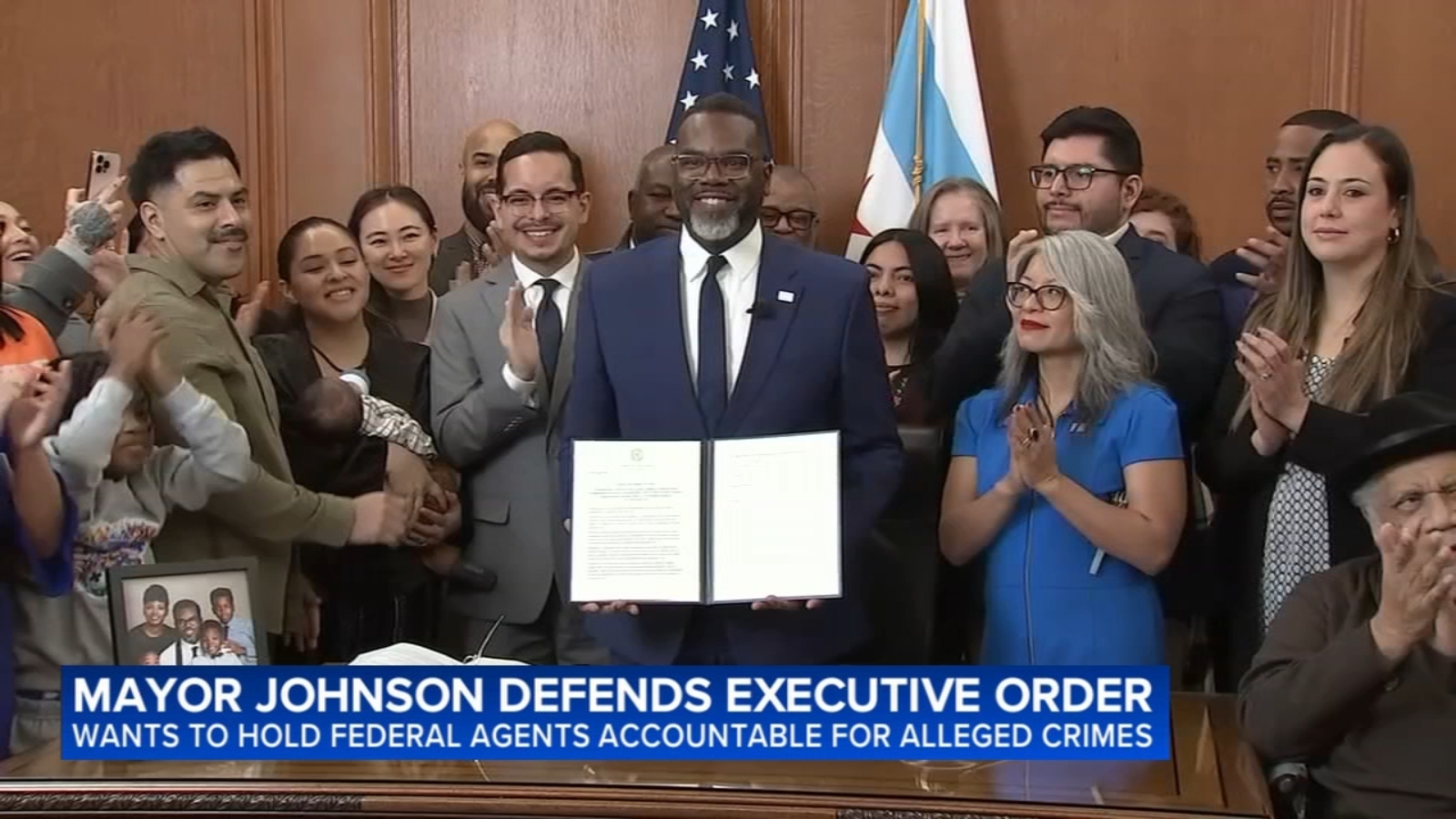
CHICAGO (WLS) — On Tuesday, Mayor Brandon Johnson stood by his recent executive order, which seeks to ensure federal immigration agents are held accountable for any alleged misconduct during their duties.
He emphasized that the decision was not politically motivated.
ABC7 Chicago is now streaming 24/7. Click here to watch
The mayor addressed concerns raised by the Cook County State’s Attorney’s Office in a memo sent to his office last week about the implications of his executive order.
Johnson remains steadfast in his commitment to hold any rogue agents accountable. He attempted to clarify and alleviate the concerns expressed by the county’s chief prosecutor regarding his order.
“I am calling for alignment, and I believe we are aligned, on the principle that if a father dropping off his children at school is murdered, and the federal government covers it up, those responsible must be held accountable,” Johnson stated.
The mayor cited the incident involving Silverio Villegas-Gonzalez, who was fatally shot by federal agents during a traffic stop in Franklin Park last autumn. Johnson insisted that his actions are about ensuring accountability, not playing politics.
“Because that’s what the people of this city want. That’s what people across the country are calling for, is a pathway for accountability to hold these rogue, reckless, chaotic, inhumane agents accountable to the abuse that they have spread throughout this country,” Johnson said. “This is not even about politics for me. This is about saving lives and protecting the people of Chicago. This is about establishing a precedent for the rest of the country to embrace. That’s what this moment is calling for: Real, bold, tenacious leadership that is prepared and willing to stand up to a tyrant.”
Last Friday, the Cook County State’s Attorney’s Office sent a memo to the mayor’s office, raising concerns about a line in the executive order that directs police to gather and preserve evidence of federal misconduct, and “at the direction of the mayor’s office,” refer it to the state’s attorney.
The state’s attorney’s office said that is not only wholly inappropriate, “but it also jeopardizes our ability to effectively prosecute and secure convictions when federal law enforcement agents have committed a crime.” The mayor contended that the order only involves the role police play in gathering evidence of rogue behavior.
“This does not necessarily have to involve the mayor giving specific direction to what gets passed along. It’s a matter of ensuring that the evidence is there and that the state’s attorney, once that evidence is received, can decide they’re going to move forward with an investigation or prosecution,” Johnson said.
The executive order is now under a month-long review period that is expected to clarify that the mayor will not be involved in individual cases, but instead, in high-level policy guidance for police. That’s according to information from the mayor’s office.
The executive order is now under a 30-day review period that could result in clarifications to make sure that police and everyone else involved in the investigation process are clear on their roles and responsibilities.
Copyright © 2026 WLS-TV. All Rights Reserved.