
Share this @internewscast.com
Walt Disney Studios Motion Pictures
20th Century Studios
X-Men Origins: Wolverine
South African director Gavin Hood made a splash in 2006 when his film “Tsotsi” secured an Academy Award. The film industry perked up and took note — including Hugh Jackman, who lobbied for the studio 20th Century Fox to hire him for “X-Men Origins: Wolverine.” According to what Hood said at the Miami International Film Festival (via IndieWire), Jackman harbored mature intentions for the film — think more “First Blood” than “X-Men: The Last Stand,” as Logan would have faced post-traumatic stress disorder after his time in the military.
This was the time before R-rated superhero movies were in vogue, so unsurprisingly, Fox wasn’t convinced by this direction. Instead, what followed was a mish-mash of bizarre ideas that chucks multiple mutants into the story, glosses over genuinely poignant moments, and makes the mind-bogglingly bad decision to stitch Ryan Reynolds’ Deadpool’s mouth shut, because what says the Merc with the Mouth better than silence, right?! That wasn’t all, though, as both Jackman and Hood reportedly found out that the film had been renamed via IMDb — not the studio.
According to Variety, Fox had shortlisted two potential directors to take over from Hood because its relationship with him had become so strained. Producer Lauren Shuler Donner’s husband, Richard (who knew a thing or two about making blockbuster superhero movies), stepped in to calm the storm and allowed everyone to wrap up the movie. Nonetheless, this didn’t stop “X-Men Origins: Wolverine” from becoming the worst Wolverine movie in the franchise.
Superman IV: The Quest for Peace
Whenever anyone discusses the worst superhero movies ever made, 1987’s “Superman IV: The Quest for Peace” features in conversations. The previous films were visual marvels and the standard bearers for the genre, but this Sidney J. Furie-directed sequel looks like it was made for the price of a chicken baguette. As it turns out, that thinking isn’t too far off from the truth.
Per AFI Catalog, the Cannon Group secured the rights for “Superman IV” and worked hard to convince Christopher Reeve to return as the Man of Steel, promising him oversight over the director and script. The film also received a $32 million budget; however, this was slashed to just $17 million when it went into production. For Reeve, this was something that they couldn’t get around, as fans would notice the movie was cheaper-looking than its predecessors. “We were also hampered by budget constraints and cutbacks in all departments,” Reeve wrote in his autobiography, “Still Me.” “Cannon Films had nearly thirty projects in the works at the time, and ‘Superman IV’ received no special consideration.”
Cannon cut corners at every turn and employed cheaper crew members to keep the costs of the Man of Steel Deal movie down to the minimum. To further compound the drama, the studio forced the director to cut 30 minutes of footage after poor test screenings. That didn’t influence much in the long run, since critics and fans alike slammed the film in the end.
The Marvels
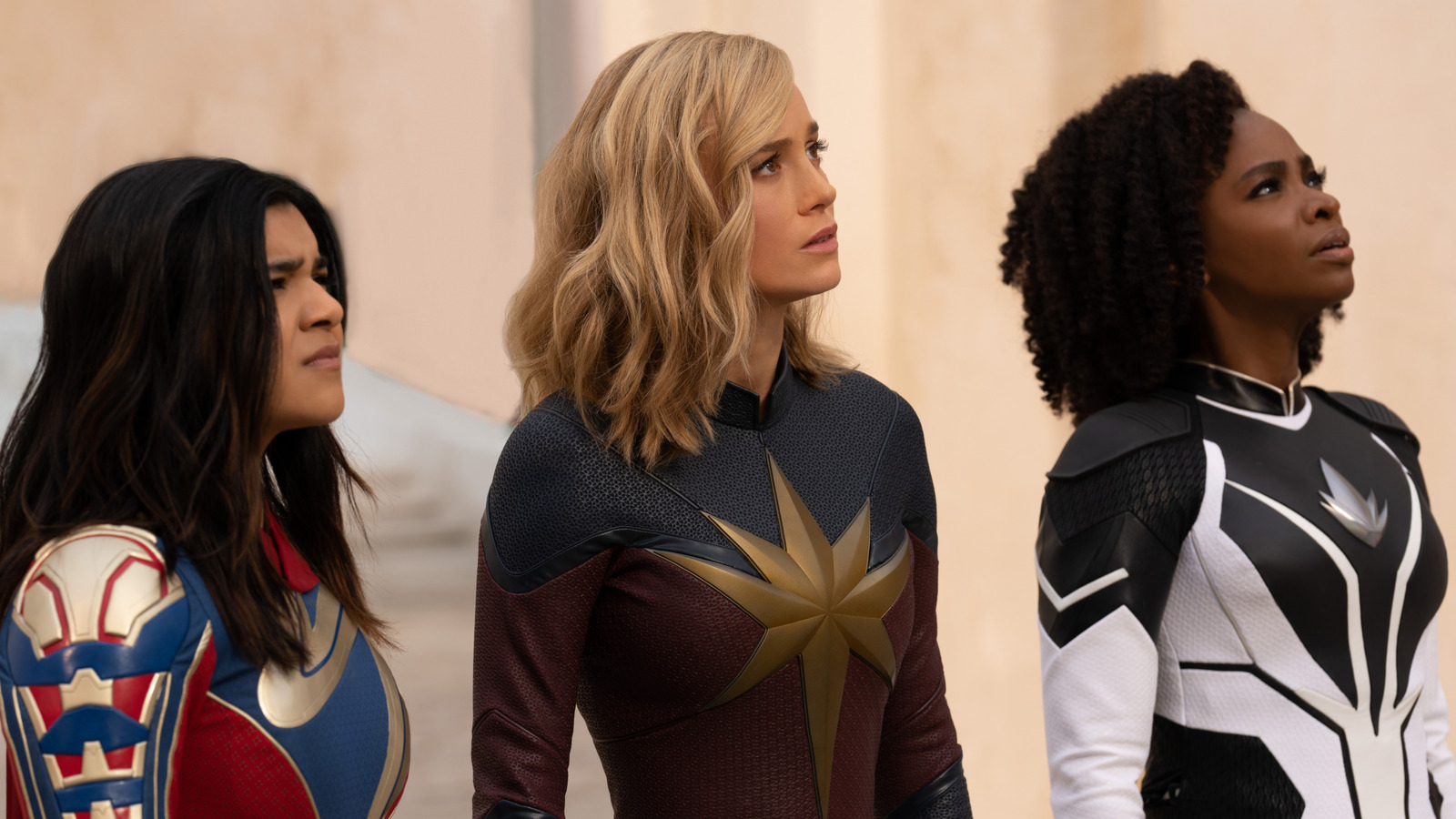
“The Marvels” might go down as one of the Marvel Cinematic Universe’s biggest disappointments. On paper, it had everything in its favor, as it was set to be a mega team-up movie featuring Brie Larson’s Captain Marvel, Teyonah Parris’ Monica Rambeau, and Iman Vellani’s Ms. Marvel. The best part? Filmmaker Nia DaCosta, who had done a phenomenal job on 2021’s “Candyman,” was in the director’s chair.
Yet, “The Marvels” bombed at the box office, making only $206.1 million from a reported $374 million budget. While the reviews weren’t the worst, the general consensus is that this is a film that never reached its full potential. Instead, it’s just there as a mediocre movie.
It’s become common knowledge that there were four weeks of intense reshoots, and DaCosta departed “The Marvels” in the post-production process, with the reason given that she was committed to her next film, “Hedda,” and couldn’t stick around. Considering the investment that Marvel Studios made in this project, it does seem peculiar that it would just allow a director to depart before the movie was wrapped. Speaking at Storyhouse (via World of Reel), DaCosta admitted the final product isn’t the film she pitched or shot. “The way they make those films is very different to the way, ideally, I would make a film,” she added. “So you just have to lean into the process and hope for the best. The best didn’t happen this time but you kind of have to trust in the machine.”
Aquaman and the Lost Kingdom
James Wan’s “Aquaman and the Lost Kingdom” is the definition of collateral damage. The 2023 film got caught up in all the changes at corporate level involving the future of DC films. The sequel’s release date moved around as everyone tried to figure out what was actually happening in the grander scheme of the cinematic universe and the regime shake-ups.
However, that wasn’t the only problem, as Wan and Co. kept having to go back to the drawing board — between multiple test screenings, three rounds of reshoots, and the constantly shifting goalposts, this must have felt like the production that wouldn’t end. For example: Wan had to film scenes with Michael Keaton and Ben Affleck individually, as there wasn’t a firm decision on who would be the Batman moving forward. The capper? Wan was told to lower the reshoot budget when he had no control over these external influences, according to Variety. The joke writes itself.
If that wasn’t enough, Wan had to let Warner Bros. execs Michael De Luca and Pamela Abdy into the editing room to oversee what was going down, sources told The Hollywood Reporter. Then, once James Gunn and Peter Safran took up their roles as the heads of DC Studios, Safran also provided input and got involved. Imagine all those notes and endless revisions! Unsurprisingly, when “Aquaman and the Lost Kingdom” arrived in theaters, it was much ado about nothing, watered down to the point that it should have been called “Dehydratedman and the Lost Cause Kingdom.”
Suicide Squad
Was 2016’s “Suicide Squad” a failure? In terms of the numbers, no — it made $749.2 million from a $175 million budget. It wasn’t exactly revered by the audience and critics, though. As a matter of fact, the film isn’t looked back on fondly by people nowadays, being remembered as a movie that’s more noise than substance.
“Suicide Squad” was supposed to be completely different than what anyone saw, however, as writer-director David Ayer revealed years later. According to the filmmaker, the tone of the movie was meant to be akin to the first trailer that debuted at 2015 San Diego Comic-Con International. “This trailer nailed the tone and intention of the film I made,” Ayer posted on X. “Methodical. Layered. Complex, beautiful and sad. After the [‘Batman v Superman: Dawn of Justice’] reviews shellshocked the leadership at the time, and the success of ‘Deadpool’ — my soulful drama was beaten into a ‘comedy.’”
Ayer revealed how “Suicide Squad” would have led to events in Zack Snyder’s “Justice League” and Jared Leto’s Joker had a more important role in the movie, but these elements were all trimmed back by the powers that be. Per The Hollywood Reporter, multiple cuts of the film were worked on, resulting in a smorgasbord of wonky tones and clashing styles that feel like ideas gasping for air in a sea of confusion. Maybe the Ayer Cut holds a different and significantly better version of the movie that everyone can get behind.
Punisher: War Zone
For some, Ray Stevenson’s “Punisher: War Zone” is an underappreciated gem that shouldn’t be ignored by comic book movie fans. There’s a charm to this violent movie that made it stand out from its contemporaries when it was released in 2008. However, no one can argue it underperformed at the box office, securing just over $10 million from a $35 million budget. The reviews also weren’t great at the time, even if the movie gets looked back on through a different lens now.
Before “Punisher: War Zone” blasted its way into the world, there was noise that director Lexi Alexander had been quietly removed from the film because of clashes with the studio, Lionsgate. Alexander never denied that there had been tensions between her and Lionsgate, and she opened up about the experience on her blog. As Alexander explained, it was a precarious situation: Lionsgate was the studio, but Marvel Knights was still involved creatively from a production standpoint. Unfortunately, since Lionsgate signed the checks here, it had carte blanche to make the big calls.
“Marvel was an equal partner, but unfortunately when there were creative decision conflicts, Marvel would let Lionsgate be the tie breaker,” Alexander said (via The Playlist). “I always regretted that I made a Marvel movie this way, because 99% of their notes were much better than the studio’s and I was more in tune with them.”
The New Mutants
Studio interference doesn’t only extend to what the execs tell the filmmaker to do, but also in how a film is treated overall. Take Josh Boone’s “The New Mutants” as an example. Originally, the movie was planned for release in 2018, but it was shuffled around, especially after the Disney-Fox merger threw a spanner into the works. Caught in no man’s land, it became obvious that “The New Mutants” wasn’t going to form part of the MCU. Consequently, it was released in 2020 as an afterthought, leaving little to no impression on audiences and a box office stuck in the throes of COVID-19.
The uncertainty of the release date harmed the movie, as most fans who may have been excited about it had moved on by the time it eventually arrived in theaters. Furthermore, since it was a cul-de-sac in terms of storytelling, the studio didn’t open up the wallet for reshoots to iron out sections of the film. There had been a rumored plan to introduce Jon Hamm as Mister Sinister at the end of the movie. Another potential plan, as confirmed by Boone to Entertainment Weekly, would have seen Antonio Banderas cast as Emmanuel da Costa, Sunspot’s (Henry Zaga) father. All of these ideas were nixed when everyone realized this was a one-and-done deal.
You can’t help but feel that “The New Mutants” was done dirty, though. After all, Fox still pushed ahead with the releases of “Deadpool 2” and “Dark Phoenix” in 2018 and 2019, respectively, so why didn’t the same happen here?
The Flash
How much did Andy Muschietti’s “The Flash” suffer from studio interference? Only the cast and crew will know the answer. What’s obvious is that this film, much like “Aquaman and the Lost Kingdom,” found itself in the unenviable position of being effectively meaningless in the long run. It’s obvious from the multiverse plot that it had intentions of setting a new course for the DC Universe, featuring the likes of Sasha Calle’s Supergirl and Michael Keaton’s Batman. A few months before its release, though, the news became official that DC Studios would undergo a soft reboot under James Gunn and Peter Safran. Unsurprisingly, whatever intentions “The Flash” had were scrapped.
Muschietti had to deal with three different regimes while making “The Flash,” so imagine how much the film evolved from inception until the final cut. As The Hollywood Reporter noted, there were three radically different endings shot for “The Flash” over this time. The first saw Ezra Miller’s Barry Allen encounter Calle’s Supergirl and Keaton’s Batman return outside of the court to set up a sequel. The second ending saw Supergirl and Batman joined by Henry Cavill’s Superman and Gal Gadot’s Wonder Woman. The third and final ending saw Barry meet George Clooney’s Bruce Wayne.
Looper’s review of “The Flash” called it a “muddled multiverse,” and that’s an accurate assessment of the film. There were big plans for it to change the direction of the DC Universe, but it found itself as a casualty of boardroom politics.
The Incredible Hulk
Securing Edward Norton as Bruce Banner, aka the Hulk, was a major coup for the Marvel Cinematic Universe. According to what Norton told The New York Times Magazine, he pitched an outline of the Hulk’s arc that Marvel Studios was excited about. At the time, Marvel Studios was involved in the production of the film, while Universal Pictures held the distribution rights. “It’s literally the Promethean myth,” Norton said. “I laid out a two-film thing: The origin and then the idea of Hulk as the conscious dreamer, the guy who can handle the trip. And [Marvel was] like, ‘That’s what we want!’”
Part of Norton’s deal gave him the ability to rewrite the script and have a say in the film. However, sources told Deadline the actor and Marvel butted heads over the cut of the film, with Norton pushing for the longer, darker version he had pitched in the first place. According to The New York Times, it reached a point at which Norton threatened to refuse to participate in the promotion of “The Incredible Hulk” due to the level of creative disputes.
Ultimately, Marvel released the cut of the movie it wanted, which is widely regarded as a safe but unremarkable superhero film — certainly no reimagining of the legend of Prometheus that Norton had pitched. The experience, though, resulted in Edward Norton being fired from the MCU, with Mark Ruffalo replacing him as the Hulk.
Justice League
Warner Bros. Pictures
Zack Snyder’s “Justice League” was meant to be the granddaddy of team-up superhero movies in 2017 — DC’s answer to “The Avengers.” Instead, it turned into one of the most tumultuous productions of all time, which still has the fanbase arguing about how this all transpired.
It would take an entire novel to cover the behind-the-scenes escapes of this film, but let’s summarize it as best as possible: Warner Bros. wasn’t happy with the negative reception toward Snyder’s previous film “Batman v Superman: Dawn of Justice,” so it became heavily involved in “Justice League.” There were rumors of rewrites and constant studio interference that upset the apple cart, before a bombshell dropped a few months before the film’s release: Snyder left to deal with a family tragedy, while Joss Whedon took over “Justice League” to wrap up the production.
While the PR-friendly message was that Whedon was just completing what Snyder had started, as well as touching up a few areas with reshoots, the reality was something different. The theatrical cut reeked of shortcuts and extensive reshoots, and when fans saw “Zack Snyder’s Justice League” in 2021, it was clear that there were two different versions of the film made. Effectively, Warner Bros. had hired Whedon to reshoot an entire movie to fit its vision of what “Justice League” should be. Needless to say, it didn’t land well, all but ending Snyder’s original plans for DC’s shared universe at the time.