
Share this @internewscast.com
Barack Obama recently issued a strong rebuke of the declining standards in American politics following a controversial video shared by President Donald Trump. The video, which depicted Obama and his wife Michelle as apes, has sparked widespread outrage.
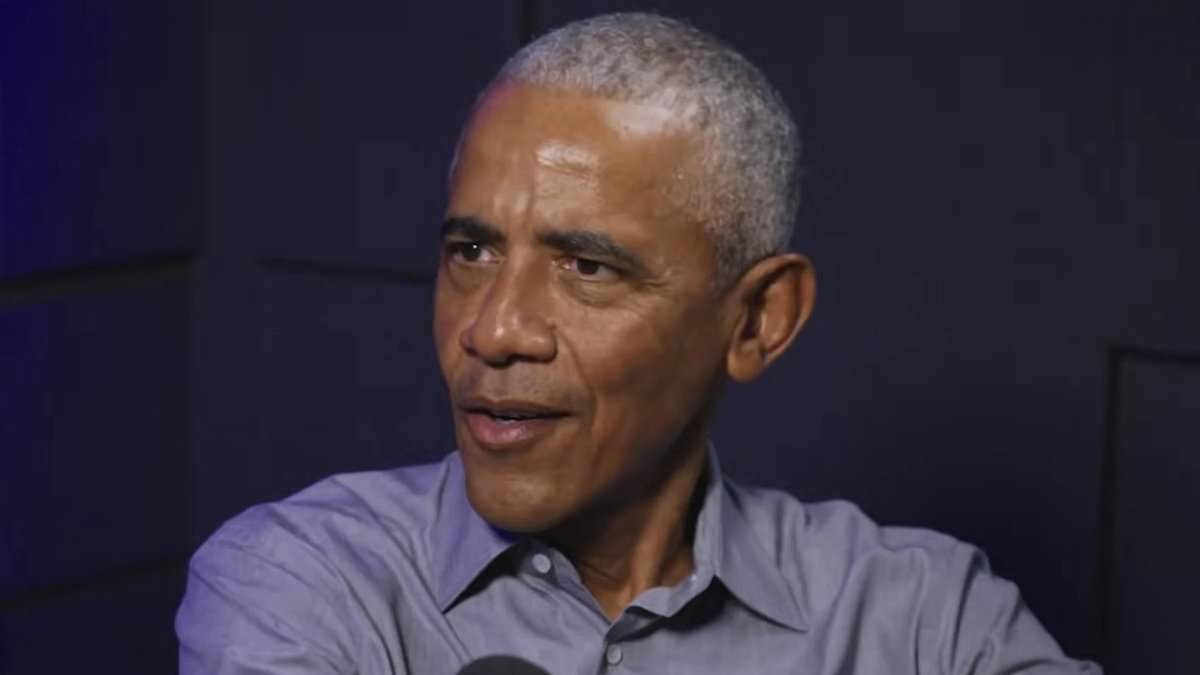
The former president expressed deep concern over the current state of political discourse, describing it as a degrading “clown show” that he believes most Americans find alarming and offensive.
Obama’s comments came in response to Trump’s decision to repost a meme video on Truth Social. This video controversially included a segment where the Obamas’ faces were superimposed onto ape bodies, a depiction laden with racist implications that has drawn criticism from both sides of the political aisle.
The imagery prompted bipartisan condemnation, compelling the White House to engage in damage control efforts to address the backlash.
Asked directly about the episode during an interview with Brian Tyler Cohen, Obama did not mention Trump by name in his response, but delivered a sweeping rebuke of the tone and tactics that now dominate modern politics.
Obama emphasized, “It’s important to recognize that the majority of Americans find this behavior deeply troubling.” He added that while such antics may garner attention, they distract from the values of “decency, courtesy, and kindness” that many citizens still uphold, contrasting sharply with the sensationalism often seen in social media and television.
‘It is true that it gets attention. It’s true that it’s a distraction… you meet people… they still believe in decency, courtesy, kindness, and there’s this sort of clown show that’s happening in social media and on television.’
His intervention marked his most direct public comments since Trump shared the incendiary video, which some critics described as one of the most racially offensive social media posts shared by the president.

Barack Obama warned that political discourse has devolved into a ‘clown show’ after Donald Trump shared a video depicting the Obamas as apes

Trump said he ‘didn’t watch the whole video’ before reposting it online and has refused to apologize
The pro-Trump meme video centered on 2020 election fraud conspiracy claims – allegations that have been repeatedly debunked and litigated.
But the clip ended with an AI-style segment that flashed the Obamas’ faces superimposed on ape bodies, set to The Lion Sleeps Tonight.
The White House initially tried to wave the uproar away.
Press Secretary Karoline Leavitt dismissed the outrage as performative.
‘This is from an internet meme video depicting President Trump as the King of the Jungle and Democrats as characters from the Lion King. Please stop the fake outrage and report on something today that actually matters to the American public.’
A White House official later gave a more serious explanation stating, ‘A White House staffer erroneously made the post. It has been taken down.’
Trump’s post was later deleted.
But the condemnation, including from Republicans, was already on the record.

The President received widespread backlash over accusations of racism after he posted a video depicting Barack and Michelle Obama as apes

President Barack Obama and first lady Michelle Obama are seen walking across the South Lawn in July 2016
Senator Tim Scott of South Carolina called it ‘the most racist thing I’ve seen out of this White House,’ adding that the president should remove it.
Senator Roger Wicker of Mississippi wrote: ‘This is totally unacceptable. The president should take it down and apologize.’
Senator Pete Ricketts of Nebraska argued that ‘a reasonable person sees the racist context,’ and said the White House should remove it and apologize.
California Governor Gavin Newsom’s press office blasted the post as well: ‘Disgusting behavior by the President. Every single Republican must denounce this. Now.’
A White House insider previously told the Daily Mail that the clip was posted by mistake and was accidentally included in a screen recording of a different video about election fraud.

White House press secretary Karoline Leavitt initially doubled down on the President’s post

Senator Tim Scott called the video ‘the most racist thing I’ve seen out of this White House’
‘It’s an obvious screen recording and the boomer who posted it on X didn’t trim off the excess when the next reel started to auto play,’ the Trump official shared.
‘The aide didn’t notice that one second portion at the end of the video and it was never seen by the president.’
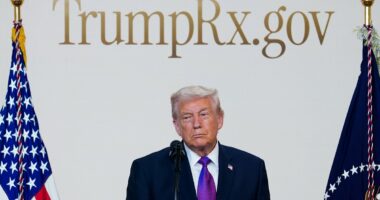
Trump told reporters that he didn’t watch the whole video before it was shared online and maintained that he didn’t do anything wrong.
‘What I saw in the beginning was really strong. It was about fraudulent elections. Anytime I see that stuff and it’s credible, you put it up. I didn’t do it. This was done by someone else. It was a re-truth but that was a very strong truth,’ he said.