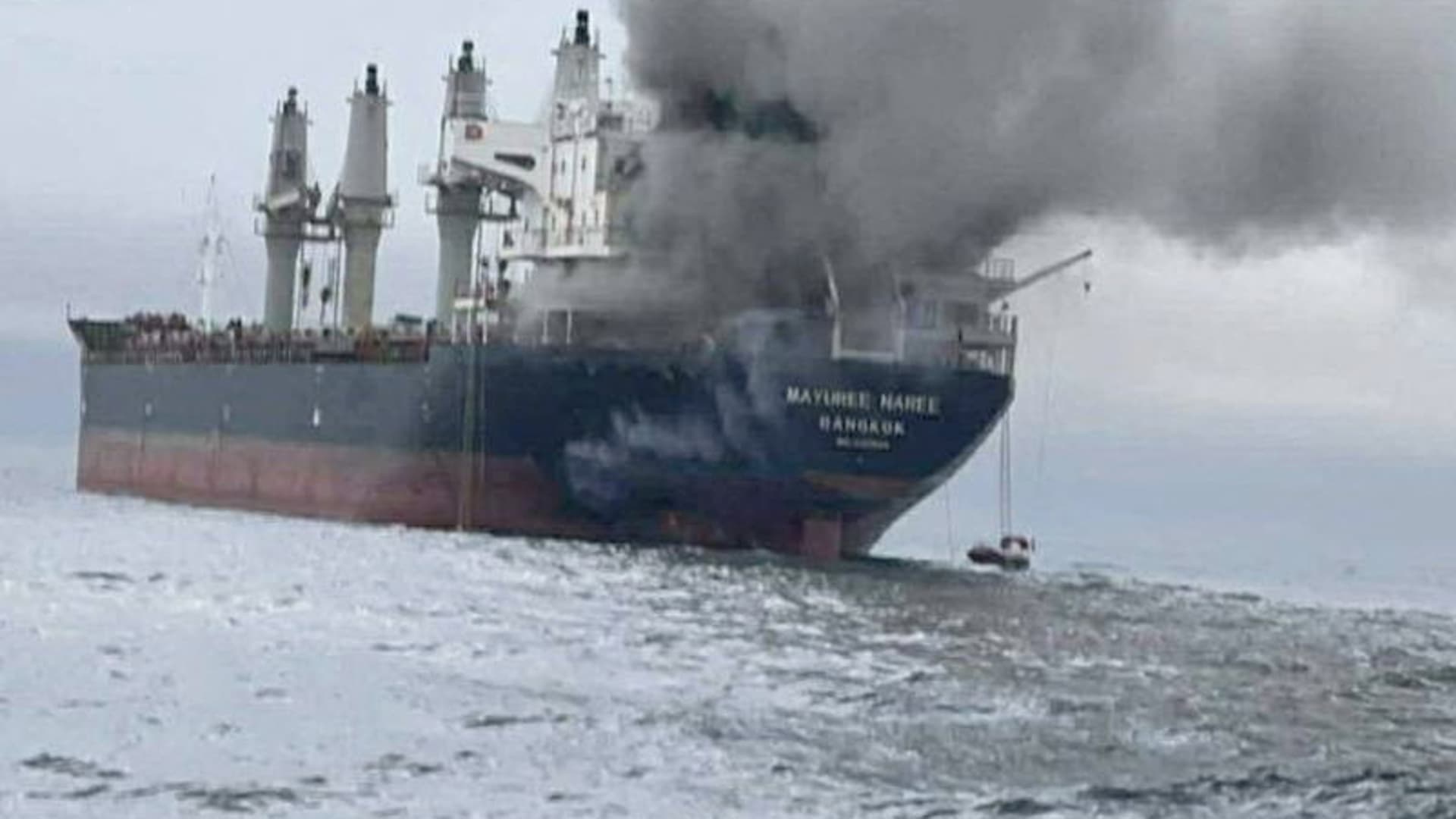

A dramatic scene unfolded in the Strait of Hormuz on March 11, 2026, as the Thailand-flagged cargo ship, Mayuree Naree, was shrouded in thick black smoke. This incident was part of a troubling series of attacks targeting vessels off the coast of Iran, as confirmed by the United Kingdom Maritime Trade Operations (UKMTO) center on Wednesday.
According to the UKMTO, three ships in the region were struck by projectiles in separate incidents, intensifying concerns over maritime security in this strategic area. One of the ships, impacted 11 nautical miles north of Oman, suffered a fire that compelled the crew to abandon the vessel. The UKMTO withheld the names of the affected ships but emphasized the gravity of the situation.
On the same day, two additional incidents were reported. One vessel was hit about 50 nautical miles northwest of Dubai, United Arab Emirates, while another ship sustained damage near the UAE coastline. These attacks illustrate a surge in hostility in the crucial waterway, through which a significant portion of the world’s oil supply is transported.
In light of these events, the UKMTO has issued a warning to ships traversing the area, advising heightened vigilance and the prompt reporting of any suspicious activities. Authorities are actively investigating these incidents to unravel the circumstances surrounding this series of maritime attacks.
Two other incidents were also reported on Wednesday morning, with one vessel struck by a projectile about 50 nautical miles northwest of Dubai, United Arab Emirates, and another sustaining damage off the coast of the UAE.
The UKMTO urged vessels in the area to transit with caution and report any suspicious activity while authorities continue to investigate.
Thailand’s navy said a Thailand-flagged container ship with 23 people onboard had been attacked while transiting the Strait of Hormuz, according to Reuters. Photos showed black smoke billowing from the Mayuree Naree vessel.
Iran’s Revolutionary Guards later said they had fired on the vessel in the waterway, Reuters reported, citing the semiofficial Tasnim news agency.
Infographic with a map of the Gulf and the Strait of Hormuz showing attacks on commercial vessels between February 28 and March 11 at 1200 GMT
AFP | Getty Images
Shipping traffic through the strategically vital Strait of Hormuz has ground to a near standstill since the U.S. and Israel launched airstrikes on Iran on Feb. 28. Iran has retaliated by targeting ships trying to pass through the Strait, with several incidents reported in recent days.
The waterway is a narrow maritime corridor that connects the Persian Gulf and the Gulf of Oman. Roughly 20% of global oil and gas typically passes through it.
U.S. forces sank several Iranian ships on Tuesday, including 16 minelayers, near the Strait of Hormuz, according to U.S. Central Command.
The update followed an earlier announcement from U.S. President Donald Trump that said if Iran had put any mines in the waterway, “we want them removed, IMMEDIATELY!”
The UKMTO said it had received 17 reports of incidents affecting vessels operating in and around the Persian Gulf, Strait of Hormuz and Gulf of Oman between Feb. 28, when the war began, and March 11. These include 13 attack reports and four reports of suspicious activity.
“Iran’s rapid and extensive retaliation against shipping and regional energy, port and economic infrastructure has severed a vital artery in global supply chains, as the flow of oil, refined products, LNG and chemicals grinds to a near halt,” Torbjorn Soltvedt, principal Middle East analyst at risk intelligence company Verisk Maplecroft, said Wednesday in a note.
“Additional attacks against ships in and around the Strait of Hormuz overnight underscore that Iran still presents a very real threat to shipping,” he added.