
Share this @internewscast.com
Coles Whalen, once an emerging talent in the music industry, found herself the target of persistent, unwanted attention from an unfamiliar man who bombarded her with messages.
JACKSONVILLE BEACH, Fla. — Now, two years following the U.S. Supreme Court’s decision to overturn her stalker’s conviction, a woman from Jacksonville Beach is stepping forward to share her story.
Originally from Colorado, Whalen moved to the First Coast, driven by the need to escape her long-term stalker. Although he was initially found guilty of stalking, the Supreme Court later determined that his First Amendment rights had been infringed upon, ruling that the messages he sent constituted protected speech.
“Every time I performed, a part of me worried, ‘Will tonight be the night he steps out of the shadows and into the crowd?'” Whalen expressed, reflecting on her fears during those times.
Back in the early 2000s, Whalen was living her dream, captivating audiences nationwide while sharing the stage with some of the music industry’s most iconic figures.
“Touring with Pat Benatar was an incredible experience. Opening for Joan Jett was unforgettable, as it was the largest crowd I had ever played for. I also had the chance to perform with various country artists. It was truly an exciting period in my career,” Whalen reminisced.
Whalen was in the process of growing her career and turned to social media to connect with more fans.
“It was 2010. Facebook was the social platform and I was posting everything from life on the road to backstage all the way up until the show. The industry advice at that time was to let people in, and it worked,” Whalen said.
One day in 2010, she began receiving Facebook messages from a man she did not know.
“He was claiming to be a promoter in Denver, Colorado, which is where I lived. He was putting on a disaster relief benefit show and he wanted me to headline. And before I could respond, more messages came in. It’s like ‘call me right away’ or ‘can I call you?’… and the messages seemed pushy and off. They were disturbing, but they didn’t seem scary at that time, so I just ignored it and I hoped it would go away,” Whalen said.
First Coast News is not naming the man because his conviction was overturned and he is no longer charged with the crime.
The man did go away for a few years, but Whalen said, out of nowhere, he started messaging her again.
“He’s talking about things from two or three years ago, and at that point I realized he never went anywhere. He’s been watching me this whole time. He was talking about places I’ve been, people I’ve been with, how I looked on a particular day,” Whalen explained.
Between 2014 and 2016, Whalen said the man sent her thousands of messages. She never responded and would even block him, but he would contact her through new profiles.
“Many of the messages near the end were implying that he was following me, that he was seeing me in person without me knowing it, and that he wanted to see me dead … I was becoming increasingly terrified that he would show up to hurt me or worse,” Whalen said.
Whalen decided to get law enforcement involved. They arrested the man in 2016 and he went to trial the following year.
“Spending a day and a half on the witness stand having to talk about the intimate details of my life in front of this man was probably one of the most traumatic parts of this whole experience for me. He did not testify. He didn’t have to take the stand at all,” Whalen said.
A jury ultimately found the man guilty of stalking, and he was sentenced to four and a half years in prison. Whalen struggled to get back to her normal life, though.
“I tried to keep performing, but I found that I was having a really hard time being in places where I couldn’t see the faces that were around me on a stage with bright lights in my face. I was having a lot of panic attacks and very intense anxiety, and it was becoming really unenjoyable for me,” Whalen said.
Whalen made the difficult decision to step away from performing and moved across the country for a change of scenery. It was in Jacksonville Beach where she found refuge, but her wounds would be reopened when she learned her case was going to be heard by the U.S. Supreme Court.
“Total shock, just total disbelief. I could not believe, one, that there was any question that this conviction could stand. And two, that a chapter in my life that I had worked so hard to heal from was being reopened again on a national stage,” Whalen said.
In April 2023, Colorado’s Attorney General Phill Weiser argued Whalen’s case before the Justices.
“One of the challenges we had is to make clear what a dangerous crime stalking is. The court was thinking about this from the First Amendment perspective of the stalker, suggesting that stalkers need to be protected and need to ensure that their speech is not chilled,” Wiser explained.
What unfolded during the oral arguments was surprising to both Whalen and Weiser. The justices read some of the messages she received by her stalker aloud and laughed.
“It says staying in cyber life is going to kill you. I, I can’t promise I haven’t said that. Come on. Come out, come out for coffee. You have my number,” Chief Justice John Roberts said during oral arguments.
“I just could not believe that they were being so flippant about this issue that affects so many women and men across the United States,” Whalen said.
The U.S. Supreme Court overturned the conviction in Whalen’s case that June, ruling that the messages from the stalker were protected under the First Amendment.
“What it means in practice is law enforcement has a more challenging task at hand to build the record that a stalker is engaging in conduct, that we can prove they had a reckless state of mind, which means they’re put on notice that what they’re doing is wrong and they keep doing it,” Wiser said.
Whalen was devastated. Her stalker was now walking free.
“I was very sad because I knew that it wasn’t just about me. I knew that victims across the United States would see their convictions overturned as well as a result of this,” Whalen said.
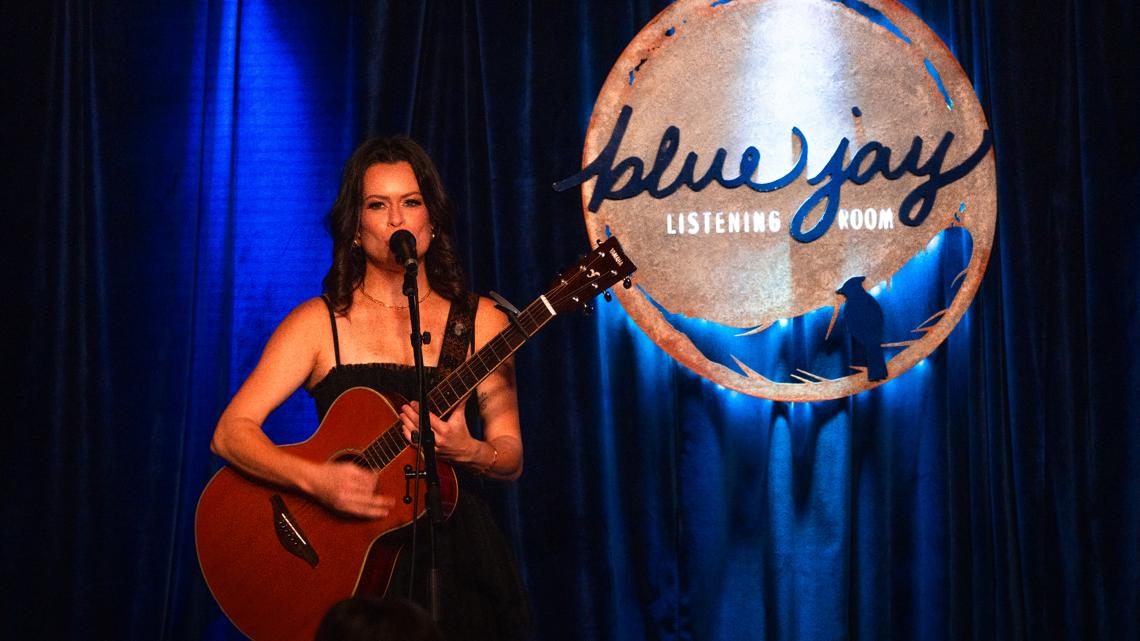
It has been two years since that Supreme Court ruling and Whalen is finding her voice again. She is turning her pain into lyrics and using it to help her get back on stage. She wrote a song about overcoming this time in her life, called ‘Stronger.’
“I’m happy to say that I really love it again. I’m writing some new music and I’m producing some new music, and when I step on that stage now, I feel even more powerful than I did before because I’ve come through this really terrifying event and I’ve been able to find myself on the other side and still find joy in sharing music with people,” Whalen explained.
Whalen now hopes her story will remind other victims of their own strength.
“I think if we all, friends and neighbors, knew more about stalking and knew when it was happening because people were talking more about it, lawmakers may be forced to pay attention. And we might get some laws that actually make it easier for victims to get legal protection and that hold our offenders accountable throughout the years,” Whalen said.
Whalen had a choice of whether she wanted to re-try her case in Colorado under the new Supreme Court standards. She recently decided she was not going to do that and focus on her advocacy work instead. She is currently working with lawmakers in Colorado on legislation that would allow victims to appear remotely in court so they do not have to come face-to-face with the person causing them harm.