
Share this @internewscast.com
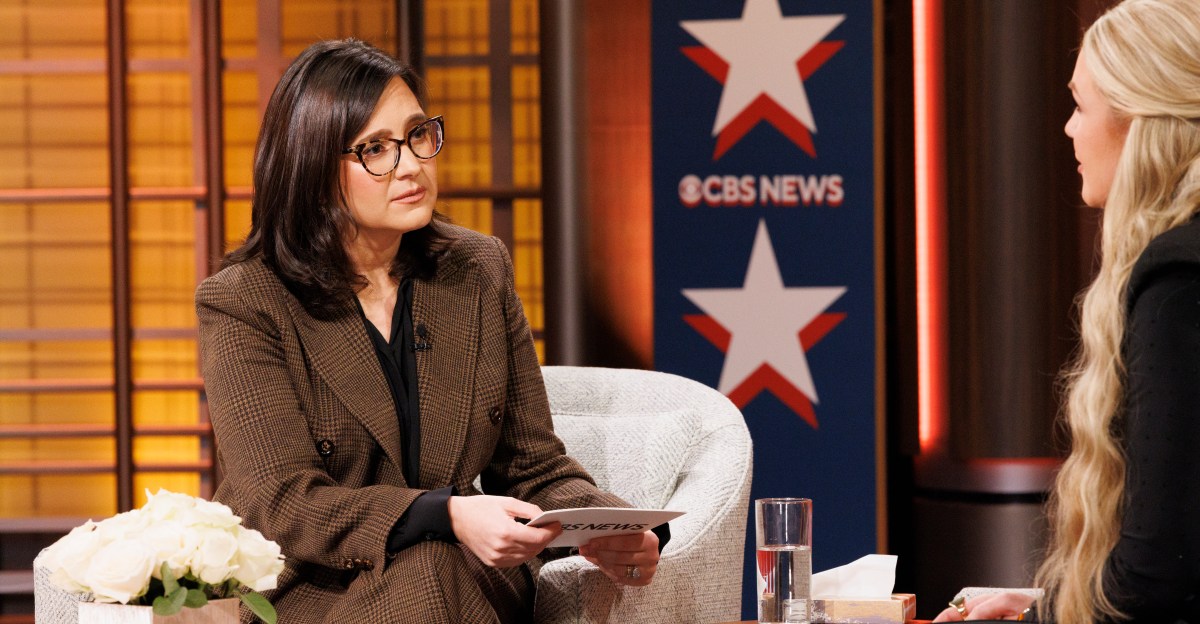
In a surprising move, Bari Weiss, the newly appointed editor-in-chief of CBS News, recently decided to censor a controversial segment from the well-known news program 60 Minutes. The segment focused on men deported to a prison in El Salvador. Despite its removal from the broadcast lineup, the segment has found its way onto the internet, causing quite a stir.
Initially, CBS began promoting the segment online, possibly unaware of the distribution challenges that would follow its last-minute removal. However, the segment aired on Canada’s Global TV, slipping through the cracks of CBS’s effort to retract it. Savvy viewers used VPNs to catch the broadcast, while others recorded it, sharing it via platforms like iCloud.
Upon review by The Verge, the segment spans approximately 14 minutes, vividly portraying the harsh realities faced by the deported men. The footage shows them shackled and bent over, paraded before cameras, and eventually transported to the notorious CECOT prison. One man who spoke to CBS in Colombia recounted being labeled “the living dead” at CECOT. After seeking asylum in the U.S., he was detained by customs for six months before deportation. He shared harrowing tales of abuse, mentioning beatings that left him bleeding and a violent encounter that resulted in a broken tooth. He also accused guards of sexual assault. Another former detainee described experiences akin to torture, such as being forced to kneel for 24 hours and enduring beatings in a dark room if they dared to move from stress positions.
The removal of the segment has sparked debate, with critics arguing that the decision was politically motivated rather than editorially justified. The men featured in the segment were deported to El Salvador, despite not being natives of the country. According to The New York Times, at least 288 individuals, mainly Venezuelans and Salvadorans, have been sent to CECOT as part of an arrangement made under the Trump administration, with El Salvador’s President Nayib Bukele agreeing to house these prisoners for a fee. Many were still awaiting their asylum cases, highlighting a serious human rights concern demanding further investigation.
Moreover, the Trump administration has been pursuing similar agreements with other nations, potentially valued at “millions of dollars,” the segment revealed. There are plans to deport individuals to countries like South Sudan and Uganda, known for their troubling histories of prisoner mistreatment, raising significant ethical and human rights questions.
The Trump administration has more deals like the one with CECOT in the pipeline, worth “millions of dollars,” according to the segment. The US may begin deporting people to places they have no relationship with, such as South Sudan and Uganda, which also have “well-documented histories of torturing prisoners.”
The story, in addition to breaking news about the deals with other countries, appears to be thoroughly reported, and both the US Department of Homeland Security and El Salvador were given opportunities to comment.
“Our story was screened five times and cleared by both CBS attorneys and Standards and Practices,” wrote Sharyn Alfonsi, the reporter whose segment it was, in an email to colleagues yesterday, according to The New York Times. “It is factually correct. In my view, pulling it now, after every rigorous internal check has been met, is not an editorial decision, it is a political one.”
Because the order to kill the story came so late, CBS didn’t successfully replace the original program everywhere that had been set to deliver it
The story had gotten through all the usual approvals, including Weiss, who suddenly changed her mind. She demanded additional reporting, “including an on-camera interview with a member of the Trump administration,” according to The Washington Post. The story was killed on Saturday night, and the promotional material was removed on Sunday. Weiss sent an edit note saying, among other things, that the segment did not adequately explain the administration’s rationale for sending people to El Salvador.
The notes do not seem unreasonable — except in their timing, which is belated and bizarre, practically calculated to cause an uproar. And, it seems, because the order to kill the story came so late, not every distributor replaced the program.
Weiss was placed in charge of CBS News by David Ellison as part of a fairly obvious attempt to placate the Trump administration and allow his company, Skydance, to acquire CBS parent company, Paramount. President Donald Trump has repeatedly whined about CBS — and 60 Minutes’ work in particular. Just before the takeover by Skydance, Paramount paid $16 million to settle a lawsuit Trump filed over the editing applied to an interview with Kamala Harris.
Ellison’s Skydance is now attempting to buy Warner Bros. in a hostile bid.
Weiss claimed on an editorial call on Monday that she “held that story because it wasn’t ready,” according to The Washington Post. The team had given the White House a chance to comment, and the Trump administration declined, according to the Post. “If the standard for airing a story becomes ‘the government must agree to be interviewed,’ then the government effectively gains control over the 60 Minutes broadcast. We go from an investigative powerhouse to a stenographer for the state,” Alfonsi wrote in her email.
Anyway, best of luck to Weiss in playing DMCA whack-a-mole with the video of the story. The segment lives as online samizdat now. Thanks to Weiss’ censorship, it may very well wind up being the most-talked-about CBS News story this year.