
Share this @internewscast.com
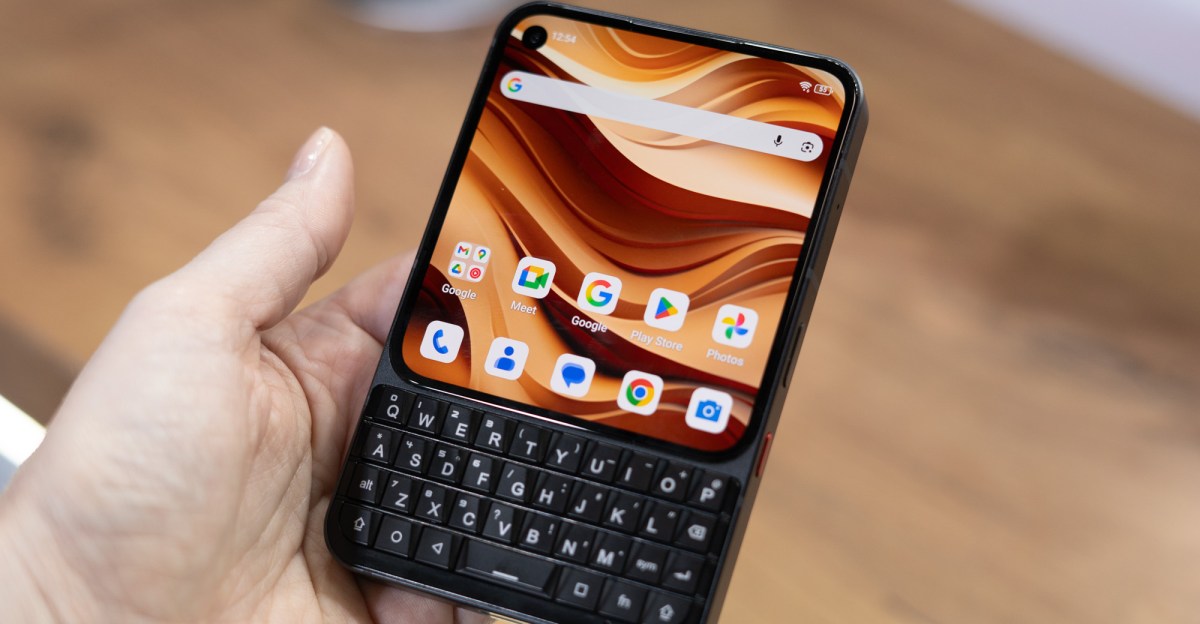
At this year’s Mobile World Congress, tucked away from the main hustle and bustle, Unihertz managed to capture attention with its Titan Elite 2. The booth became a hotspot for attendees, drawn in by the device’s vibrant cosmic orange hue and its nostalgic QWERTY keyboard, a nod to the beloved BlackBerry of yesteryears. The phone’s sleek and lightweight design made it a joy to hold, a far cry from the hefty devices many of us are accustomed to. I found myself reluctant to set it down, a sentiment shared by the steady stream of curious visitors.
MWC is always a treasure trove of quirky and innovative phone concepts, diverging from the traditional glass and metal slabs. This year was no exception, showcasing phones with unique features like an electric igniter—though it failed to function during my visits—and a camera mounted on a gimbal reminiscent of the DJI Osmo. There were even phones designed for pets. While most of these novelties might not become mainstream hits, they certainly spark the imagination.
Amidst these eccentric devices, an intriguing trend emerged: secondary phones that complement rather than replace your primary device. This concept isn’t entirely new but seems to be gaining traction, offering a simplified experience to escape the relentless notifications of our main smartphones.
These secondary phones, including Unihertz’s offerings, are fully capable of being your primary device. The Titan Elite 2, for instance, operates on Android 16 with promises of updates up to Android 20. While its 4-inch square screen might not deliver the best vertical video experience, it’s perfectly adequate for everyday tasks. In fact, its appeal might lie in its ability to keep you away from endless TikTok scrolling, turning a potential shortcoming into a strength.
The philosophy behind secondary phones is straightforward: create a buffer between you and your primary phone. For those looking to reduce screen time on weekends, a secondary phone can handle calls and texts while keeping social media at bay. Ironically, a less-than-ideal user experience for apps like TikTok might be exactly what’s needed to curb excessive use.

Fans of QWERTY devices might find the Titan Elite 2 reminiscent of the Clicks Communicator, introduced earlier this year at CES. Both devices focus on enhancing the typing experience, albeit with different design philosophies. The Titan Elite 2 features squared keys nestled closely together, while the Clicks Communicator opts for oval keys spaced apart. With a full suite of Android functionalities, including a headphone jack and microSD slot, these devices are well-equipped to serve as your daily driver, focused on communication rather than distraction.

The Light Phone III is a very different device from the Communicator and the Titan 2 Elite. Texting, calling, and a few connected functions like calendar and navigation are basically all it can do. At the show, I spoke to Light’s cofounder and CEO, Kaiwei Tang, who’s been focused on creating minimalist phones for the past decade. He says that 50 percent of Light’s customer base uses the phone as a primary device, while the other half treats it as a complement to their full-featured smartphone. Tang sees the demand growing, too. “The last 10 years we grew every year, even though we have zero marketing budget,” he says.
Is the answer to “I want a break from my phone” really… another phone?
But there’s a massive elephant in this room: Is the answer to “I want a break from my phone” really… another phone? Is there a day when that thing is a pair of glasses, or a smartwatch, or some earbuds you control with voice? Tang sees the appeal of a screen-free device, but doesn’t think it’s realistic in the short term. “I love voice UI,” he says. “I think that could be the future, but we’re just not there yet.” We still need discreet methods of input, he argues. A little screen you carry around seems to be the method we all landed on.
Another approach is to make the minimalist phone part of your main phone. This has obvious drawbacks; if it’s a focus mode or an app, there’s almost certainly an easy way for you to turn it off quickly and slide back into social media-scrolling habits. Fairphone’s latest device has an interesting take on the idea: a physical switch on the side of the phone that triggers a customizable “moment,” with access only to the apps you’ve specified — and only certain people who can interrupt you. The physical slider adds just a little more friction than turning a focus mode on and off in quick settings.

This growing interest in minimal phones comes at an unfortunate time, though. You’ll have heard about the RAM crisis, and just how bad it is for phone makers. It’s all but inevitable that phone prices will rise, and when one phone costs more, you’d probably think long and hard about buying two. The situation is no doubt making it harder on the smaller brands trying to break into the market with something new, and it doesn’t appear to be improving anytime soon.
Still, folks at the companies I talked to this week didn’t seem deterred. For Tang, it’s his customers that keep him going. “I’m hopeful because my customers are mostly young,” he says. “My generation — we’re ruined,” he adds with a laugh. “The next generation, I feel like they have better sense managing, or making decisions that change what tools they use.” If he can muster up some optimism given the challenges facing his business, then I think it’s fair to keep hoping for more good things to come — whatever weird shape they might take.