
Share this @internewscast.com
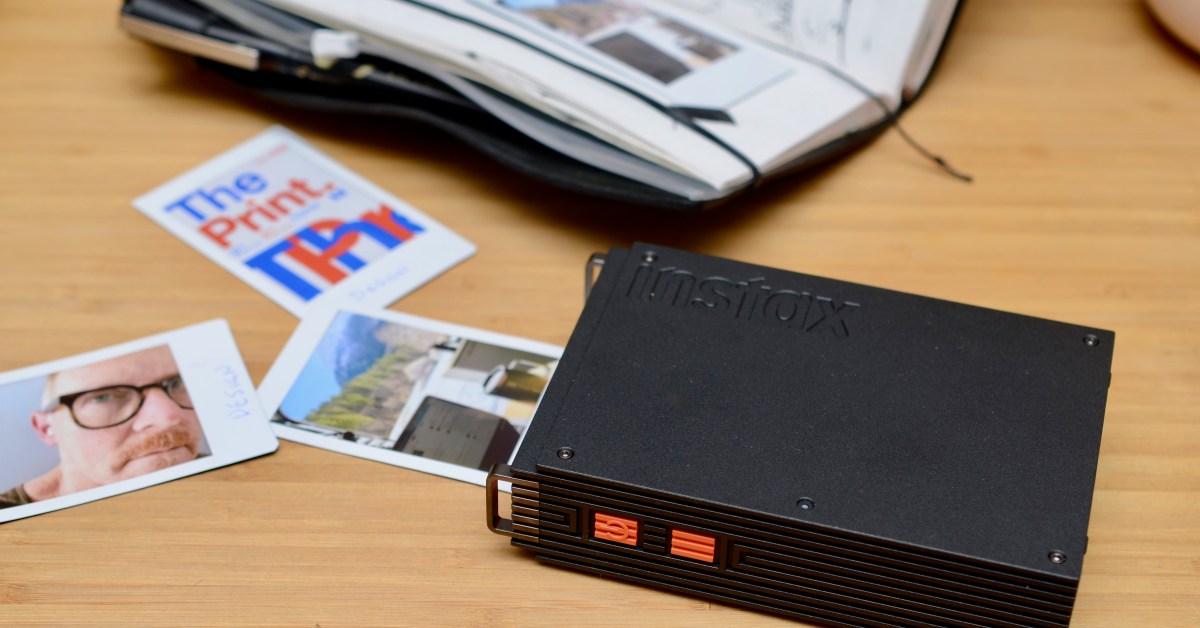
Among my essential travel journal accessories is the FujiFilm Instax Mini Link 3 printer. Priced at $100, it allows me to attach printed snapshots alongside my handwritten notes, capturing moments with a personal touch. However, the prints can appear a bit muted, a shortcoming the newly released Instax Mini Link+ at $169.95 aims to address.
The highlight of the Mini Link+ is its new Design Print mode, designed to enhance text and intricate illustrations for better clarity. Despite this feature being a major selling point, the improvements were subtle in my experience. More notably, the Mini Link+ boasts enhanced image processing that significantly boosts contrast, color vibrancy, and sharpness, enriching the depth and detail of a wide array of photos, which I believe will appeal to most users.
In my trials, the Mini Link+ does present an advancement over its predecessor. However, it is important to manage expectations; no instant film printer, including this one, will transform images dramatically, especially given the small print size of 62 x 46mm (2.44 x 1.81 inches).


The Mini Link+ is priced at approximately $170.
The Good
- Best Instax Mini printer yet
- Improved colors, sharpness, and contrast on most photos
- Fun for creatives
The Bad
- Little improvement on text heavy illustrations
- Expensive
- App is overwrought
FujiFilm’s printers utilize Instax Mini instant film, with a typical cost of around $30 for a pack of 20 sheets, averaging about $1.50 per photo. To print, users must download the “Instax Mini Link” app, compatible with both iOS and Android devices.
The app is packed with features, offering virtual reality tools to visualize photos in real space and using the printer as a remote shutter. It also assists in organizing images, allowing you to see your prints in frames or as part of a collage. Additional embellishments such as text, stickers, and filters are available, and you can even integrate your Pinterest account. While these features are entertaining, I personally prefer the straightforward approach of printing photos directly from my iPhone library.


To do that, I have to first import the image into the Instax Mini Link app, hit print, choose either the Simple or Design mode, then wait 20 seconds for the printout. Simple print promises “smooth color tones for everyday images” and produces softer images that, in general, are still an improvement over most anything the Mini Link 3 can print. Design mode is exclusive to the Mini Link+ and the reason you might want it.
I tested the different modes with a variety of images and generally found Design prints made on the Mini Link+ were superior for faces, landscapes, high contrast images, and macro shots of nature. Everything, really, other than text-heavy illustrations, where I saw no obvious improvement.

For example, look at my stupid face. Photos with intense lighting were susceptible to blowout when printed on the older Mini Link 3. The Simple and Design prints from the Mini Link+ handled the lighting better, with improved contrast, more detail in the eye, and more accurate colors and skin texture.

In the example above, everything in the Mini Link 3 print is super soft and blends together in a muddled mess. The Mini Link+ again offers improved contrast, with visible textures on the rock faces, tree branches, and improved colors throughout. The wooden slats on the barn, lines of individual trees, and wheel detail are more pronounced on the Design print, with less saturation on that big pine to the left.

Here, the Mini Link 3 struggles to depict the snow as anything but a white smear, while you can make out individual snowflakes and depth on the Mini Link+ Design print.

In this example, the Mini Link 3 really flattens the sky and removes the texture from the distant mountain. The greens and blues are more brilliant with the Simple and Design prints, while the separation between bits of gravel and blades of grass is more apparent in Design mode.


In this Spotify screenshot, Design mode sharpens the lettering and artificially enhances the white text with a black outline, most visible on the letters “a” and “s.” Simple mode doesn’t do this. The outlining does make the lettering pop.


I find surprisingly little difference between these illustrations printed by the Mini Link 3 and the Mini Link+, even in Design mode. Strange because this is where FujiFilm’s new printer is supposed to excel. Nevertheless, they all look good enough for hobbyists, and anyone looking to spice up a journal or decorate a room.
1/7
After printing 15 photos over the last few days, the battery on the Instax Mini Link+ is still at 80 percent. The battery charges over USB-C, and, if you’re in Europe, the FujiFilm NP-70S battery can be user-replaced when it no longer holds a charge.
From my testing, I think it’s clear that if you want the best photo quality available in an Instax printer, then the $169.95 Mini Link+ is the one to get. It also makes the case for being a worthy upgrade for some Mini Link 3 owners, so long as you’re not expecting improved prints of text-heavy illustrations.
But its price puts the Mini Link+ into direct competition with dye-sublimation printers like the Canon Selphy QX20 which yields prints that are sharp and accurate with better resistance to water and fading. Otherwise, the Mini Link 3 is still a great printer for the price, and the soft, moody images it prints is a vibe worth $100.
Photography by Thomas Ricker / The Verge