
Share this @internewscast.com
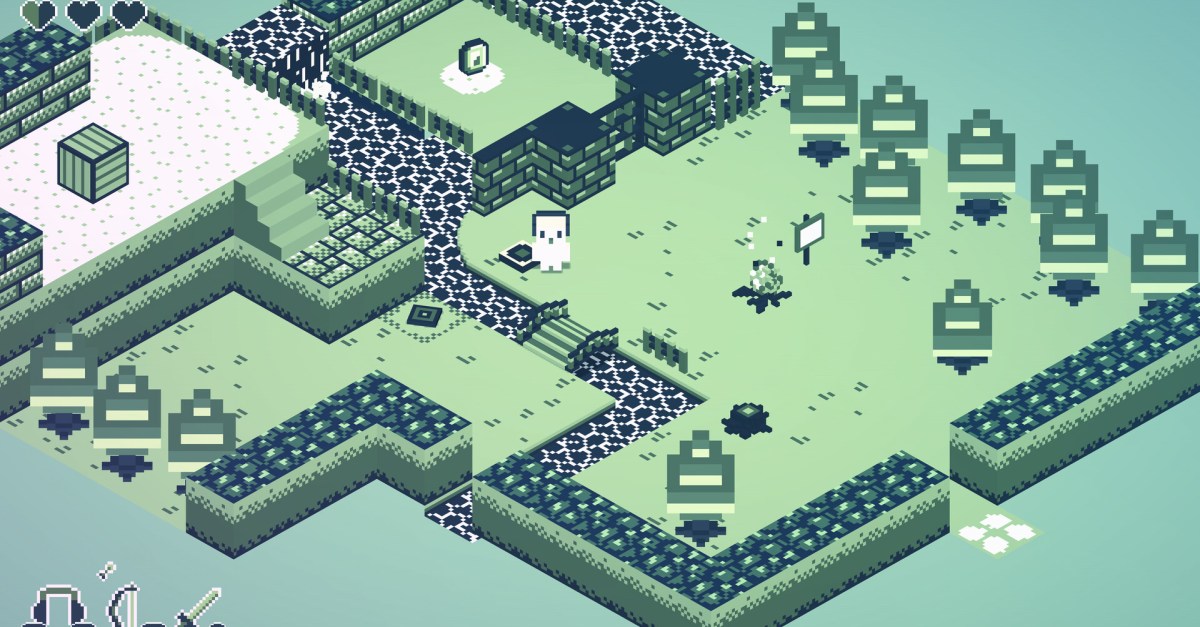
Cassette Boy draws inspiration from gaming classics, creating a unique blend of nostalgia and originality. This top-down adventure game channels the retro charm of Legend of Zelda and features a quaint home base reminiscent of early Pokémon titles, complete with a supportive mom character. Its blocky 3D visuals nod to Minecraft, and the campfire save points echo mechanics from FromSoftware games. A distinctive green tint evokes memories of the original Game Boy. Despite these clear influences, Cassette Boy stands out with its inventive puzzles that challenge players to think in new ways.
The core gameplay revolves around an intriguing concept inspired by quantum mechanics: objects cease to “exist” when they’re out of sight, freezing in their last visible state. For instance, a block pushed behind a wall no longer obstructs your path, and enemies disappearing behind a barrier become inactive and harmless. Players can rotate the camera to eight different angles, akin to points on a compass, to bring hidden elements back into view and interact with them anew.
Throughout Cassette Boy, perspective-shifting puzzles require creative solutions. Early in the game, players encounter a button that raises a platform across a river when pressed. Instead of moving a boulder onto the button, as one might in a typical Zelda game, players must use the camera to obscure the button with the boulder, effectively “freezing” it in its pressed state. This allows players to cross the river on the platform.
Beyond manipulating perspectives, players gain access to tools such as a bow and arrow for activating switches and combating enemies from afar, and cassette tapes that grant abilities like detecting bombable walls or shrinking in size. When all these elements come together, Cassette Boy offers a rewarding experience, encouraging players to explore each room and uncover hidden treasures. The game also features battles against massive, block-like bosses, with the goal of collecting moon fragments, the central quest item.
Despite its charm, Cassette Boy can sometimes be perplexing. The absence of maps means players must speak to the right character at the right moment to advance the narrative, with little guidance besides speech bubbles. After acquiring a moon fragment, returning to the main town often leaves players uncertain of their next steps, leading to repeated interactions with townsfolk. Some puzzles are particularly challenging, prompting many players to consult walkthroughs during the roughly eight-hour journey.
However, this complexity is likely intentional, echoing the game’s classic inspirations. Like vintage Zelda and Pokémon games, getting lost and eventually finding the right path is part of the experience. This struggle fosters familiarity with the game world, leaving lasting memories of navigation challenges overcome. Even the creators of Breath of the Wild view getting lost as a potentially enriching aspect of gameplay.
Cassette Boy evokes that old-school spirit. Even when it frustrated me, I usually didn’t mind the struggle, and it helped me learn my way around. Usually, I realized that finding the right way forward just required a new perspective.
Cassette Boy is now available on PC, PlayStation, Xbox, and Nintendo Switch.