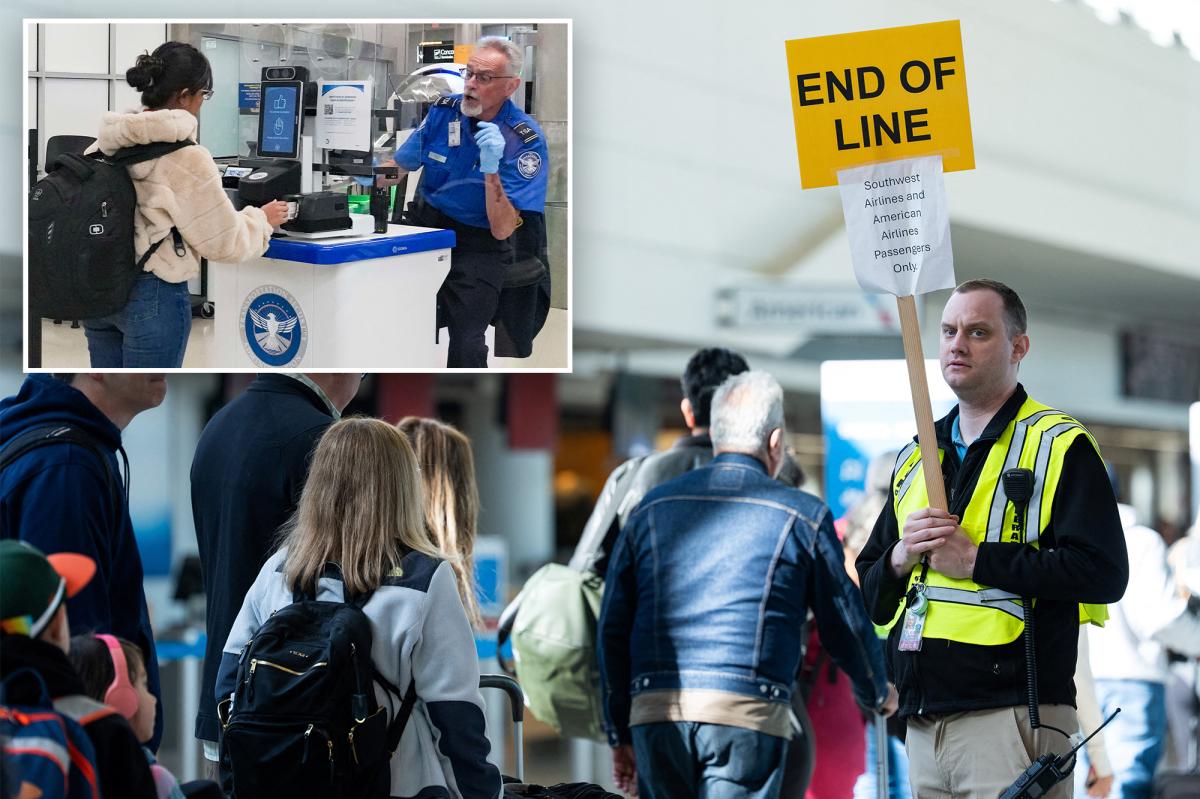


The White House has issued a stark warning to Congress, indicating that funds for the Department of Homeland Security (DHS) are on the brink of depletion. This situation raises the specter of potential disruptions at airports and heightened national security risks, as the House of Representatives delays legislation to resolve the longest-ever funding gap for the agency.
In a memo delivered to lawmakers late Tuesday, the Office of Management and Budget cautioned that the financial resources President Trump had redirected to sustain the salaries of Transportation Security Administration (TSA) personnel and other workers through executive measures will be exhausted by May.
The memo urged the House to expedite approval of the budget resolution, which senators had passed during an extended session last week. This resolution is crucial for securing full funding for the department.
“DHS will soon run out of critical operating funds, placing essential personnel and operations at risk,” the memo stated.
This pressure from the Trump administration could potentially aid House Speaker Mike Johnson. Johnson’s slim Republican majority has been hampered by internal party disagreements over various issues, including the DHS funding, resulting in legislative gridlock.
The House is scheduled to vote as early as Wednesday on the Senate’s budget resolution, which aims to initiate a multi-step process to eventually provide funding for the department. The administration has cautioned GOP lawmakers against making amendments that could delay the resolution’s passage.
âRestoring funding for the Department of Homeland Security (DHS) has never been more urgent, as demonstrated by recent events,â the memo said, a nod to the situation over the weekend when a man armed with guns and knives tried to storm the annual White House Correspondentsâ Dinner that Trump, the vice president and top Cabinet officials were attending.
Homeland Security has been operating without regular funds for more than two months after Democrats refused to fund Immigration and Customs Enforcement and Border Patrol without changes to those operations after the deaths of Americans protesting Trumpâs deportation agenda.
While immigration enforcement workers have largely been paid through the flush of new cash â some $170 billion â that Congress approved as part of Trumpâs tax cuts bill last year, others, including TSA, have had to rely on Trumpâs intervention through executive action to ensure their paychecks.
But with salaries topping $1.6 billion every two weeks, DHS Secretary Markwayne Mullin said recently, those funds are drying up.
House and Senate Republicans have embarked on a go-it-alone strategy, attempting to approve funds for Immigration and Customs Enforcement and Border Patrol without Democrats.
They want to provide $70 billion for those immigration operations for the remainder of Trumpâs term to ensure no further interruptions.
Itâs a cumbersome process, the same that was used last year to approve Trumpâs tax cuts bill, that will play out over several weeks.
The Senate launched the process last week, and is now waiting on the House to act. Once that budget resolution is approved, both the House and Senate are expected to draft the actual funding bill, a process that can take weeks.
In the meantime, Johnson is expected to quickly turn this week to legislation that would fund the other parts of Homeland Security, including TSA, the Coast Guard and other agencies.
That bipartisan bill has support from Democrats and already passed the Senate a month ago, when Republicans reluctantly agreed to carve out the immigration-related funds that Democrats had opposed.
But it has been stalled out in the House, as Republicans in that chamber disagreed with the Senateâs approach.