
Share this @internewscast.com
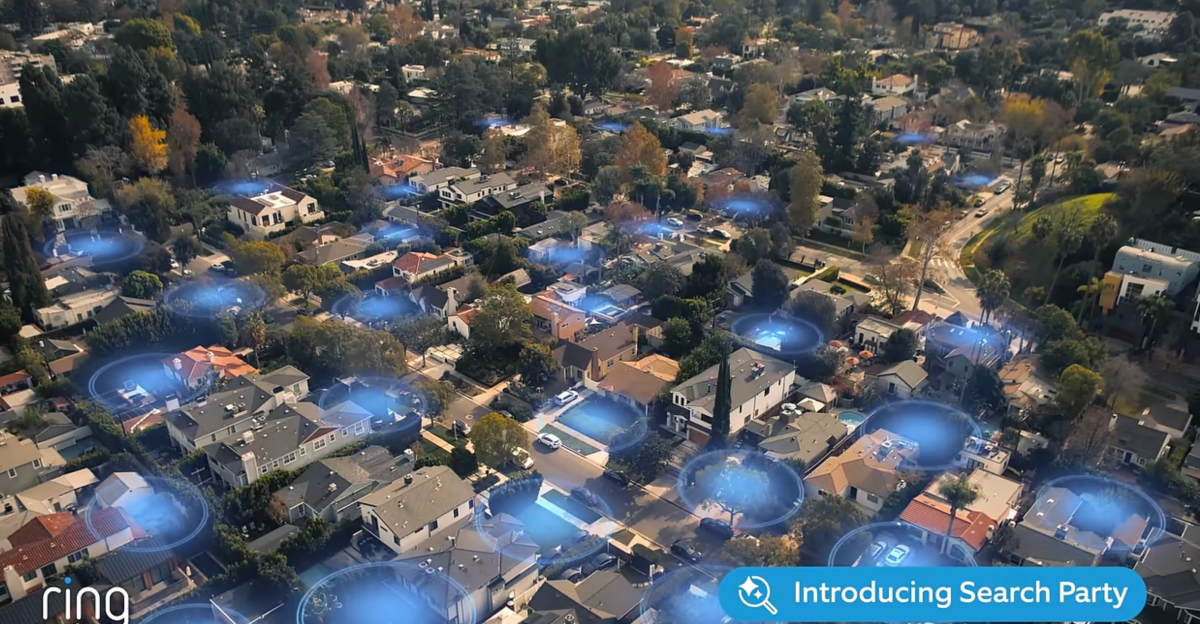
During a recent discussion with The Times, Siminoff addressed the public’s apprehensions, noting that the advertisement’s imagery, particularly the depiction of blue rings emanating from suburban houses, might have unsettled some viewers. He mentioned that future advertisements will feature fewer maps to avoid triggering such reactions.
The real issue, however, extends beyond mere graphics. The concern lies in the expansive network of Ring’s AI-powered cameras, which could potentially be transformed into a surveillance apparatus. Such a system, accessible to law enforcement, could catalog individuals’ movements, bringing up questions about the accuracy and potential misinterpretations by AI. Notably, Ring stands out as the sole home security firm with a feature — Community Requests — enabling users to share footage directly with local law enforcement agencies.
Ring asserts that its cameras are not intended to serve as tools for widespread surveillance. The company claims strong privacy safeguards, emphasizing that users retain full control over their video content, including decisions about sharing it with authorities. Nonetheless, these assurances have not entirely alleviated user concerns.
Instead of persisting with the narrative that cameras alone can prevent crime, Siminoff needs to seriously consider the public’s genuine worries and clearly outline the boundaries of Ring’s technological capabilities. It is crucial for him to articulate how far the company plans to advance this technology and whether initiatives like Search Party will limit themselves to tracking individuals.
Yet, Siminoff seems to be reinforcing his belief in the benefits of increased camera presence and video availability, a stance expected from someone whose business profits from selling such devices. He shared with The Times that he believes most people share this view, even if they do not openly admit it.
“There have been numerous instances recently where, without video evidence, the narrative might have been different, or we might not have known the full story,” he remarked to The Times, asserting that Ring’s operations do not equate to unchecked mass surveillance.
The other concern is around what happens to its video after users share it with the police. While that’s arguably not Ring’s problem, the company has acknowledged that its mission “to make neighborhoods safer” carries significant responsibility. It created this technology and needs to ensure it’s used responsibly.
The argument that camera owners have complete control of how their footage is shared puts the onus on the user. But Ring turned Search Party on by default for everyone, demonstrating that it has the control. There’s also no guarantee that any current default settings will stay that way. Additionally, while the user can choose to share footage, the people captured by the cameras don’t necessarily have that choice.
Siminoff confirmed to The Times that Ring will continue building out Search Party, saying that they’re looking to add searching for cats to its capabilities. But then, what comes next?
All this technology is coming together at lightning speed, and to many, it feels like it’s just one turn away from a dystopian surveillance system.