Share this @internewscast.com
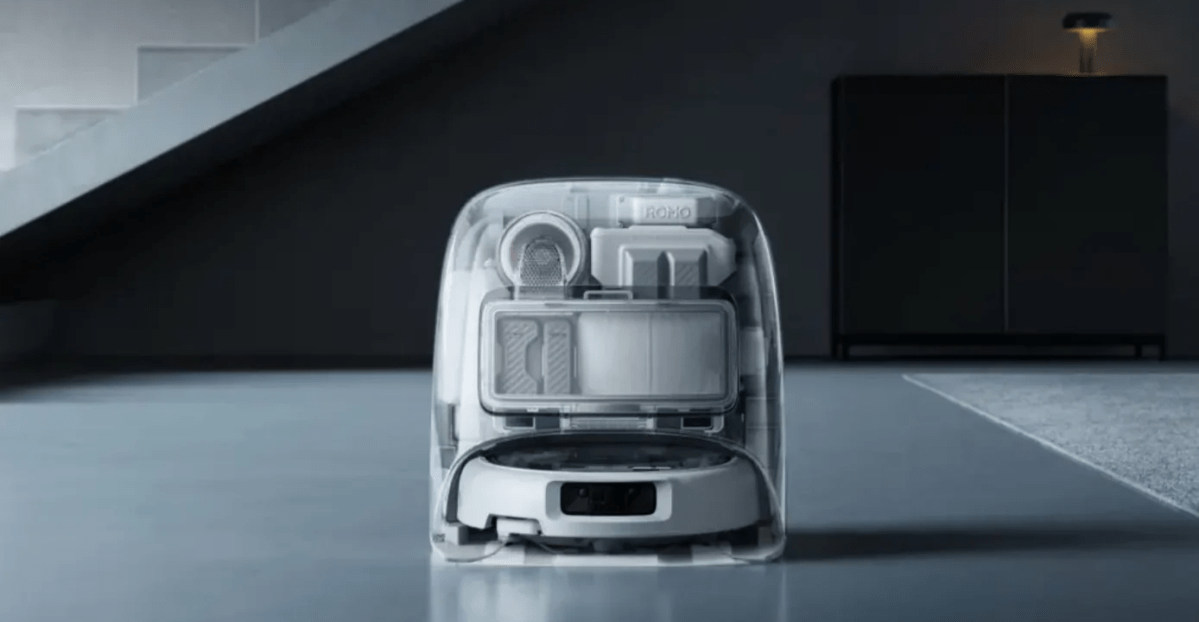
Sammy Azdoufal insists that his intention was never to breach the security of every robotic vacuum globally. His goal, as he revealed to The Verge, was simply to control his new DJI Romo vacuum using a PS5 controller, purely for the thrill of it.
However, things took an unexpected turn when his DIY remote control application began interacting with DJI’s servers. Rather than just one vacuum responding, approximately 7,000 devices worldwide started acknowledging Azdoufal as if he were their operator.
Remarkably, he found himself capable of remotely directing these vacuums and accessing their live camera feeds. During a trial run with a friend, he discovered he could watch the vacuums navigate and map each room, producing detailed 2D floor plans. Furthermore, he could pinpoint the approximate location of any vacuum using its IP address.
“It was astonishing to realize my device was merely one among a vast network,” Azdoufal remarked.

In a live demonstration on Tuesday, Azdoufal revealed the extent of his access, which left me in disbelief. Thousands of robots appeared at his command, transmitting MQTT data packets every three seconds. These packets contained information like serial numbers, cleaning routes, visual data, distances covered, charging status, and obstacles encountered.
As I observed, these robots gradually appeared on a global map. Within nine minutes, Azdoufal’s laptop had identified 6,700 DJI devices across 24 countries, capturing over 100,000 data messages. Including the DJI Power portable stations, which utilize the same servers, he had visibility into more than 10,000 devices.

When I say I couldn’t believe my eyes at first, I mean that literally. Azdoufal leads AI strategy at a vacation rental home company; when he told me he reverse engineered DJI’s protocols using Claude Code, I had to wonder whether AI was hallucinating these robots. So I asked my colleague Thomas Ricker, who just finished reviewing the DJI Romo, to pass us its serial number.
With nothing more than that 14-digit number, Azdoufal could not only pull up our robot, he could correctly see it was cleaning the living room and had 80 percent battery life remaining. Within minutes, I watched the robot generate and transmit an accurate floor plan of my colleague’s house, with the correct shape and size of each room, just by typing some digits into a laptop located in a different country.


Separately, Azdoufal pulled up his own DJI Romo’s live video feed, completely bypassing its security PIN, then walked into his living room and waved to the camera while I watched. He also says he shared a limited read-only version of his app with Gonzague Dambricourt, CTO at an IT consulting firm in France; Dambricourt tells me the app let him remotely watch his own DJI Romo’s camera feed before he even paired it.
Azdoufal was able to enable all of this without hacking into DJI’s servers, he claims. “I didn’t infringe any rules, I didn’t bypass, I didn’t crack, brute force, whatever.” He says he simply extracted his own DJI Romo’s private token — the key that tells DJI’s servers that you should have access to your own data — and those servers gave him the data of thousands of other people as well. He shows me that he can access DJI’s pre-production server, as well as the live servers for the US, China, and the EU.

Here’s the good news: On Tuesday, Azdoufal was not able to take our DJI Romo on a joyride through my colleague’s house, see through its camera, or listen through its microphone. DJI had already restricted that form of access after both Azdoufal and I told the company about the vulnerabilities.
And by Wednesday morning, Azdoufal’s scanner no longer had access to any robots, not even his own. It appears that DJI has plugged the gaping hole.
But this incident raises serious questions about DJI’s security and data practices. It will no doubt be used to help retroactively justify fears that led to the Chinese dronemaker getting largely forced out of the US. If Azdoufal could find these robots without even looking for them, will it protect them against people with intent to do harm? If Claude Code can spit out an app that lets you see into someone’s house, what keeps a DJI employee from doing so? And should a robot vacuum cleaner have a microphone? “It’s so weird to have a microphone on a freaking vacuum,” says Azdoufal.
It doesn’t help that when Azdoufal and The Verge contacted DJI about the issue, the company claimed it had fixed the vulnerability when it was actually only partially resolved.
“DJI can confirm the issue was resolved last week and remediation was already underway prior to public disclosure,” reads part of the original statement provided by DJI spokesperson Daisy Kong. We received that statement on Tuesday morning at 12:28PM ET — about half an hour before Azdoufal showed me thousands of robots, including our review unit, reporting for duty.

To be clear, it’s not surprising that a robot vacuum cleaner with a smartphone app would phone home to the cloud. For better or for worse, users currently expect those apps to work outside of their own homes. Unless you’ve built a tunnel into your own home network, that means relaying the data through cloud servers first.
But people who put a camera into their home expect that data to be protected, both in transit and once it reaches the server. Security professionals should know that — but as soon as Azdoufal connected to DJI’s MQTT servers, everything was visible in cleartext. If DJI has merely cut off one particular way into those servers, that may not be enough to protect them if hackers find another way in.
Unfortunately, DJI is far from the only smart home company that’s let people down on security. Hackers took over Ecovacs robot vacuums to chase pets and yell racist slurs in 2024. In 2025, South Korean government agencies reported that Dreame’s X50 Ultra had a flaw that could let hackers view its camera feed in real time, and that another Ecovacs and a Narwal robovac could let hackers view and steal photos from the devices. (Korea’s own Samsung and LG vacuums received high marks, and a Roborock did fine.)
It’s not just vacuums, of course. I still won’t buy a Wyze camera, despite its new security ideas, because that company tried to sweep a remote access vulnerability under the rug instead of warning its customers. I would find it hard to trust Anker’s Eufy after it lied to us about its security, too. But Anker came clean, and sunlight is a good disinfectant.
DJI is not being exceptionally transparent about what happened here, but it did answer almost all our questions. In a new statement to The Verge via spokesperson Daisy Kong, the company now admits “a backend permission validation issue” that could have theoretically let hackers see live video from its vacuums, and it admits that it didn’t fully patch that issue until after we confirmed that issues were still present.
Here’s that whole statement:
DJI identified a vulnerability affecting DJI Home through internal review in late January and initiated remediation immediately. The issue was addressed through two updates, with an initial patch deployed on February 8 and a follow-up update completed on February 10. The fix was deployed automatically, and no user action is required.
The vulnerability involved a backend permission validation issue affecting MQTT-based communication between the device and the server. While this issue created a theoretical potential for unauthorized access to live video of ROMO device, our investigation confirms that actual occurrences were extremely rare. Nearly all identified activity was linked to independent security researchers testing their own devices for reporting purposes, with only a handful of potential exceptions.
The first patch addressed this vulnerability but had not been applied universally across all service nodes. The second patch re-enabled and restarted the remaining service nodes. This has now been fully resolved, and there is no evidence of broader impact. This was not a transmission encryption issue. ROMO device-to-server communication was not transmitted in cleartext and has always been encrypted using TLS. Data associated with ROMO devices, such as those in Europe, is stored on U.S.-based AWS cloud infrastructure.
DJI maintains strong standards for data privacy and security and has established processes for identifying and addressing potential vulnerabilities. The company has invested in industry-standard encryption and operates a longstanding bug bounty program. We have reviewed the findings and recommendations shared by the independent security researchers who contacted us through that program as part of our standard post-remediation process. DJI will continue to implement additional security enhancements as part of its ongoing efforts.
Azdoufal says that even now, DJI hasn’t fixed all the vulnerabilities he’s found. One of them is the ability to view your own DJI Romo video stream without needing its security pin. Another one is so bad I won’t describe it until DJI has more time to fix it. DJI did not immediately promise to do so.
And both Azdoufal and security researcher Kevin Finisterre tell me it’s not enough for the Romo to send encrypted data to a US server, if anyone inside that server can easily read it afterward. “A server being based in the US in no way, shape, or form prevents .cn DJI employees from access,” Finisterre tells me. That seems evident, as Azdoufal lives in Barcelona and was able to see devices in entirely different regions.
“Once you’re an authenticated client on the MQTT broker, if there are no proper topic-level access controls (ACLs), you can subscribe to wildcard topics (e.g., #) and see all messages from all devices in plaintext at the application layer,” says Azdoufal. “TLS does nothing to prevent this — it only protects the pipe, not what’s inside the pipe from other authorized participants.”
When I tell Azdoufal that some may judge him for not giving DJI much time to resolve the issues before going public, he notes that he didn’t hack anything, didn’t expose sensitive data, and isn’t a security professional. He says he was simply livetweeting everything that happened while trying to control his robot with a PS5 gamepad.
“Yes, I don’t follow the rules, but people stick to the bug bounty program for money. I fucking don’t care, I just want this fixed,” he says. “Following the rules to the end would probably make this breach happen for a way longer time, I think.”
He doesn’t believe that DJI truly discovered these issues by itself back in January, and he’s annoyed the company only ever responded to him robotically in DMs on X, instead of answering his emails.
But he is happy about one thing: He can indeed control his Romo with a PlayStation or Xbox gamepad.