
Share this @internewscast.com
As Inauguration Day approached, the political stage was set for a dramatic turn involving popular social media platform TikTok. The year prior, Congress had decisively passed legislation requiring TikTok to sever ties with its Chinese parent company or face a ban in the United States. This directive was solidified by a unanimous Supreme Court ruling, leaving the outgoing and incoming presidents with two choices: extend TikTok’s deadline to finalize a deal by 90 days or enforce an immediate ban.
In a surprising twist, neither scenario played out. President Joe Biden, in his final act, deferred the decision to his successor, Donald Trump. After a suspenseful period during which TikTok temporarily went offline in the U.S., the app reemerged, expressing gratitude to Trump for its unexpected reprieve.
Fast forward nearly a year and multiple deadline extensions, TikTok still operates under its original ownership, the Chinese company that many legislators have deemed a national security threat. Only recently did TikTok announce it had secured a deal to sell its U.S. operations, aiming for completion by January 22, 2026—far beyond the initial deadline. This prolonged saga, filled with bureaucratic missteps and delays, raises skepticism about the forthcoming agreement’s compliance with the original legislative mandate.
The TikTok debacle is just one of several incidents that have exposed vulnerabilities within the federal government this year. In a notable lapse, Secretary of War Pete Hegseth reportedly used Signal, an encrypted messaging app, to relay war plans. This method, though secure, is not designed for sensitive communications due to potential security risks on devices. The leak of this information was an inadvertent error, revealed when Trump’s then-national security adviser mistakenly added a prominent editor from The Atlantic to the conversation.
The year 2025 brought with it a cascade of governmental upheavals, most notably involving Elon Musk’s ambitious Department of Government Efficiency (DOGE) initiative. A record-breaking 43-day government shutdown ensued, jeopardizing food security for low-income Americans, disrupting air travel, halting space missions, and delaying consumer products requiring regulatory approval. Federal Communications Commission Chair Brendan Carr faced backlash after threatening to revoke broadcast licenses over a late-night comedian’s joke he found offensive. Meanwhile, aggressive Immigration and Customs Enforcement (ICE) operations diverted resources from critical areas like child exploitation investigations.
There was the record 43-day government shutdown that threatened food access for millions of low-income Americans, threw air travel into chaos, halted space launches, and delayed consumer products that needed regulatory approval. There was Federal Communications Commission Chair Brendan Carr’s naked threat to pull broadcast licenses over airing late-night comedian Jimmy Kimmel after he made a joke he found distasteful. There were the Immigration and Customs Enforcement (ICE) raids on workplaces like Home Depot and the amped up deportation efforts that pulled law enforcement resources from areas like child exploitation investigations. And then there was the biggest full-on rupture to the government in 2025: Elon Musk’s pet project, the Department of Government Efficiency (DOGE).
Shall we list the ways DOGE took a sledgehammer to the federal government? Hundreds of thousands of federal workers had their jobs cut or left as the Trump administration eagerly pushed them out; it shuttered the group once considered to be the country’s greatest source of soft power, which delivered food and medicine to impoverished countries; it accessed a system containing millions of Americans’ most sensitive financial information, while all but dismantling a financial consumer protection watchdog; it pushed out tech talent across several agencies; saved taxpayers far less money than promised while decimating institutional knowledge; and cut medical research funding perceived as promoting diversity, equity, and inclusion. After all that, Musk has deemed the project only “somewhat successful” and said he probably wouldn’t do it again.
There have been many other instances where democracy’s counterweights have shown signs of life, and at times, even bravery
Of course, the only true test of a democracy’s durability is to see how its checks fare when things break. The TikTok saga shows one example where — at least so far — they have weathered poorly. Congress has issued tepid statements about the executive branch’s unwillingness to enforce the law, but there’s no appetite to impeach Trump over it, and the judicial branch can’t or won’t force action, either. But there have been many other instances where democracy’s counterweights have shown signs of life, and at times, even bravery.
Judges across the country have forcefully struck down and pushed back on policies from the Trump administration that clearly violate the law or Constitution. Several judges ruled to block Trump’s order seeking to end birthright citizenship, ruled against rhetorical gymnastics justifying mass cuts, and moved forward with proceedings to hold administration officials in contempt for allegedly violating an order to stop transporting deportees to El Salvador. The judge in charge of those contempt proceedings has faced personal backlash from Trump and some Republicans filed articles of impeachment against him over separate rulings, but so far, he’s forged ahead.
Even Congress, which has mostly proven to be a rubber stamp, or meek critic at best, has occasionally found its voice. Lawmakers from Trump’s own party, including Rep. Thomas Massie (R-KY), stood their ground alongside Democrats on forcing a release of information related to the Epstein files — the one issue that continues to dog the president. Though several Republicans called for firing or deplatforming Americans who criticized conservative activist Charlie Kirk after his killing, a few like Sen. Ted Cruz (R-TX) pushed back on efforts like Carr’s Goodfellas-style threats to broadcasters. And recently, the House Armed Services Committee is stepping up to fill its oversight role in questioning the series of events leading to military strikes on a boat Trump officials claim was illegally carrying drugs from Venezuela.
Then there’s the pushback from millions of Americans across the country, who have showed up in large numbers at “No Kings” rallies, protested Tesla showrooms at the height of CEO Musk’s power at DOGE, and documented raids and arrests by an emboldened ICE as the administration has waged a mass deportation effort. There have been efforts to fill the food banks when SNAP benefits were at risk during the shutdown, while former federal workers pitched in to help keep technologists in the government during the extensive pay pause.
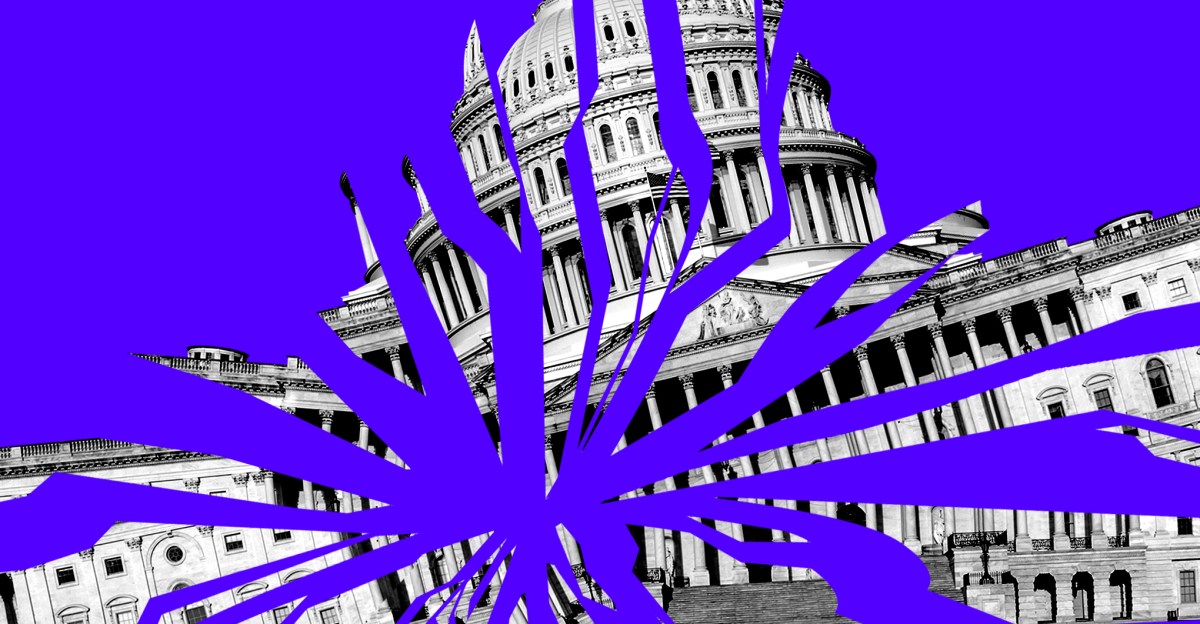
As 2026 approaches, political posturing for the midterms is likely to overshadow any real efforts at policymaking. With that will come a slew of messages from politicians promising to fix what was broken this year and also promising to break what hasn’t worked in far too long. Voters will choose who they think can best put it all back together. Only then will we find out how deep the cracks actually go.