Experts have warned that some holiday destinations popular with Britons are hotspots for a virus that can cause pain that lasts for months.
The chikungunya virus, which although rarely deadly, can severely damage organs and lead to chronic disability.
Just last month the World Health Organisation issued an urgent call for action as cases of the virus exploded across the globe.
Chinese officials have reported 10,000 cases in the country, with 7,000 in the southern city of Foshan, in the Guangdong province—with no deaths so far.
This surge began in early 2025, with major outbreaks reported in the Indian Ocean islands of La Réunion, Mayotte and Mauritius—popular holiday destinations.
So far, globally, there have been 250,000 cases and 90 related deaths in 16 countries this year, according to the European Centre for Disease Prevention and Control.
There is currently no risk of contracting the virus in the UK at present, but it can be found in parts of Southern Europe.
However, while concerning, experts have fortunately said it isn’t going to be the next pandemic.

Experts have warned those travelling to the destinations to take precautionary measures

Professor Paul Hunter, a professor in medicine at the University of East Anglia
Professor Will Irving, a virology expert at the University of Nottingham said: ‘There have been equally large, if not larger outbreaks around the world prior to this one.’
However, he added: ‘With climate change, the mosquitos are spreading, and there are reports of the mosquito being present in parts of Europe (France, Italy, Spain).’
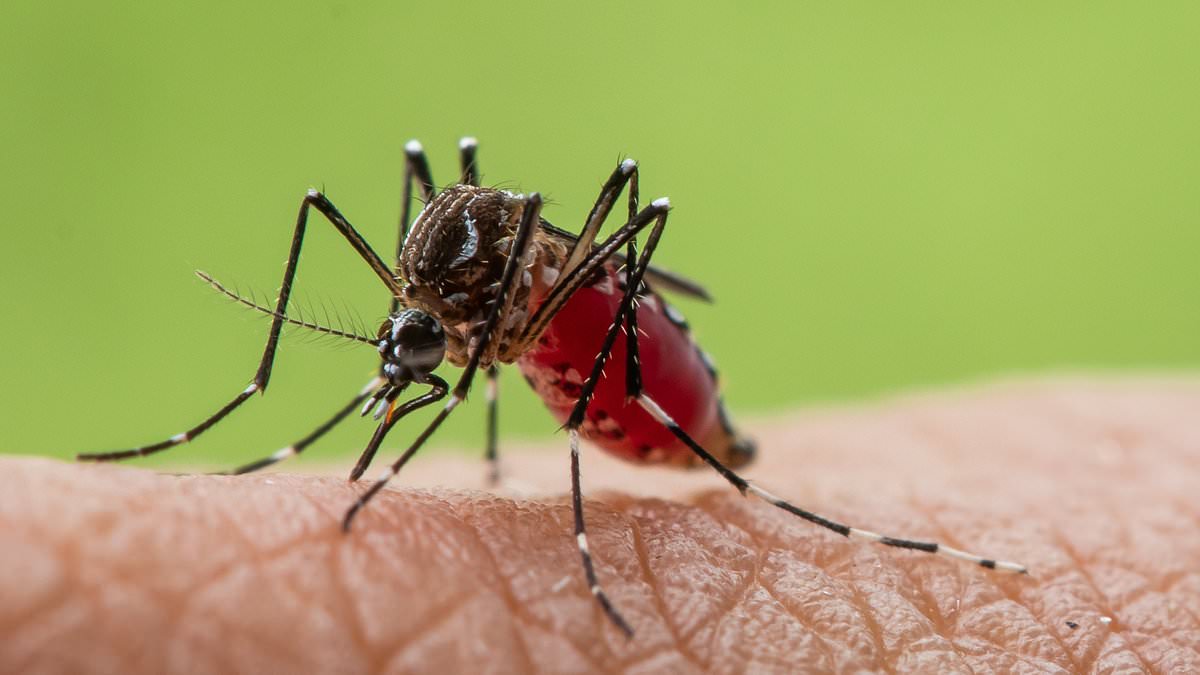
The virus is spread to humans by bites from infected mosquitoes but it cannot be passed from person-to-person.
Several experts have shared precautionary steps those travelling the sunny beaches of Europe can take to prevent infection.
Professor Paul Hunter, a professor in medicine at the University of East Anglia, advised travellers to wear loose-fitting clothing that covers your arms and legs.
Ideally, he added: ‘They will be light coloured, so you can see if mosquitos have landed on you.’
In particular, he warned that it is a bad idea for women in late stages of pregnancy to travel to these destinations.
‘If you get infected with it later on in the pregnancy, it can pose a risk to the baby,’ he said.

The nasty virus which can cause pain for months is spread through bites by mosquitos
A 2021 study found infection just prior to delivery increases risk of transmission to the baby.
Professor Irving said those most vulnerable to the virus are people with immunosuppression, the very young, elderly, and those with underlying comorbidities.
In the UK, so far this year, there have been 26 confirmed cases of the virus, from people travelling to Sri Lanka, India, Maldives, Oman and United Arab Emirates.
However, the government said the figure includes individuals who travelled to more than one country—so the number may be higher than actual cases.
Previously the virus was more commonly found in Asia, Africa and South America, but more recently cases have emerged in Europe and the US.
The chikungunya virus has also spread to Madagascar, Somalia, Kenya and India and is making its way to Europe.
Case counts have also been increasing in Samoa, Tonga, French Polynesia, Fiji and Kiribati.
Meanwhile there have been 46 cases of chikungunya infections in the US this year, all contracted by travellers returning from high-risk areas, but no deaths.
The majority of people infected with Chikungunya develop a sudden fever and severe pain in multiple joints.

This map shows cases per 100,000 population reported across the globe over the last year (Image: European Centre for Disease Prevention and Control)
Other symptoms may include headache, muscle pain, joint swelling, or rash.
The virus is spread to humans by bites from infected mosquitoes, but cannot be passed from person-to-person.
Symptoms typically resolve within seven to 10 days, and most patients make a full recovery.
However, in some cases the joint pain and arthritis may persist for several months or even years.
Occasional cases of eye, neurological and heart complications have been reported, as well as gastrointestinal complaints.
A small number of people may develop a severe version of the disease, which can lead to multiple organ failure and death.
Severe symptoms and deaths are rare and usually occur in young babies or elderly people with coexisting health problems.
There is no specific antiviral treatment for chikungunya but medications (such as paracetamol) for fever and pain can be used to alleviate these symptoms.
There are currently two vaccinations which protect against the virus; IXCHIQ for those aged between 18 and 64 and Vimkunya for those 12 years and older.
In the UK, the vaccine is given to those who travel abroad to certain regions where the chikungunya virus is present.
However, unfortunately, some of the most vulnerable to the virus are those who cannot get the virus—those who are immunosuppressed.
Earlier this summer, UK vaccine chiefs suspended a newly approved jab from being given to people aged 65 or over, after reports of two deaths and 21 severe reactions.
While the jab, called IXCHIQ, is approved in the UK it had yet to be rolled out, so there were no immediate safety concerns, British regulators said.
The suspension followed two fatalities in the French island La Réunion—where a vaccination campaign was underway following a recent Chikungunya outbreak.