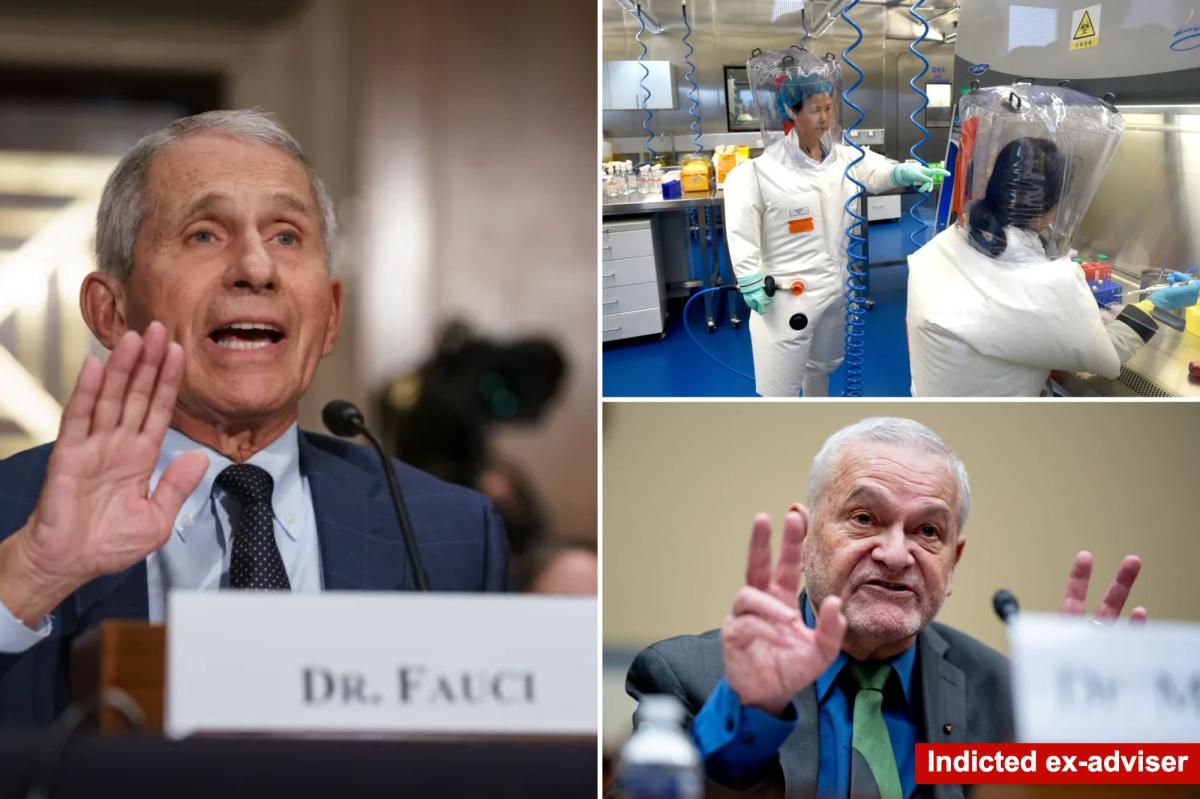
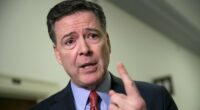

WASHINGTON — The recent indictment of David Morens, a former advisor to Dr. Anthony Fauci, has reignited demands for the Justice Department to take legal action against Fauci. Critics allege that Fauci misled Congress about financing potentially hazardous research in China prior to the COVID-19 outbreak.
With only two weeks remaining until the May 11 deadline for legal action, pressure mounts on authorities to indict Fauci. At issue is his sworn testimony denying involvement in “gain of function” research that altered bat coronaviruses in Wuhan, where the pandemic began.
Morens, aged 78, faces serious charges including conspiracy, and multiple counts of altering or destroying records related to COVID-19’s origins. These charges could result in a sentence of up to 51 years in prison.
Critics argue that Fauci, now 85, should be held accountable and face legal proceedings himself.
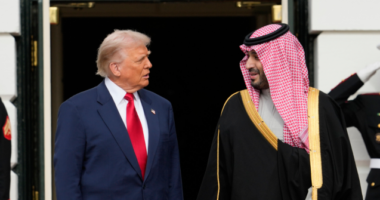
In a phone interview with The Post on March 31, former President Trump expressed his intention to investigate Fauci’s legal standing. Some Republicans believe that acting Attorney General Todd Blanche, who is under consideration for a permanent role, might challenge the validity of former President Joe Biden’s preemptive pardons, which are said to include Fauci.
“Most Americans are unaware of who Morens is,” stated Mike Howell, President of the Oversight Project.
“It’s Fauci that they will blame for one of the worst government catastrophes in history in America. And so the test is Fauci. The Morens indictment is great, and we applaud it. But there are a lot of people out there that want to see Fauci held to account for the damage he wrought.”
Howell, whose group sent the Justice Department a draft indictment for Morens last year, believes the adviser’s actions were closely linked to his boss.
“[Fauci] lied about one of the most damaging events in American history routinely and was behind a massive coverup of the key factors,” Howell said.
Sen. Rand Paul (R-Ky.), to whom Fauci allegedly lied, told The Post that “we’ve been looking through a lot of information on this for the last year or so. The Trump administration has been much more forthcoming than the Biden administration ever was.”
“On Anthony Fauci’s case, we think lying to Congress is one felony,” Paul said in an interview on Tuesday.
“We also think that destroying federal records and advising others to destroy federal records is also a felony. So I think there’s opportunity there… There was a vast both organized and unorganized conspiracy to cover up the fact that the US government was funding the research that led to the pandemic.”
Trump said in December that Biden was so mentally diminished that he was either unable to authorize autopen pardons or that his staff did so without his knowledge â setting the stage for potential legal test-cases. Biden claimed to the New York Times last year that he was aware of them.
To determine the validity of those pardons, “you would have to indict somebody who’s been pardoned. And I think it’s worth a challenge,” Paul said.
“There’s some questions that have never been asked before. Is the pardon power so broad that you can pardon people for a period of time and not for a conviction? [Fauci’s pardon is] for a decade period of time for unspecified crimes.
“You’d have to determine whether [Biden] was aware these pardons happened… My guess is that somebody around him will make him aware of which pardons he did by the time they get to trial, [but what matters is] whether he was aware at the time.”
“I’m for pushing it to find out, and I think the only way to find out is to take it before a court.”
Paul said it’s also possible that Fauci committed crimes after Biden’s pardon and that “it might involve the question of conspiracy charges.”
Fauci would face up to five years in prison if convicted of lying to Congress. Possible conspiracy charges could carry another five years.
Neil McCabe, a former Trump Justice Department official, told The Post that “from the beginning, Trumpâs DOJ recognized and enforced Bidenâs autopen clemencies â even the tranches [of prison commutations] that extended into the current administration.”
“Trump said anything done by autopen was invalid, so letâs see how [Blanche] handles it now that it is his decision,â added McCabe, now a national political reporter at Real Americaâs Voice.
Fauci served as Biden’s chief medical adviser in 2021 and 2022 after presenting himself in the early phase of the pandemic as a beacon of reason and good health guidance, though allies of Trump noted his often inconsistent tips, including on mask-wearing.
On his final full day in office, Biden issued the auto-pen pardon to Fauci for “any offenses” dating to 2014.
The Post could not reach Fauci for comment, but left a voicemail on a number associated with him. The Justice Department did not respond to a request for comment.
‘If anybody’s lying here, senator, it is you!’
Fauci cultivated a saintly image during the pandemic, which killed about 15 million people worldwide in 2021 and 2022, and was once so esteemed that he declared criticism of his actions amounted to criticism of science itself.
His committee-room clash with Paul received coverage at the time, but with significant public sympathy for the doctor, for whom accolades and even songs of praise were being written as he dispensed advice such as to remain six feet apart, which he later admitted had no scientific grounding.
“The [National Institutes of Health] and [National Institute of Allergy and Infectious Diseases] categorically has not funded gain of function research to be conducted in the Wuhan Institute of Virology,” Fauci said at a Senate committee hearing on May 11, 2021, during a tense exchange with Paul.
“You are entire, entirely and completely incorrect… the NIH has not ever and does not now fund gain of function research in the Wuhan Institute of Virology.”
At a July 20, 2021, hearing Fauci testified “I do not retract that statement” and angrily pointing his finger at Paul, shouting, “if anybody’s lying here, senator, it is you!”
Documents published in late 2021 by The Intercept revealed that the EcoHealth Alliance used grants from Fauci’s agency to fund Wuhan experiments that modified three bat coronaviruses distinct from COVID-19.
The research found viruses became much more infectious among “humanized” mice when human-type receptors were added to them.
Records revealed that the NIAID, which Fauci led between 1984 and 2022, in 2014 awarded EcoHealth $3.1 million in multiyear grants for “Understanding the Risk of Bat Coronavirus Emergence,” of which $750,000 flowed to the Wuhan Institute of Virology.
“They twice submitted summaries of their work that showed that, when in the lungs of genetically engineered mice, three altered bat coronaviruses at times reproduced far more quickly than the original virus on which they were based,” The Intercept revealed.
“The researchers reported, ‘These results demonstrate varying pathogenicity of SARSr-CoVs with different spike proteins in humanized mice.’”
NIH principal deputy director Lawrence Tabak confessed in 2024 at a House committee hearing that the US government funded gain of function research in Wuhan.
âDr. Tabak, did NIH fund gain-of-function research at the Wuhan Institute of Virology through EcoHealth?â asked Rep. Debbie Lesko (R-Ariz.).
âIt depends on your definition of gain-of-function research,â Tabak answered. âIf youâre speaking about the generic term, yes, we did.â
The origins of COVID-19 remain a mystery due to the Chinese government’s refusal to allow an independent international investigation.
Some parts of the US government believe the pandemic emerged with a lab leak in China.