
Share this @internewscast.com
Unilever is in the midst of a significant transformation, shifting its focus from food products to the realm of beauty. Say goodbye to staples like Hellmann’s mayonnaise and welcome a new era with products such as Dove Body Love Glowing Care Lotion.
This strategic shift is being spearheaded by Fernando Fernandez, Unilever’s chief executive, who is often referred to as a ‘beauty guy.’ With the anticipated sale of its food division, the company, valued at £100 billion, is set to concentrate on its thriving beauty portfolio, including well-known brands like Dove.
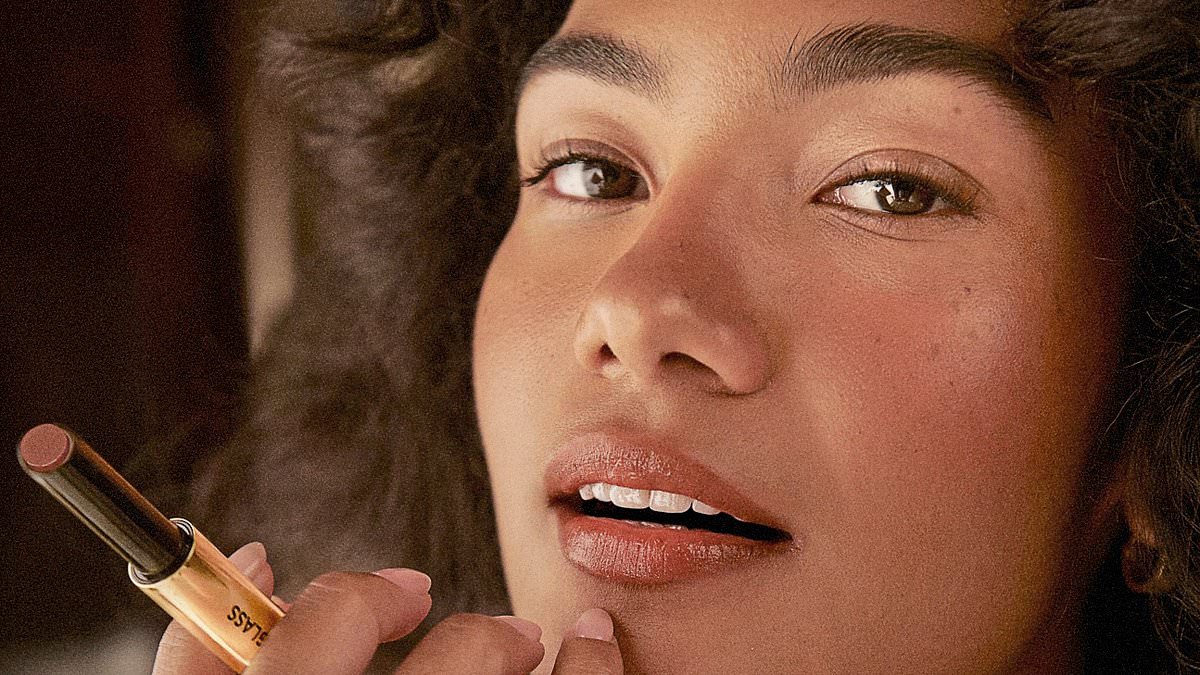
Unilever’s impressive £11 billion beauty collection boasts names like Dermalogica, Liquid IV, Ponds, Paula’s Choice, Vaseline, and Hourglass, the latter of which has British Grammy award-winning artist Olivia Dean as its current spokesperson.
The pivot towards cosmetics and skincare is a calculated move, reflecting the robust growth in this sector across various age groups. Consumers are expected to prioritize beauty and wellness purchases, even amidst economic challenges like rising inflation.
According to a study conducted by McKinsey & Co in collaboration with the Business of Fashion, the global beauty market, valued at $2 trillion in 2024, is projected to soar to $2.5 trillion by 2028.
This financial potential is prompting companies to harness every available technological advancement to stay competitive in the ever-evolving landscape of aesthetics.
This week, the £160bn French giant L’Oreal said it would be collaborating with Californian tech titan Nvidia in an artificial intelligence (AI) project to convert laboratory skincare concepts into anti-ageing products ‘100 times faster’ than at present.

Lip sync: Grammy award-winning singer Olivia Dean is the face of Hourglass makeup
The £23billion US group Estee Lauder and Unilever are also making more use of AI, which has fuelled the ascent of South Korean beauty brands such as APR, whose shares are 430 per cent higher than a year ago.
Over the same period, Unilever has fallen by 6 per cent to 4,606p, explaining why Fernandez is bidding farewell to food. If your portfolio could also use a makeover in these uncertain times, here are the names to consider.
Unilever
In the wake of the news earlier this week that Unilever could move out of foods, Barclays analyst Warren Ackerman declared Unilever to be a ‘buy’ with a target price of 6,000p.
Five other analysts share his view. But eight others, meanwhile, consider the stock to be a ‘hold’ reflecting the mounting squeeze on consumers’ budgets from energy bill increases.
If you are an existing holder of this FTSE 100 stock, you should not expect a windfall from the disposal. As Chris Beckett, consumer staples analyst at Quilter Cheviot, points out, these are ‘low-growth mature’ businesses that will not attract huge sums.But he is positive about the shift away from Hellmann’s, Colman’s and Pot Noodle.

The Beauty Parade
Analysts are taking a wait-and-see view on the turnaround at Estee Lauder.
The business has been hard hit by challenges in the China market which accounts for one-fifth of revenues. As a result, the shares have dropped nearly 20 per cent this year, although they remain 26 per cent above their level of a year ago. I have made a decent profit on my tiny Estee Lauder holding acquired last June. (I was acting on my advice in this column to take a bet on the beauty game).
I intend to stay invested since the new chief executive Stephane de La Faverie is pledging action on China.
David Coombs, of Rathbones, sees two other beauty companies as an enhancement to a portfolio – L’Oreal and Ulta Beauty. L’Oreal shares are 3 per cent lower than a year ago, despite its acquisition of a 20 per cent stake in Galderma, the Swiss Botox specialist which also makes the Cetaphil skincare range.
L’Oreal has also been affected by slowdown in China. But L’Oreal’s chief executive Nicholas Hieronimus said this nation is now in ‘positive territory, back to positive luxury consumption’.
Despite this optimism, most analysts are cautious, although this week RBC told clients that L’Oreal was a ‘buy’ with a target price of €430 (£373).
Shares in Ulta Beauty have been beset by fears that economic woes will curb the spending of the US beauty store chain’s clientele. But at $530 (£398) – more than 55pc up since last year – the shares seem worth a flutter if you think that people will consider lipsticks and serums less of an indulgence and more of a necessity. I will be observing these buying habits in Space NK, the UK chain that is now an arm of the Ulta empire.
Shares in ELF Beauty, another US group, stand at around $73 (£55). They are regarded as a ‘buy’ by analysts who have set an average target price of $112 (£84).
Why the enthusiasm? ELF’s cosmetics are inexpensive ‘dupes’ or copies of more expensive options, which should be even more appealing as inflation squeezes every type of expenditure.
But ELF also caters for the affluent with Rhode, the brand created by Hailey Bieber, wife of pop star Justin Bieber.
Rhode sparks considerable excitement, as I have observed in the London branch of Sephora, LVMH’s beauty boutique business, where I carry out research on this sector.
LVMH, the luxury behemoth, is facing headwinds. But it still describes Sephora’s performance as ‘remarkable’.
This would seem to indicate that although beauty is not immune to economic woes, it is more resilient than other goods.
K-Beauty
K-Beauty, as the Korean beauty market is called, was worth about £9.75billion in 2024. By 2030, this could be £14.3billion so popular is its skincare evolved for the requirements of South Korean women who will happily undertake 10-step night-time cleansing routines.
Sadly it can be tricky to buy Korean shares through UK investor platforms, and Korean funds do not offer much exposure to Amorepacific, APR and other companies in the field.
Meanwhile, the Korean onslaught has been tough for the Japanese group Shiseido which is known for brands like Cle de Peau and Nars. Some believe that the group can recover from the surge in competition, despite its unfortunate foray into the US youth market with the acquisition of the Drunk Elephant brand.
The shares are 63 per cent down over five years, an opportunity which could suit those who are ready for a big gamble.
You could contemplate backing the British names. Charlotte Tilbury is part of the Spanish Puig perfumes group. Its shares – at €15 (£13) – are seen as a ‘buy’.
Warpaint London is a £156m Aim company whose shares have slumped by 54 per cent over the past year. But the company is hoping for recovery.
Its blushers and make-up are a bargain buy. In the current cost-conscious climate, some will feel its shares are a bargain too.
DIY INVESTING PLATFORMS
AJ Bell
AJ Bell
Easy investing and ready-made portfolios
Hargreaves Lansdown
Hargreaves Lansdown
Free fund dealing and investment ideas
interactive investor

interactive investor
Flat-fee investing from £4.99 per month
Freetrade

Freetrade
Investing Isa now free on basic plan
Trading 212

Trading 212
Free share dealing and no account fee
Affiliate links: If you take out a product This is Money may earn a commission. These deals are chosen by our editorial team, as we think they are worth highlighting. This does not affect our editorial independence.
Compare the best investing account for you