
Share this @internewscast.com
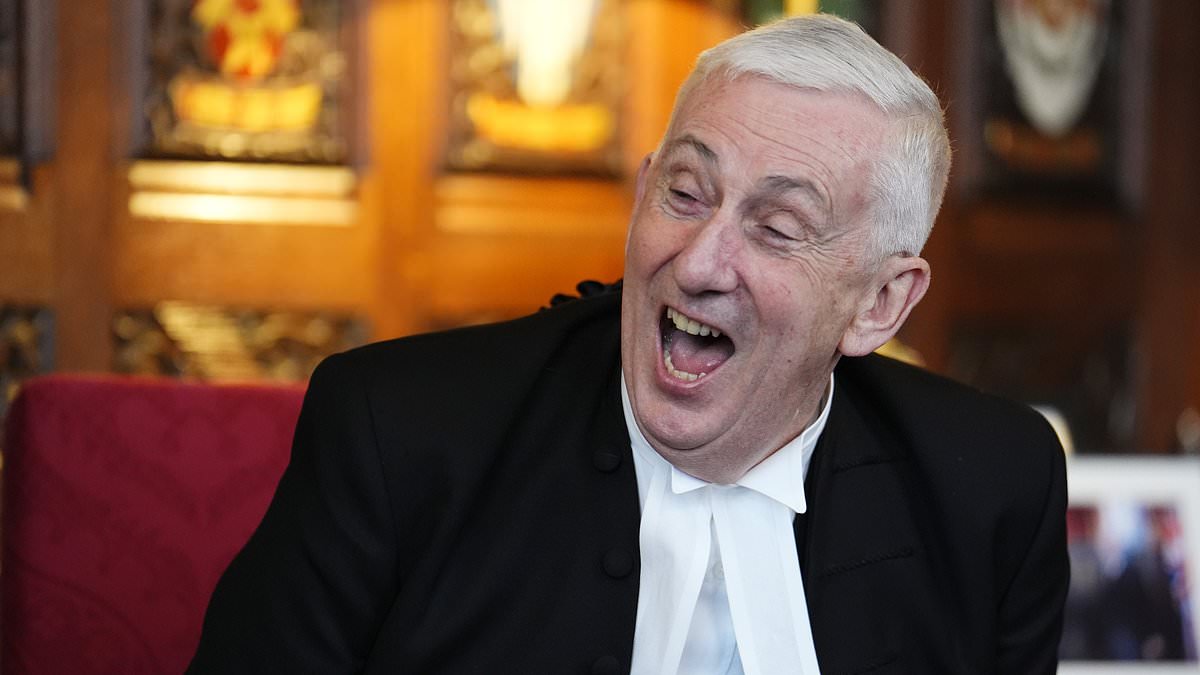
Sir Lindsay Hoyle has charged taxpayers £40,000 for trips to Canada and South Africa, as revealed in his latest travel expenses report.
The Speaker of the House of Commons, who earned the nickname ‘long-haul Hoyle’ last year, accumulated a £25,000 expense for his visit to Ottawa. This included a hefty £22,795 in flight costs, alongside £327 for transportation and £1,803 for meals and accommodation.
In addition, a journey to Cape Town cost nearly £15,000, with £13,230 spent on flights, £1,043 on lodging, and £169 on meals.
These trips were part of five journeys Sir Lindsay embarked upon between September and December of the previous year. His overall travel expenses for ‘non-regular travel’ have reached £370,000 across 30 trips since he assumed the role of Speaker, with the majority of these expenses incurred in the last three years.
Up until earlier this month, Sir Lindsay had only disclosed details of his travel expenses up to August of last year. Expenses for 2026 have yet to be published.
The recent disclosure also highlights a £2,524 expenditure on a trip to Gibraltar, which allowed staff to accompany him to a graduation ceremony at the University of Gibraltar—a visit unrelated to his Parliamentary duties.
He is Chancellor of the university and has used taxpayers’ cash for several visits there. The cost – £1,786 on flights and £700 on hotels and meals – was for two staff to jet off with him, as the university covered Sir Lindsay’s costs.

Sir Lindsay spoke of how it was ‘wonderful’ to visit officials at the Malaysian Parliament during a trip there last year

Sir Lindsay visited officials at the Malaysian Parliament last year during a trip to Kuala Lumpur, which cost taxpayers more than £24,000

The hotels and resorts Sir Lindsay has stayed in were up to £900 a night. His room at the Westin Grand in the Cayman Islands (pictured) for one trip was £679 a night
Two further trips to Jersey, the Channel Island, and Holyrood to visit the Scottish Parliament came in at more than £3,000.
Callum McGoldrick, of the TaxPayers’ Alliance said: ‘Taxpayers are sick of seeing their hard-earned cash treated as a travel fund for the Speaker.
‘While families are tightening their belts, the Speaker is racking up eye-watering bills for luxury flights and trips that seem more about personal prestige than parliamentary business.
‘Sir Lindsay needs to rein in these trips and properly explain why the public is picking up the tab for his foreign jollies.’
Former Tory Cabinet Minister David Jones said: ‘There’s no reason for him to spend taxpayers’ money going to the University of Gibraltar, which has nothing to do with his job. It’s astonishing.
‘It’s fair to say the Speaker is to an extent an ambassador for Parliament, but one would have thought that at a time of a cost of living crisis he would be a bit more mindful of the impression that these visits give.’
According to the Speaker’s travel log, the Canada trip in September was to attend a conference of Speakers from the parliaments of G7 countries, along with two staff.
The visit to Cape Town less than a month later, along with one of his staff, was for another conference of Speakers – this time from G20 countries.Sir Lindsay spoke of how it was ‘wonderful’ to visit officials at the Malaysian Parliament during his trip there last year
Meanwhile, the three-day visit to Jersey in October with two staff was for meetings with its Chief Minister, who is head of government, and its chief judge.
Sir Lindsay was branded ‘long-haul Hoyle’ last year following a string of revelations by this newspaper.
He has racked up a bill of more than £220,000 on first and business class plane tickets alone because he won’t travel in economy.
Tens of thousands more has been splurged on chauffeur-driven cars, stays at luxury five-star resorts and swanky restaurants.
Several of his taxpayer-funded trips appear to have had little to do with his Parliamentary role, including giving speeches at the University of Gibraltar and the University of California.
During a Caribbean tour in March 2023, Sir Lindsay splurged nearly £5,500 chartering private planes to hop between the islands of St Maarten, Montserrat, Anguilla and Antigua, which are British Overseas Territories.
Another of his eyebrow-raising trips was in 2024, when he spent £22,000 for a five-day trip to meet his counterpart in the Cayman Islands, staying at the Westin Grand, where his room was billed at £679 per night.
Critics have said the extent of his globe-trotting and the bills racked up have been ‘excessive’ and that several appeared to be ‘jollies’ at taxpayers’ expense.
In February, it emerged he was on a jaunt to the British Virgin Islands when he picked up the suggestion that Peter Mandelson might be about to flee Britain for the archipelago amid the fallout from the Jeffrey Epstein scandal, later tipping off police. At the time, Lord Mandelson said claims he was a flight risk were ‘baseless’.
A Speaker’s office spokesman said: ‘The visits to Canada and South Africa were for the G7 Speaker’s Conference and the G20 Parliamentary Speaker’s Summit respectively.
‘It is obviously important that Mr Speaker – alongside his counterparts – attends such events. Costs also cover accompanying staff.
‘The visit to Gibraltar was in Mr Speaker’s capacity as Chancellor of the University of Gibraltar and his flights and accommodation were covered by the University.’