
A Canadian judge has intervened to stop the deportation of an Indian truck driver, citing concerns over his mental health. This driver was responsible for a tragic accident that claimed the lives of 16 members of a junior ice hockey team.
Judge Jocelyne Gagne issued a temporary stay on the deportation of Jaskirat Singh Sidhu, just days before he was set to be sent back to India.
In a devastating incident on April 6, 2018, Sidhu, 37, was at the wheel of a semi-truck loaded with peat moss when he ran a stop sign at speeds between 53 and 60 mph. His truck collided with a bus carrying the Humboldt Broncos hockey team in rural Saskatchewan.
Sidhu admitted to dangerous driving causing death and received an eight-year prison sentence in March 2019. However, he was released on parole after serving four years and four months.
Following his release, the Immigration and Refugee Board revoked Sidhu’s permanent residency status and ordered his deportation from Canada.
In a last-ditch effort to avoid deportation, Sidhu’s attorneys submitted a request for him to stay in Canada, arguing on humanitarian and compassionate grounds.
The attorneys argued that Sidhu has two young children who would be affected by his absence, and that he is living with mental health issues, including depression and Post-Traumatic Stress Disorder, that could worsen if he were to be deported.
Justice Gagne on Friday granted a pause of his deportation until the court can rule on his residency application, stating that ‘considering his high suicidal ideation, that he would suffer irreparable harm in the absence of a stay order,’ CBC News reported.

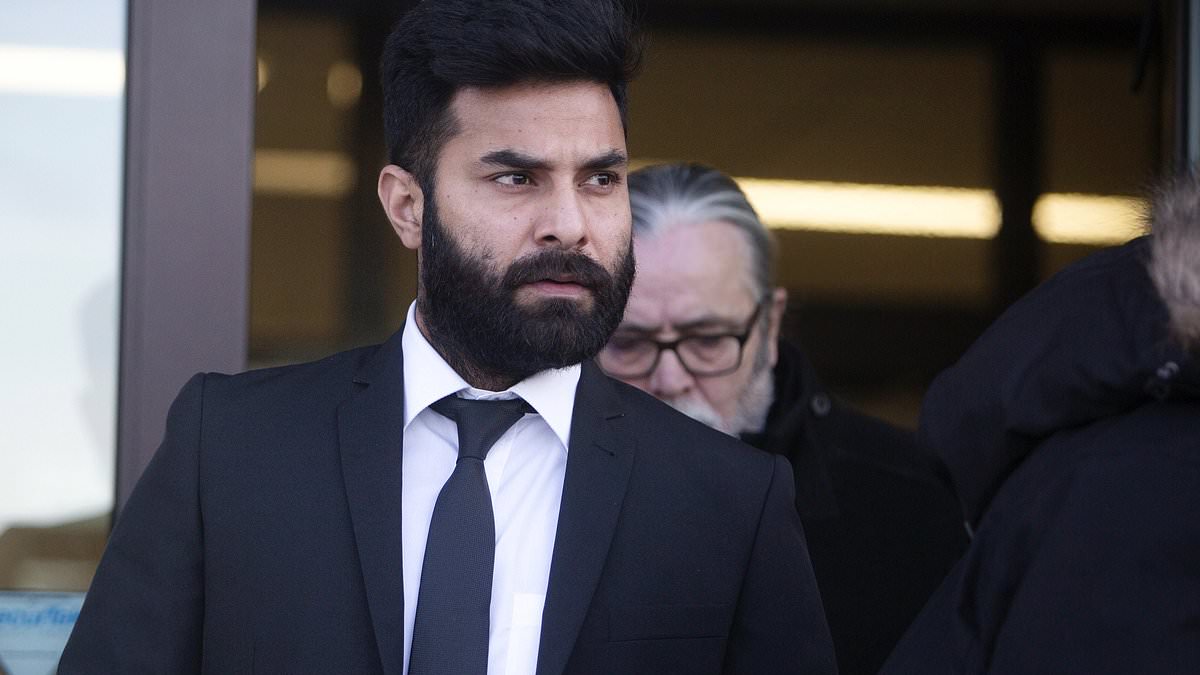
Jaskirat Singh Sidhu was scheduled to be deported to India this week, but on Friday, a judge ruled he can stay in Canada

Sidhu struck a bus carrying a total of 29 people, including the driver and the Humboldt Broncos (above), when it crashed in Saskatchewan, Canada. Ten teammates and six staffers died
Sidhu appeared in federal court in Calgary last Friday, just three days before his scheduled deportation.
His lawyer, Navi Dhaliwal, told the judge that if he were forced to return to India, Sidhu was ‘quite likely to commit suicide,’ the court heard.
‘This is not about the availability of treatment,’ Dhaliwal said. ‘This is about his harm upon removal.’
Co-counsel Michael Sherritt added that Sidhu should not be penalized for the long processing time of his immigration case.
Alexander Menticoglou, representing the Minister of Public Safety and Emergency Preparedness, argued that the first stage of the humanitarian and compassionate application could take 17 months.
He argued the law states deferral is for short-term emergencies, lasting just a few months.
Menticoglou also argued that there is insufficient evidence to support claims that Sidhu is an imminent risk of suicide.
‘The applicant is a convicted criminal and he’s responsible for the deaths of 16 Canadians,’ Menticoglou told the court. ‘This ranks along the worst tragedies in Canada’s history, and we don’t have to assess the applicant’s moral blameworthiness for that crime because-‘
But Justice Gagne interrupted him, stating that Sidhu’s crimes were ‘dealt with in the criminal court and the sentence that was imposed.’

Justice Jocelyne Gagne granted a temporary stay of deportation for Sidhu, telling the court that ‘considering his high suicidal ideation, that he would suffer irreparable harm in the absence of a stay order’
A parent whose son died in the hockey bus crash is outraged by Gagne’s decision, claiming that deportation was part of Sidhu’s sentence and should be honored.
‘Being deported back to India, although not anybody’s favorite choice, is not a death sentence,’ former NHL player Chris Joseph, whose son Jaxson died in the tragedy, told Media Bezirgan. ‘What we have is a death sentence.’
Canadian law states that a legal immigrant with permanent resident status can lose their status and face deportation if they are convicted of a crime with a sentence greater than six months.
Joseph cited how the criminal court judge, immigration authorities, court of appeals and the Canada Border Services Agency all ruled Sidhu should be deported.
‘Deportation was part of his sentence. Forgiveness doesn’t mean he gets to be more special than any other criminal,’ Joseph said.
The grieving father added that, unlike the victims of the crash, Sidhu can still be with his family, even if he is deported. He said: ‘His family can go to India with him. If my wife or I were deported, we’d be at each other’s side.’
Russ Herold, whose son, Adam, was the youngest player killed in the crash, previously told CBC that he thought Sidhu should have been deported years ago.
‘To talk about [Sidhu] trying to stay here on humanitarian grounds – what about the humanitarian side of the parents who lost their children?’ Herold said.
‘It’s not like he stole our car and we can go buy another one. We can never replace our children.’

The hockey team’s bus and the truck that crashed into it, as well as its scattered cargo, in the aftermath of the 2018 crash
Some of the victims’ families have also expressed their support for Sidhu to stay in the country, with Christine Haugan, the widow of head coach Darcy Haugan, arguing that his deportation would not bring the victims back and would only hurt Sidhu’s family.
‘I forgive him,’ she said. ‘When he closes his eyes, I’m sure he sees horrific things and I just would hope that there’s some way that he can forgive himself and know that he’s allowed to be happy, too.’
Sidhu caused the deadly crash after he failed to brake as he approached the intersection of two highways, and did not heed multiple warnings, including one with a flashing light.
He was not impaired by drugs or alcohol, speeding or on his phone during the fatal collision, instead telling the court at his sentencing that he was distracted by a tarp covering his cargo that came loose and was flapping in the wind.
It later emerged that Sidhu had committed 70 violations of federal and provincial trucking regulations in the 11 days leading up to the crash.
Most of those were discrepancies in his logbook, which is designed to monitor how much time drivers spend on the road to prevent them from becoming dangerously fatigued.
In the immediate aftermath of the crash, Sidhu told the victims’ families at his sentencing how he came out of his truck and heard the teenagers crying.
Sidhu pleaded guilty, was jailed in 2019 and then granted full parole in 2023, returning to his suburban life with his Canadian wife.
The couple had a baby soon after. The child has severe heart and lung complications.