
Share this @internewscast.com

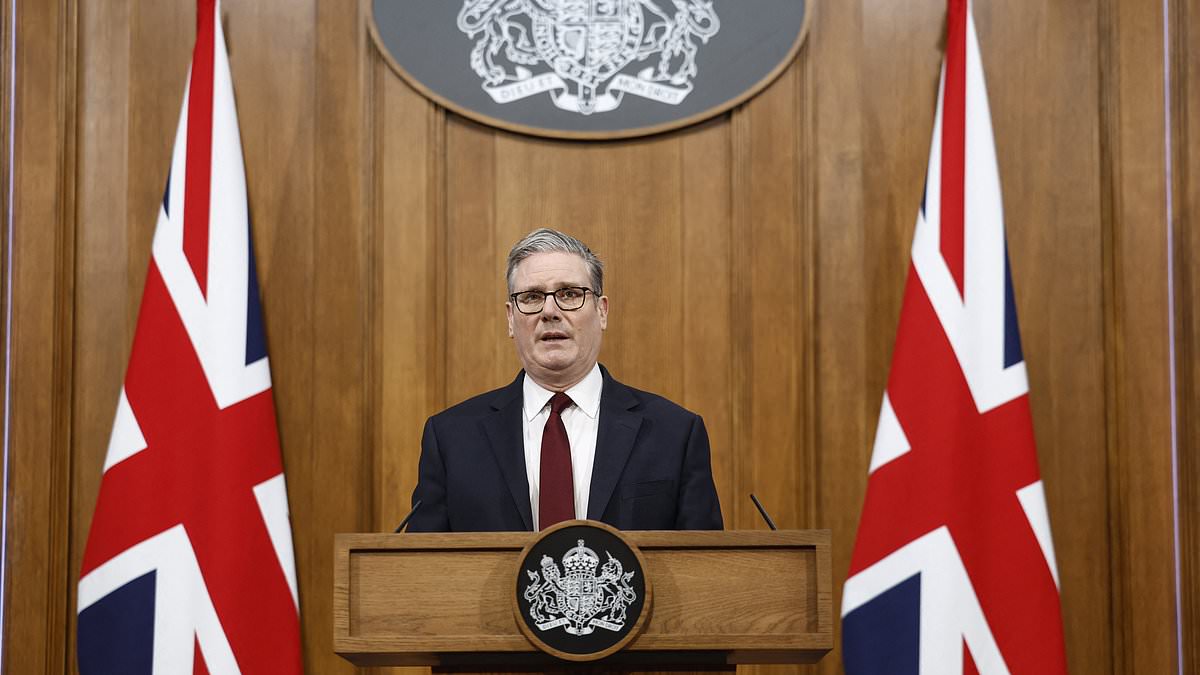
In a firm stance against escalating military involvement, UK Prime Minister Keir Starmer emphasized today that Britain will not be entangled in a broader conflict in the Middle East. During a press briefing at Downing Street, Starmer dismissed former U.S. President Donald Trump’s urging to deploy British warships to the Strait of Hormuz. The Prime Minister stressed the importance of ending the conflict swiftly to prevent further danger and economic strain at home, advocating instead for a “negotiated agreement” with Iran. While open to a “viable collective plan” for the region, Starmer indicated the UK is currently only considering the deployment of anti-mine drones, stating, “This is not easy. It’s not straightforward.” His remarks followed criticism from Trump regarding his hesitance to join military actions against Iran.
NATO at a Crossroads

Amidst a tense phone conversation with Trump, Starmer reportedly conveyed that Britain would refrain from sending warships to the Strait, a stance shared by France, Canada, Germany, and Australia. The Strait is a critical passage for about 20% of the world’s oil supplies, but its effective closure by Iran has sent oil prices soaring, stirring fears of a global economic downturn. Trump intensified pressure by tying the response to his demands for naval deployment to the future of NATO and support for Ukraine. UK ministers dismissed his comments as mere rhetoric. Starmer emphasized, “We’re working with all of our allies, including our European partners, to bring together a viable collective plan that can restore freedom of navigation in the region as quickly as possible and ease the economic impacts.”
Bailouts and Red Lines

Meanwhile, the ongoing Middle East crisis continues to ripple through various sectors: A YouGov poll indicates that 77% of Britons believe the conflict will have a long-term negative impact on the UK economy, while only 26% think Iran’s nuclear ambitions will be curbed. Former UK forces chief Nick Carter cautioned against sending navy ships to the Strait, highlighting the risk of them being sunk and stressing that NATO is a defensive, not offensive, alliance. An expert in oil markets and former No. 10 adviser warned that energy rationing might become necessary if the situation worsens. In response to rising heating oil prices, Starmer unveiled a £53 million support package targeting households most affected. Ministers also hinted at a possible larger bailout if the crisis persists, with aid likely directed towards benefit claimants and pensioners. Starmer reiterated, “The Strait of Hormuz is then a separate discussion… and it’s a discussion. We’re not at a point of decision… We are working, discussing that with the US, with Gulf partners… there are no decisions that have been made.” He noted that he had discussed the matter with President Trump, as expected between allies.

Sir Keir said: ‘It’ll have to be something which is agreed by as many partners as possible, is my strong view. We’re not at that stage yet, but we are working hard.’ The president has previously branded the PM ‘no Churchill’ for refusing to join initial US-Israeli strikes on Iran a fortnight ago. Speaking to the Financial Times after his call with Sir Keir, Mr Trump took aim at the Special Relationship again. ‘The UK might be considered the number one ally, the longest serving et cetera and when I asked for them to come, they didn’t want to come,’ he said. ‘And as soon as we basically wiped out the danger capacity from Iran, they said, “oh well we’ll send two ships,” and I said, “we need these ships before we win, not after we win.” I’ve long said that Nato is a one-way street.’ Mr Trump said: ‘It’s only appropriate that people who are the beneficiaries of the Strait will help to make sure that nothing bad happens there.’ ‘We have a thing called Nato,’ Trump added. ‘We’ve been very sweet. We didn’t have to help them with Ukraine… but we helped them. Now we’ll see if they help us. Because I’ve long said that we’ll be there for them but they won’t be there for us. And I’m not sure that they’d be there.’

He added: ‘If there’s no response or if it’s a negative response, I think it will be very bad for the future of Nato.’ Speaking to reporters on Air Force One, Mr Trump said: ‘Whether we get support or not… I can say this and I said it to them – we will remember.’ The president previously insisted the US did not need any military assistance from allies such as Britain, accusing them of only turning up after the war was ‘won’. In the past Mr Trump has questioned whether Nato countries would stand by the Article 5 commitment to collective defence, even though the only time the provision has been invoked was in response to the September 11 attacks. Downing Street said ministers were ‘discussing with our allies and partners a range of options to ensure the security of shipping in the region’. However, it appears Britain’s only immediate contribution to unblocking the strait will be autonomous underwater vehicles based in Bahrain which are untested in conflict situations.

Work and Pensions Secretary Pat McFadden told Times Radio: ‘There’s a lot of rhetoric, always, in this presidency. Underneath that, there is a good and close relationship between the United Kingdom and the United States. I’m confident that will continue. We speak to one another all the time. But that doesn’t mean that we will always have to support every intervention and every action that the United States chooses to take.’ General Sir Nick Carter said it was in the UK’s national interest to agree to Mr Trump’s request for naval help to combat Iranian forces throttling shipping in and out of the Gulf. But he said that any Royal Navy vessels sent to either clear mines or escort tankers would be ‘vulnerable’ to attacks by the Islamic Revolutionary Guard Corps. He told BBC Radio 4’s Today programme escort ships would also face tough opposition, saying: ‘You are very vulnerable when you do it. On the assumption there are no mines in the water the threat is principally about shore-based drones and shore-based missiles. Modern air defence systems are capable of dealing with that, as we have seen over the course of the last two or three weeks of this war.’

‘But we should be in no doubt that if they put together all of the IRGC capabilities… it would be quite exciting going through the Straits of Hormuz.’ Asked if ‘quite exciting’ meant ships could be lost, he added: ‘It would be challenging, no doubt about it, the risks as I have described them are significant.’ However he added that it should be balanced against the interest the UK and the global economy has in keeping the Strait open. He backed ‘a well-coordinated operation led by the Americans with many nations involved in it, thoughtfully planned and implemented’ because no one, not even the US Navy, has the capability to do it alone.

Nick Butler, the former head of strategy at BP and a former adviser to Gordon Brown, has warned that ministers would need to consider rationing energy if the situation gets bad enough. ‘I think we learnt from the tanker drivers dispute in 2000 that oil and gas supplies are absolutely crucial to the running of the economy and you can’t bring on new supplies quickly,’ he told the BBC. He added: ‘In the short-term, we have to look at what supply we have and look at the crucial sectors, the health service, food supply, hospitals, those are key elements that must be protected. ‘And beyond that, it is then for the Government to decide how to ration what is left if we get to that situation.’