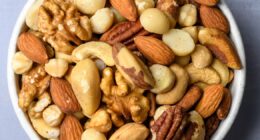

Scientists suggest that adopting a “brain healthy” diet may help slow the physical decline associated with Alzheimer’s and Parkinson’s diseases.
A significant long-term study revealed that individuals who adhered closely to this diet experienced slower brain cell loss and reduced brain shrinkage, as observed in scans—factors that are closely associated with memory deterioration and dementia.
This dietary approach, known as the MIND diet, stands for Mediterranean–DASH Intervention for Neurodegenerative Delay. It prioritizes foods like leafy greens, berries, nuts, olive oil, and fish.
While previous studies have linked the MIND diet to a decreased risk of dementia, new research provides evidence that it can also slow the damage leading to these neurodegenerative conditions.
Published in the Journal of Neurology, Neurosurgery & Psychiatry, the researchers recommend promoting this diet as a straightforward strategy to address the growing incidence of dementia in aging populations.
Dr. Mohammad Talaei, a lecturer specializing in life course epidemiology at Queen Mary University of London, described the study as a significant advancement in understanding how dietary choices can enhance brain health.
To investigate the diet’s effects, researchers tracked 1,647 middle-aged and older adults from the Framingham Heart Study Offspring cohort for around 12 years.
Participants completed detailed dietary questionnaires covering roughly 140 food items and underwent at least two MRI scans over the study period.

A diet rich in leafy green vegetables, berries, nuts, olive oil and fish could slow down age-related brain decline by more than two-and-a-half-years, experts say
Researchers then calculated a MIND diet score ranging from 0 to 15, based on how closely each participant’s eating habits matched recommendations across nine encouraged food groups, five restricted food groups and moderate wine intake.
On average, participants scored 6.8 out of 15.
Those with the highest scores were more likely to be women, college educated and non-smokers. They also had lower rates of type 2 diabetes, high blood pressure and heart disease – all of which are known to increase the risk of dementia.
Lifestyle factors including smoking, physical activity and body mass index were also taken into account.
As expected, all participants showed some degree of age-related brain decline over the course of the study.
But those who adhered more closely to the MIND diet experienced a slower decline in grey matter and less enlargement of the brain’s ventricles – fluid-filled spaces that expand as brain tissue is lost.
The most notable differences were seen in the hippocampus, a region crucial for learning and memory.
Grey matter is rich in nerve cells and plays a central role in memory, learning and decision-making, while ventricular enlargement is a key marker of brain atrophy.
Researchers found that a three-point increase in MIND diet score was associated with the equivalent of a two-and-a-half-year reduction in brain ageing.
Join the debate
Do YOU believe diet plays a major role in preventing dementia?

Everyone experiences dementia differently. Use this checklist to help you make a note of your symptoms before you talk to your GP.

Those who followed the diet more strictly also showed slower ventricular expansion, equivalent to roughly a one-year delay in brain ageing.
The benefits appeared strongest in older adults, people who were physically active and those who were not overweight – suggesting a combined lifestyle approach may offer the greatest protection.
The researchers said foods promoted by the diet may help protect the brain by reducing oxidative stress and inflammation.
They wrote: ‘MIND-recommended foods rich in antioxidants, such as berries, and high-quality protein sources like poultry may reduce oxidative stress and mitigate neuronal damage.
‘Conversely, fried or fast foods, often high in unhealthy fats, trans fats and advanced glycation end-products, may contribute to inflammation and vascular damage.’
However, the study also produced some unexpected findings.
Higher wholegrain intake was linked to less favourable changes in several brain markers, including faster decline in grey matter, while higher cheese intake was associated with slower decline.
The researchers said further long-term studies are needed to better understand how specific foods and dietary patterns influence brain ageing.
Dr Talaei also suggested a ‘longer follow-up’ to the study ‘might be needed’.
Meanwhile, Professor Eef Hogervorst, an expert in biological psychology at Loughborough University, said the findings should be interpreted alongside other lifestyle factors.
She said: ‘This suggest that engaging in multiple lifestyle behaviours including not smoking and engaging in physical activity and making sure people address health conditions such as prediabetes and hypertension, rather than only focusing on diet, is important to maintain brain health, and prevent dementia risk and cognitive decline.’
Professor Catey Bunce, statistical ambassador at the Royal Statistical Society, said the results were ‘interesting’ but urged for caution.
She added: ‘As with many observational studies, the results are interesting and may point to possible associations, but they should not be interpreted as definitive evidence that the diet directly prevents brain ageing.’
Michelle Dyson, chief executive of Alzheimer’s Society, welcomed the findings and said ‘further research into prevention is vital’.
She continued: ‘Continuing to grow our understanding of risk, and encouraging people to quit smoking, keep physically active, eat a healthy balanced diet, control blood pressure and drink less alcohol can all help reduce the risk of dementia.’
Dr Jacqui Hanley, head of research at Alzheimer’s Research UK, said ‘the findings add to growing indications that eating a balanced diet, staying active and taking other healthy steps may support our brain health as we age’.
She added that ‘more long‑term studies in diverse groups are still needed’.
Around 900,000 people in the UK are currently living with dementia, a figure expected to rise to more than 1.6 million by 2040. It is the leading cause of death, accounting for more than 74,000 deaths each year.
Foods with an impact
These are the ten brain-healthy foods set out in the MIND diet, proven to reduce dementia risk…
- LEAFY GREENS such as spinach, kale and other vegetables rich in folate and vitamin K: six-plus servings a week.
- OTHER VEGETABLES, particularly colourful varieties: one-plus serving daily.
- NUTS, especially almonds and walnuts for healthy fats: five-plus servings a week.
- BERRIES like blueberries and strawberries, rich in antioxidants: two-plus servings a week.

Olive oil is recommended for cooking as part of the MIND diet
- BEANS AND LEGUMES for protein and fibre: three-plus servings a week.
- WHOLEGRAINS – brown rice, quinoa and whole wheat products: three-plus servings a day.
- FISH – fatty fish (e.g. salmon, mackerel) for omega-3 fatty acids: one-plus serving weekly.
- POULTRY – this is a good, lean protein source: two-plus servings a week.
- RED WINE in moderation; one glass daily (this is optional).
And the five categories of food considered unhealthy are: red meat; butter and margarine; cheese; pastries and sweets as well as fried or fast foods.
One serving (or less) per week of these foods are recommended.