
The International Monetary Fund’s annual meeting of finance ministers and bankers often seems to coincide with global crises.
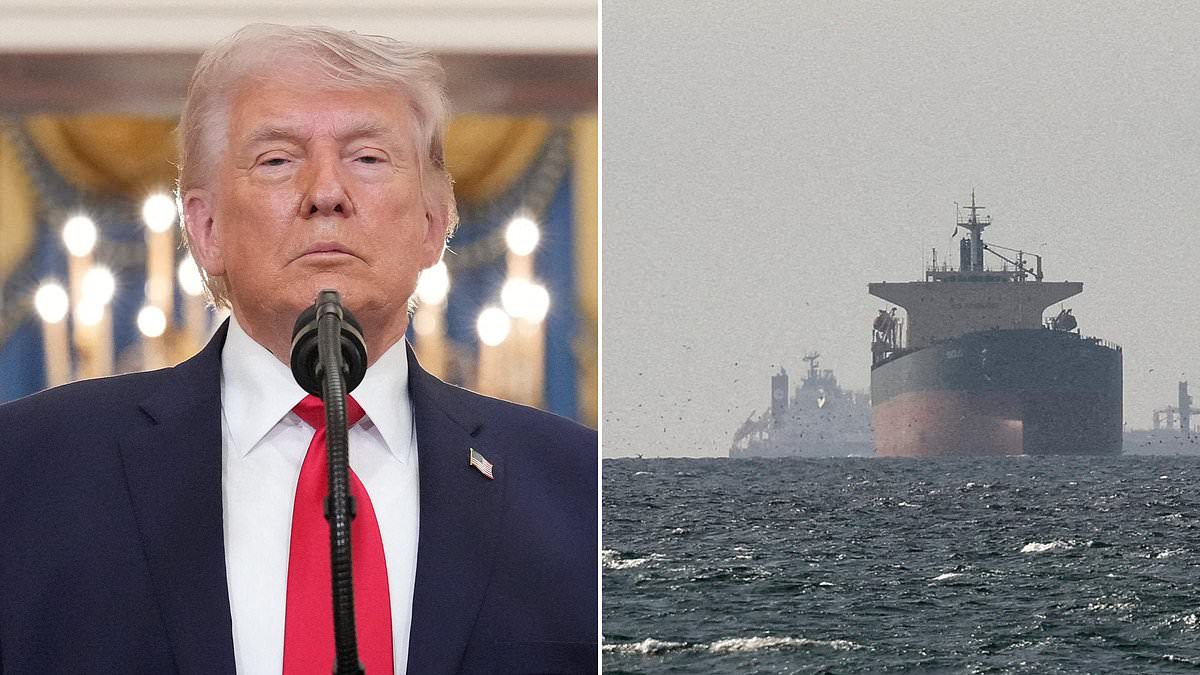
This year, the tension is unmistakable. President Donald Trump’s frequent and erratic social media updates on the deadlock in the Strait of Hormuz have left financiers, bankers, and economists more anxious than ever.
The blockade of this crucial waterway is causing chaos in the oil and gas markets, casting a dark shadow over Washington, D.C., already burdened by an unseasonable heatwave.
Economists at the meeting are comparing today’s energy crisis to the turmoil of the 1970s Yom Kippur War, which led to skyrocketing oil prices, rampant inflation, and a global recession.
Back then, Britain’s economic woes included a plummeting pound and a reluctant bailout from both the U.S. and the IMF under Prime Minister Jim Callaghan’s Labour government.
If current trends continue unchecked, experts warn that the situation could worsen significantly.
Rachel Reeves arrived in Washington for the IMF meetings full of misplaced bravado, claiming that Britain had entered this conflict in a stronger position than before ‘because of the choices this Government took to build economic stability’ and demanding ‘responsive and responsible action’ in the face of war.
How the Chancellor can utter such remarks is beyond me, given that the IMF has singled out Britain as the country that faces the biggest economic shock in the G7 from the effect of Trump’s war on Iran.

International Monetary Fund managing director Kristalina Georgieva in Washington DC yesterday
Thanks to our ridiculous dependence on gas imports and our lack of gas storage facilities, we simply cannot protect ourselves from the ravaging effect of soaring global oil and gas prices.
The truth is that those representing the UK Government – as well as virtually every other country in the advanced world – have good reason to be really scared of what is to come.
IMF officials accept that the world could already be heading for the first global recession since 2020, when the Covid lockdowns brought economic activity across the planet to a shuddering halt.
However, it’s almost certainly going to be worse this time, for the current energy tsunami – affecting 80 per cent of countries that import oil – comes on top of the cumulative effect of a string of huge shocks to stability over the past quarter-century that have left public finances reeling.
We’ve still not fully recovered from the banking meltdown of 2008, which led to the great financial crisis.
We’re still adjusting to the chaos caused by the pandemic. And Russia’s brutal war on Ukraine, now in its fourth year, is still affecting stability, as is President Trump’s tariff chaos.
As a result, advanced countries have been left with debt levels that are more than 100 per cent of total national output. As the war in the Gulf rages, the US is heading towards a ‘debt to output ratio’ – a crucial economic metric – of more than 140 per cent. In plain terms, that presages disaster.
Fear has stalked all the sessions of the IMF that I have attended here in recent days.

The economic fallout of the mess in which Donald Trump finds himself is in effect immeasurable, writes Alex Brummer
During private dinners with US government officials and at gatherings of bankers, I have heard and witnessed the acute concern among top financiers and officials.
The world, in their view, has stumbled into a military and economic pit governed by an unstable, even lunatic leader in Trump, who is incapable of understanding the full consequences of his actions.
The economic fallout of the mess in which he finds himself – in the shape of rocketing prices, balance of payments difficulties where countries can no longer finance their trade, and lost output – are in effect immeasurable.
The World Bank is immediately mobilising up to $100billion (£74billion) of rescue funds for ailing poorer nations and the IMF a further $80billion (£59billion) to help emerging market countries. But no one thinks this will be nearly enough.
What is more, advanced nations such as Britain face challenges just as daunting as those crises looming over the poorer countries.
Because their public finances are in such appalling shape, G7 nations are in no position to support struggling households and businesses as they seek to weather the storm of soaring fuel and food prices, and other rising costs.
Generously hosing taxpayers’ money at poorer households, especially during a crisis, is more or less Labour’s raison d’etre.
Now, however, inflation has to be kept at bay and wage-price spirals avoided – and responsibility for doing so will fall on the Bank of England and other central banks.

The war in Iran and the closure of the Strait of Hormuz have caused global economic unrest
Which means they are now almost certain to change course and raise interest rates to curb inflationary pressures. Instead of the falling borrowing costs anticipated this year, mortgages will become more expensive, there will be less funding for investment by business and a near-fatal blow will be struck against consumer spending. Again, it all means we could be looking at a prolonged recession.
And this at a moment when our financial institutions are themselves in mortal peril, with bankers and financiers attending these IMF meetings living in fear of an economic collapse.
A weird kind of optimism has been witnessed on Wall Street, which has seen share prices rebound from the initial blow of the Iran war with the S&P 500, the broadest index of America’s top shares, hitting a new peak this week.
But beneath the misplaced exuberance of share markets, the tectonic plates of global finance are shifting.
Risky lending in the form of the poorly policed private credit market has ballooned in the US to an eye-watering $2trillion. If lenders take fright and demand their money back because of economic uncertainty, who knows what could happen?
Equally, there’s said to be an astonishing $6trillion at risk courtesy of US hedge funds, which make vast bets on financial markets. They would be hugely exposed to any market volatility.
In addition, there are serious fears of a tech bubble, with a remarkable $6trillion rise in share prices since the last big dip in the markets.
The artificial intelligence boom is concentrated in the top-ten tech stocks, among them Google’s parent company Alphabet, Apple, Amazon, Facebook owner Meta, Microsoft, Nvidia and Netflix. A decade ago, they represented 20 per cent of the value of global markets, a figure that has since gone up to 33 per cent.
Any fissures could bring the whole lot tumbling down, and in Washington this week there is talk the war with Iran could be the catalyst.
Serving as a reporter during the sub-prime mortgage and banking crisis of 2008, I witnessed first-hand how market stability unravelled so rapidly that regulators and central banks struggled to cope.
There were behind-the-scenes warnings that the whole UK banking system might need to be nationalised, and Britain could face a sterling crisis.
Here among the grim-faced, sweating bankers and officials this week there is recognition that something just as threatening is possible. And the feeling is that we have seldom been in a worse position to cope.