

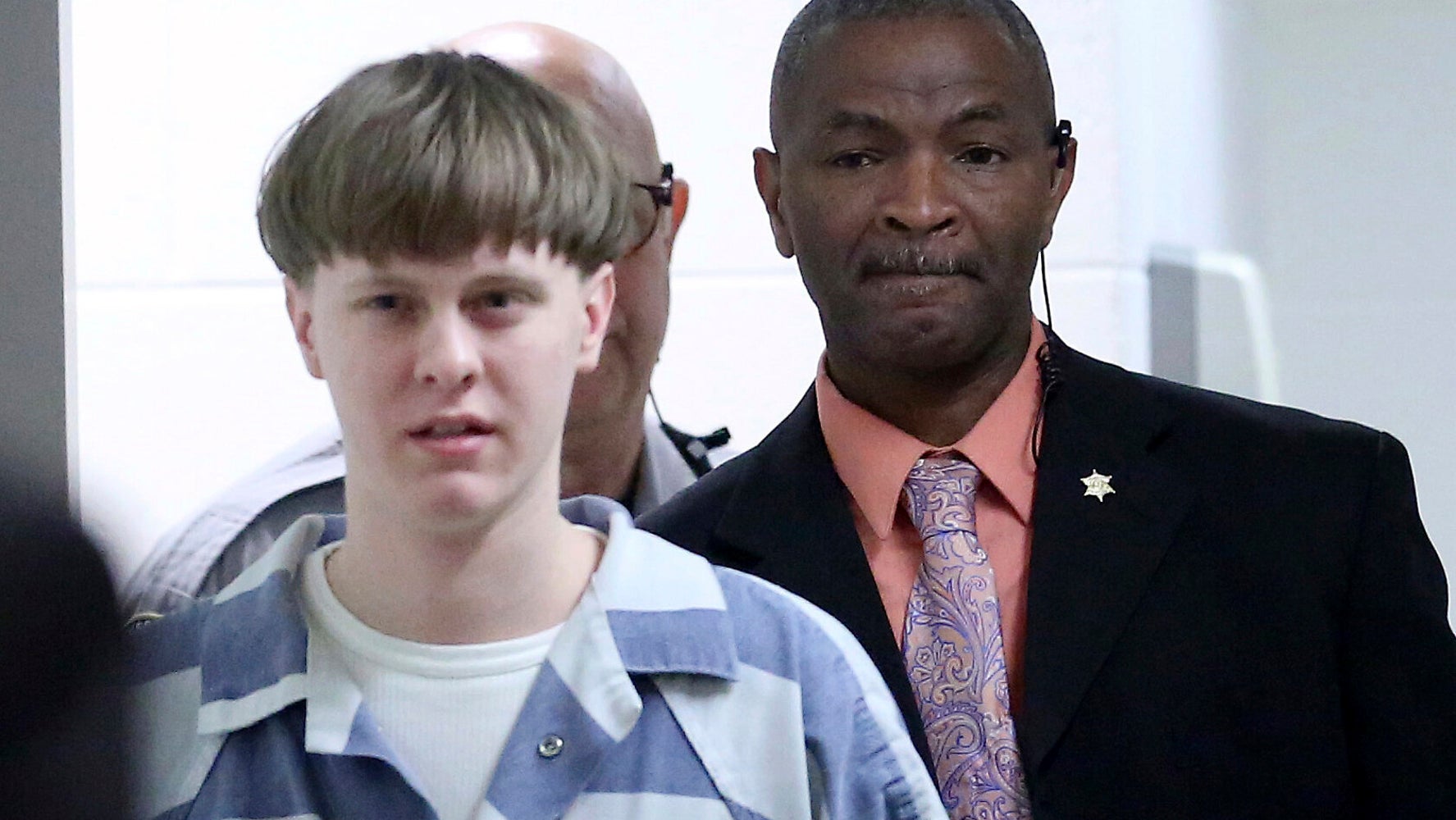
Dylann Roof has filed the next step in his federal appeal, challenging a court’s confirmation of his conviction and death sentence for the 2015 racist slayings of nine members of a Black South Carolina congregation.
In a petition filed Wednesday with the 4th U.S. Circuit Court of Appeals, attorneys for Roof argued that the court’s decision last month to uphold his federal conviction and sentence interpreted too broadly the Commerce Clause of the U.S. Constitution, which authorizes Congress to regulate commerce among the states.
Last month, a three-judge panel of the court unanimously upheld Roof’s conviction and sentence, saying the legal record cannot even capture the “full horror” of what he did. The judges rejected arguments that the young white man should have been ruled incompetent to stand trial in the shootings at Mother Emanuel AME Church in Charleston. Now, Roof wants the full court to consider his appeal.
By accepting the government’s argument that a combination of factors including Roof’s use of the internet to post his views and research the church constituted “interstate commerce,” Roof’s lawyers wrote, the panel’s decision amounted to “an amorphous, unprecedented, and all-encompassing standard for federal Commerce Clause jurisdiction over local crime, effectively nullifying states’ traditional police power in that arena.”
In 2017, Roof became the first person in the U.S. sentenced to death for a federal hate crime. Authorities have said Roof opened fire during the closing prayer of a Bible study at Mother Emanuel, raining down dozens of bullets on those assembled. He was 21 at the time.
In his appeal, Roof’s attorneys had argued that he was wrongly allowed to represent himself during sentencing, a critical phase of his trial. Roof successfully prevented jurors from hearing evidence about his mental health, “under the delusion,” his attorneys argued, that “he would be rescued from prison by white-nationalists — but only, bizarrely, if he kept his mental-impairments out of the public record.”
Roof’s lawyers said his convictions and death sentence should be vacated, or his case should be sent back to court for a “proper competency evaluation.”
The 4th Circuit initially found that the trial judge did not commit an error when he found Roof was competent to stand trial and issued a scathing rebuke of Roof’s crimes.
“No cold record or careful parsing of statutes and precedents can capture the full horror of what Roof did,” the judges wrote. “His crimes qualify him for the harshest penalty that a just society can impose.”
It remains to be seen who exactly would hear the case, should the court grant Roof a full hearing. All of the judges in the 4th Circuit, which covers South Carolina, have recused themselves; one of their own, Judge Jay Richardson, prosecuted Roof’s case as an assistant U.S. attorney. The panel that heard arguments in May and issued August’s ruling was composed of judges from several other appellate circuits.
Along with his request for a full-court hearing, Roof also asked that either U.S. Supreme Court Chief Justice John Roberts designate a panel to consider the rehearing petition or the 4th Circuit’s chief judge designate other judges from within that district to make up such a panel.
After his federal trial, Roof was given nine consecutive life sentences after pleading guilty in 2017 to state murder charges, leaving him to await execution in a federal prison and sparing his victims and their families the burden of a second trial.
Earlier this summer, however, Attorney General Merrick Garland issued a moratorium and halted all federal executions while the Justice Department conducts a review of its execution policies and procedures. The review comes after a historic run of capital punishment at the end of the Trump administration, which carried out 13 executions in six months.
A federal lawsuit also has been filed over the execution protocols — including the risk of pain and suffering associated with the use of pentobarbital, the drug used for lethal injection.
As a candidate, President Joe Biden said he’d work to end federal executions. White House press secretary Jen Psaki said in March that he continues to have “grave concerns” about it.
If unsuccessful in his direct appeal, Roof could file what’s known as a 2255 appeal, or a request that the trial court review the constitutionality of his conviction and sentence. He could also petition the U.S. Supreme Court or seek a presidential pardon.
Meg Kinnard can be reached at http://twitter.com/MegKinnardAP.
Calling all HuffPost superfans!
Sign up for membership to become a founding member and help shape HuffPost’s next chapter
Source: huffpost


