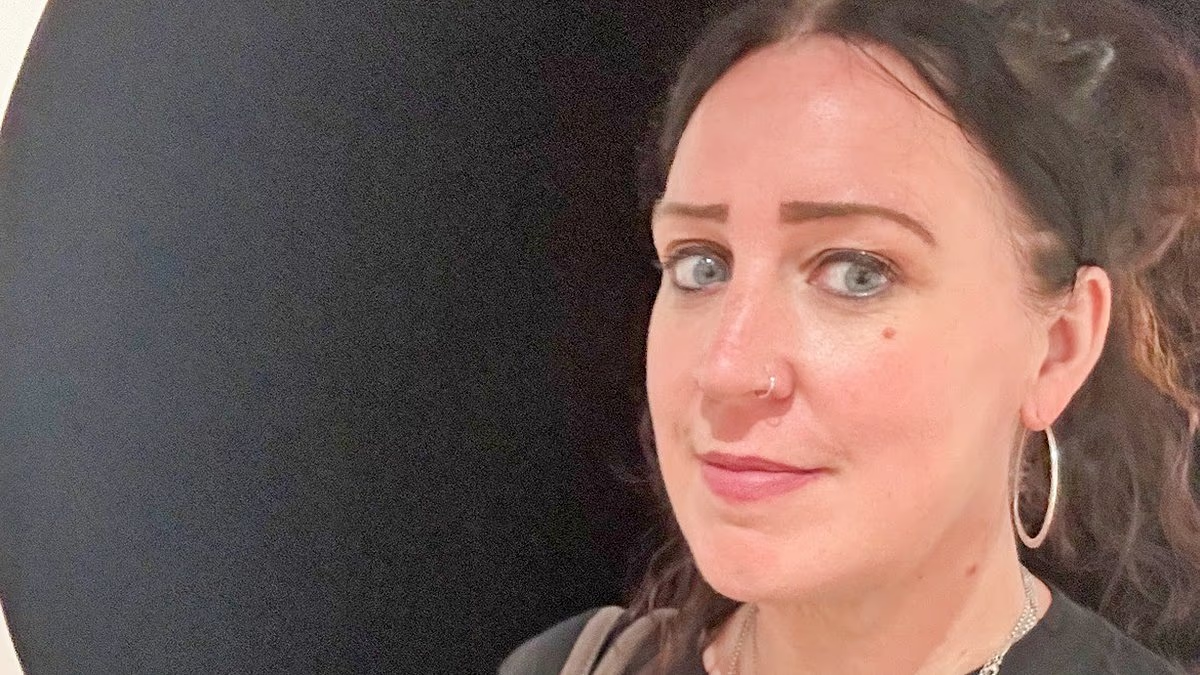
DENVER — Mary McKenzie is very busy these days; she’s Boulder County’s only dedicated behavioral health navigator for its mental health diversion program.
McKenzie is part of a pilot program prompted by a 2018 state law that works to divert some low-level criminal offenders away from jails and into treatment programs.
“We really individualize everything for what somebody is really needing to get them the support and the stability that they need,” McKenzie said. “That can be anything from mental health treatment, housing, connection to family if they’ve lost connection.”
Right now, McKenzie has about three dozen clients she’s helping with wraparound services and many others who would qualify for the program. She’s eventually hoping to help up to 75 clients at a time.
“We just had to close down referrals, because we just had no room to serve anybody else right now,” she said.
Elaina Shivley, who oversees the diversion and restorative justice and behavioral health programs for the Boulder District Attorney’s Office see the potential in the idea.
“The faster we can kind of treat and recognize, then hopefully we don’t see people getting deeper and deeper into the system,” Shivley said.
The program did face challenges at the onset; it was difficult to get off the ground, for one. Training law enforcement to recognize which offenders might benefit from the program to recommend to the district attorney’s office was also a hurdle. Funding was also a challenge.
Despite this, Shivley says the program has had a 91% success rate among participants, meaning they have been successfully connected to services and had no new charges in the six months they are working with the behavioral health navigators.
In one instance, Shivley says a low-level offender was arrested more than 100 times in 2019. He was identified as someone who could benefit from the program. Navigators worked with him to set goals and expectations, connect with a case manager and receive treatment.
In 2020, after completing the program, the man was only arrested once and he was not arrested at all in 2021. Shivley considers his story to be a success, saying he’s now housed and stabilized.
“We need more innovative programs like this, and we need better tools to be able to identify where people are at,” she said. “If we can get people back on the right track, stabilize their behavioral health issues, we’re going to see less crime from them in the future.”
Boulder is just one of several counties across the state that’s been testing out the program for the past couple of years. The 6th, 8th and 16th judicial districts have also been testing the idea out.
With the COVID pandemic, though, some of those districts had to scale back their program as funding was cut.
Now, state lawmakers are hoping to make the pilot program permanent with Senate Bill 22-010. The bill expands the scope of the pretrial adult diversion program to divert more low-level offenders away from jail based on recommendations by the district attorney’s office.
“This bill is designed to provide treatment rather than punishment,” said Sen. Pete Lee, D-El Paso County, one of the bill’s bipartisan cosponsors. “They don’t have to make a plea, they don’t get sentenced, they’re just diverted out of the system into community treatment for that period of time. At the end of it, if they haven’t re-offended and they’re progressing through the treatment, presumptively the charges could be dismissed.”
Along with making a commitment to complete the six-month program, offenders must pay restitution for the crimes they committed.
A 2021 report on the progress of the pilot program found some successes but also several challenges. Among the challenges listed:
- Judicial districts reported that the eligibility restrictions prohibited some offenders from participating who may have otherwise been appropriate for the program
- Judicial districts reported that the six-month treatment programs were not appropriate for all cases
- The obligation to pay restitution during the six-month period of diversion rendered some candidates, who would have otherwise been appropriate, ineligible
- Judicial districts found that some offenders needed a greater amount of support than was allowed in the plan
- There is a statewide and national shortage of providers
- Judicial districts are understaffed and overburdened so implementing a new program was difficult
Boulder also noticed some challenges with making sure thee offenders are able to afford their copay or deductible for the treatments. Others have a difficult time affording the restitution they owe.
The district attorney’s office does have some funding to help on both fronts but, when it comes to the restitution, says it’s important for the offenders to take ownership in repairing the harm they caused.
There’s also the risk that the offenders might not complete their treatment but have their cases dismissed.
“We don’t threaten to file the charges later. But we do expect that they are going to work with us. The downside is that there’s some people that might not come back in. And so that was a challenge for us to consider,” Shivley said.
Some of the higher-level offenders do have a review date six months after the treatment begins, though, and could return to court for charges or higher levels of service.
Sen. Cleave Simpson, R-Alamosa, is another one of the bill’s cosponsors. He sees this bill as an important step forward but, ultimately, only part of the overall public safety solution.
“The timing’s right, the state has funding to do this right now, and with all the emphasis on public safety, there’s… there ought to be a real appetite for finding that niche where folks really qualify and need the help that can get them out of the criminal justice system,” Simpson said.
One concern he has for rural Colorado in particular, though, is the availability of mental health providers, saying that a diversion program is great but if there are not the facilities or personnel to run them it won’t be as successful.
His bottom line is that the program is not for every offender or every instance, but in the right situations, it could make a difference.
“It’s not just a carte blanche pretrial diversion program. Offenders have to qualify, the district attorneys, if they’re receiving money from the state have to follow some guidelines about is this in the public’s best interest? Does it account for victim’s rights?” Simpson said.
The bill passed its first committee test already and has moved on to appropriations.
Source: This post first appeared on