

WASHINGTON – As global humanitarian organizations navigate declining funding, the leader of the International Rescue Committee emphasizes a critical decision: preserving the lives of millions in the most at-risk nations means diverting resources from initiatives in more stable countries, which tackle issues like climate change and refugee support.
Essential services such as food, water, and healthcare are ceasing operations in nations like Sudan, where the closure of 80% of community kitchens has stripped millions of their sole food source. This follows the Trump administration’s shutting down of the main U.S. aid entity and axing numerous foreign aid programs.
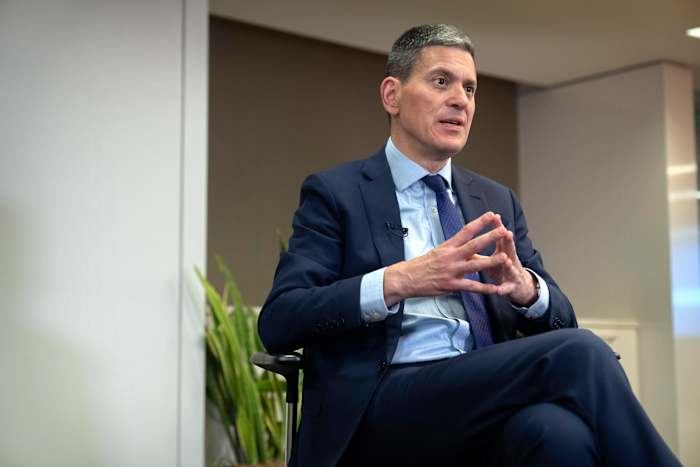
“There are lives on the line,” stated David Miliband, the IRC president, in an interview with The Associated Press this week in Washington. He also addressed lawmakers and officials from the Trump administration.
“Our point is there’s no way you can keep the aid system as it was,” said Miliband, a former U.K. foreign secretary. As it was, he notes, only 14% of total aid was going to humanitarian efforts, while middle-income countries got more funding than low-income ones.
The triage underway shows the impact of the Trump administration decision to pull the U.S. back from being the world’s single largest aid donor. The United States previously provided about a third of the more than $200 billion in foreign assistance given annually by governments worldwide. The White House last week proposed a budget for next year with an 84% cut to such funding.
Other important European donors, including Britain, say they also are cutting aid as they work to free up more money for defense spending, fearing U.S. changes in European defense commitments.
Miliband and his International Rescue Committee are more explicit than some aid groups in offering their ideas for change in leaner funding times. Countries that are doing OK or are downright wealthy should have some of their donor funding redirected, so it can go to the range of needs of poor countries most affected by war and climate change.
“If you’re looking for a guideline, I would say at least half the global aid budget needs to go to conflict states,” Miliband said. That’s up from about a quarter of total aid now.
Miliband points to climate mitigation in wealthier countries and help for newly arrived refugees to settle in wealthier countries as programs that should be lower priorities for donors in the current harsh aid environment.
With the dust settling from the Trump cuts, aid organizations are looking at how to reorganize to focus on the most vital and strategic aid, said Kate Phillips-Barrasso, a vice president of Mercy Corps, another top humanitarian organization.
“My fear is that we’re going to end up in a world” where donors split their efforts between two poles: arranging financing for infrastructure and economic development in middle-income countries or paying for only the most basic aid “helping people not die” in poor countries, Phillips-Barrasso said.
“I worry about pretty much everything in the middle disappearing,” she said. That would leave the very poorest and most fragile countries never getting the help they need to get ahead of climate change and other threats.
For Miliband and the IRC, donors should focus on getting humanitarian aid, climate help and other vital assistance to 13 poor countries struggling the most with conflicts and environmental damage. That includes Afghanistan, where the Trump administration has cut aid on the grounds that it could benefit the Taliban, and Yemen, where the U.S. recently reached a ceasefire with Houthi militants, who have been targeting global shipping.
The other countries that the IRC identifies as priorities for the shrinking pool of aid funding are Haiti, Burkina Faso, the Central African Republic, Chad, Mali, Mozambique, Somalia, South Sudan and Sudan.
The Trump administration’s cuts already have forced top aid organizations to pull out of entire countries. Groups say that endangers the progress many countries in Africa and elsewhere have made and threatens further destabilization and extremist gains in volatile regions, including the southern edge of the Sahara.
Copyright 2025 The Associated Press. All rights reserved. This material may not be published, broadcast, rewritten or redistributed without permission.