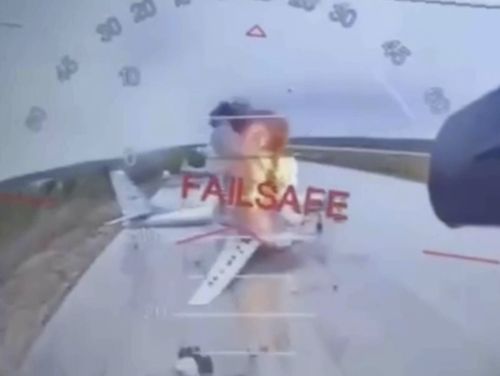

But most of all, it was meticulously planned and flawlessly executed.
Kyiv targeted locations that could have a significant impact, harming or destroying military planes that Russia has been utilizing to launch frequent air assaults on Ukrainian civilians.
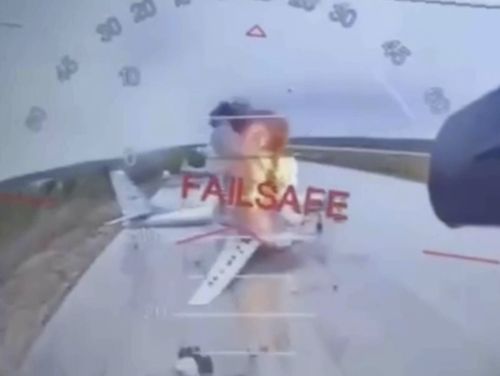
Justin Bronk, a senior research fellow at the Royal United Services Institute in London, described the strike as “a remarkable achievement for Ukraine’s special services.”
He stated, “If even half of the claimed total of 41 aircraft being damaged or destroyed is verified, it will greatly affect the Russian Long Range Aviation force’s ability to maintain its routine large-scale cruise missile attacks on Ukrainian cities and infrastructure. This would also impact their nuclear deterrence and signaling operations against NATO and Japan,” he noted.
This is what we know about how the attack unfolded.
Striking from within Russia
The attacks targeted four airfields deep inside Russia, with the farthest one, the Belaya base in Irkutsk region, some 4500 kilometres from Ukraine’s border with Russia.
The other targets included the Olenya base near Murmansk in the Arctic Circle, more than 2,000 kilometres from Ukraine; the Diaghilev airbase in Ryazan Oblast, some 520 kilometres from Ukraine; and the Ivanovo air base, which is a base for Russian military transport aircraft, some 800 kilometres from the border.
A visual shared by the SBU, Ukraine’s security agency, also showed another base in the eastern Amur region as a target.
It is not clear whether an attack on this base failed or was aborted.
It’s these huge distances from the border with Ukraine that likely made Russia complacent about protecting the sites.
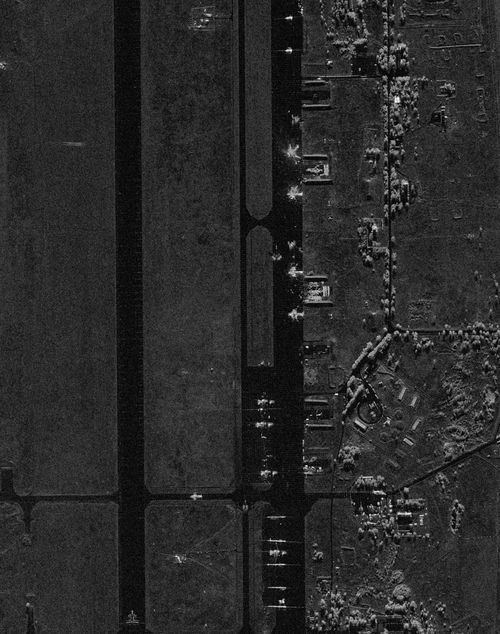
Its most prized aircraft at the Belaya base were regularly parked in plain sight in the airfield, clearly visible in publicly available satellite images â including on Google Maps.
Moscow likely believed the distance itself was enough to keep the aircraft safe from Ukrainian attacks.
Russia maintains air superiority over Ukraine and while Kyiv’s allies have supplied Ukraine with some long-range missile systems, including US-made ATACMS and British-French Storm Shadows, neither has the range to strike this deep inside Russia.
Ukraine has been using drones against targets inside Russia, including in Moscow, but the low speed at which they travel makes them relatively easy for Russian air defences to strike them.
This is where the audacity of the attack really played out: rather than trying to fly the drones all the way from the border, Ukraine managed to smuggle them right next to the sites it wanted to target and launched them from there.
Insufficient Russian defences
Russia’s radar and air defences at these bases were not prepared for such a low-altitude and sudden attack.
The only effective way to stop an attack like this is with heavy machine guns.
Russia has been using these against Ukrainian sea drones in the Black Sea.
But these were either not available or not deployed quickly enough at the air bases targeted by Ukraine on Sunday â most likely because Russia simply didn’t foresee this type of attack.
CNN was able to verify and geolocated photos and videos from the scenes, confirming their locations near the bases.
Russia’s Defence Ministry confirmed in a statement that the attacks â which it called “terror attacks” were launched from the vicinity of the airfields.
Ukraine’s President Volodymyr Zelenskyy said 117 drones were used in the operation.
According to the SBU, the drones were smuggled into Russia by its operatives.
At some point, likely while already in Russia, the drones were then hidden inside mobile wooden sheds.
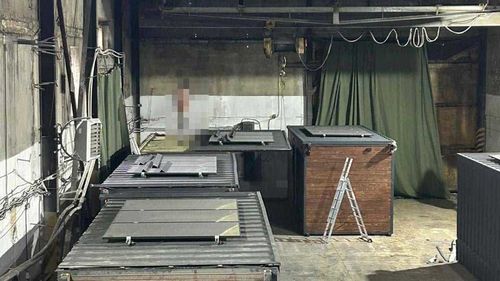
Photos obtained by CNN show the drones tucked just under the sheds’ metal roofs, slotted in insulation cavities.
These wooden cabins were then placed on trucks and driven to locations near the bases.
Ukraine did not disclose how exactly it managed to get the vehicles into the vicinity of high-profile military targets without detection, but reports in Russian media suggested it was relatively simple.
Baza and Astra, two Russian Telegram channels, both reported that the trucks were bought by a Ukrainian man who lived in Russia who then simply paid a quartet of drivers to get them where he needed them.
Neither Russian nor Ukrainian authorities commented on these reports, but the Russian state news agency RIA reported that authorities in the Irkutsk region were searching for a man who was suspected of being involved in the attack.
His name matched the name reported by Baza and Astra.
The Ukrainian Security Service said the operatives involved in the operation were safely back in Ukraine by the time the attacks started.
Zelenskyy said they worked across multiple Russian regions spanning three time zones.
A senior source with Ukraine’s drone development program told CNN the pilots who flew the drones were probably nowhere near the locations from which they were launched.
“They would have likely set up an internet hub allowing the pilots to (control them) remotely, each rapidly deploying each FPV (first person view drones), hitting each target one by one.”
The source said the communication hub could be “a simple Russian cell phone” which is harder to track than other systems, such as Starlink that is used widely in Ukraine.
A source briefed on the matter confirmed the attack was carried out via Russian telecommunications networks.
Once the trucks were in place and the drones ready to go, the cabin roofs opened and the drones flew towards their targets.
A video of the attack in Russia’s southeastern Irkutsk region that was shared on social media and verified and geolocated by CNN shows two drones flying out of a truck.
They are seen heading towards the Belaya air base in the distance, where thick, dark smoke is already billowing from a previous strike.
Another video from the same location shows the truck used to transport the drones on fire after what appears to be an explosion designed to self-destruct the truck.
Zelensky said on Sunday that the attack was in the making for one year, six months and nine days, and praised the security services for a “brilliant” operation.
Russian officials have downplayed the attack, saying strikes were repelled in the Ivanovo, Ryazan and Amur regions but that “several pieces of aircraft” caught fire after attacks in the Murmansk and Irkutsk regions.
It added that the fires had since been extinguished.
It said there were no casualties.
But while Russian authorities tried to downplay the attack, several high-profile Russian military bloggers have been vocal in their criticism.
Rybar, a high-profile Russian military blog, said the attack caused a “tragic loss for the entire Russian air fleet” and was a result of “criminal negligence”.
The SBU said the strikes caused an estimated $US7 billion ($10.8 billion) in damages and hit 34 per cent of Russia’s strategic cruise missile carriers at its main air bases â a claim CNN cannot independently verify.
Ukraine said it destroyed several TU-95 and Tu-22M3 strategic bombers and one of Russia’s few remaining A-50 surveillance planes.
A source briefed on the matter said 27 Tu-95, four Tu-160, two Tu-22M3 and “probably” an A-50 were hit.
The Tu-22M3 is Russia’s long-range missile strike platform that can perform stand-off attacks, launching missiles from Russian airspace well behind the front lines to stay out of range of Ukrainian anti-aircraft fire.
Russia had 55 Tu-22M3 jets and 57 Tu-95s in its fleet at the beginning of the year, according to the “Military Balance 2025” report from the International Institute for Strategic Studies think tank.
The Tu-95 joined the Soviet Union air force in the 1950s, and Russia has modified them to launch cruise missiles like the Tu-22.
Bronk, the RUSI expert, said that replacing some of these aircraft would be very difficult for Russia because they have not been produced for decades.