
A GP has warned patients to check for signs of a hidden sleep problem linked to a host of conditions that could shorten your life.
Dr Asif Ahmed took to social media to raise the alarm about what he labelled ‘one of the most chronically undiagnosed conditions out there’ sleep apnoea.
This is a condition where a patient suffers interruptions to their breathing while they sleep and is estimated to blight the lives of millions of Britons.
‘We need to stop missing this diagnosis’ Dr Ahmed said on Instagram.
‘If you’ve been diagnosed with chronic fatigue or fibromyalgia, or you can’t lose weight or a prediabetic, this condition has to be ruled out.
‘Nothing will work, nothing will get better until we treat this.’
Fibromyalgia is a long-term condition that causes pain all over the body.
As well as causing exhaustion, sleep apnoea is linked to an increased risk of deadly conditions like high blood pressure, stroke and type 2 diabetes as well as depression.

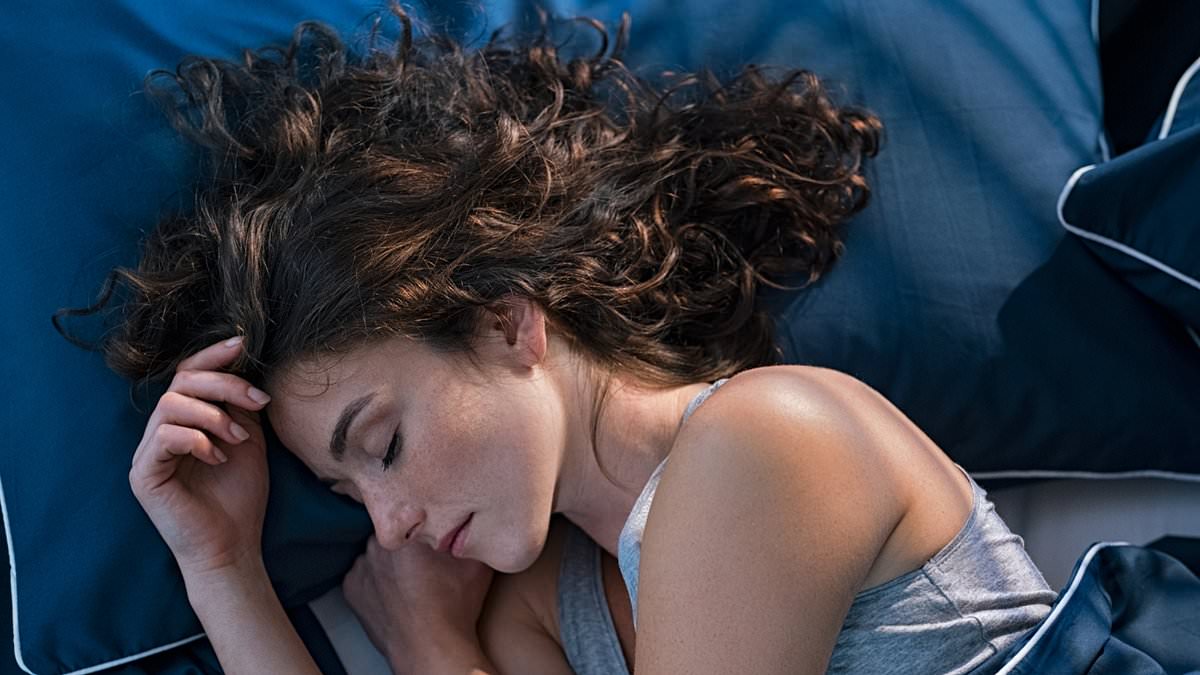
A GP has warned patients to check for signs of a hidden sleep problem linked to a host of conditions that could shorten your life. Stock image
One recent study even found a link between the sleep apnoea and lung cancer, though this is still being explored.
Its connection to numerous health problems is part of the reason Dr Ahmed said that if sleep apnoea goes untreated it can knock 10 to 14 years off your lifespan.
He said the impact of sleep apnoea on a person’s health couldn’t be understated and it could act as barrier to successfully treating other conditions.
‘It is so significant, it really messes with your metabolism,’ he said.
‘If it’s undiagnosed and untreated, nothing we do therapeutically is going to work.’
Despite the dangers, Dr Ahmed said sleep apnoea often remains hidden particularly among single people, as it is often partners who spot it first.
‘They complain of loud snoring or recognise anionic episodes (periods where a person stops breathing) while the other person is sleeping,’ he said.
Thankfully, he added that there are now simple test kits that can be used at home to tell if a person had the condition within days.
‘I urge everyone whose got chronic fatigue or are feeling tired all the time or can’t lose weight to really get checked for sleep apnoea,’ he said.
While sleep apnoea has multiple types the most common is called obstructive sleep apnoea (OSA).
This where the walls of the throat relax and narrow or close during sleep, limiting the flow of oxygen into the body.
In response the brain instinctively pulls a person out of deep sleep to get more oxygen.
This leads to significant sleep interruptions and as a consequence exhaustion in daily life and additionally—in the longer term—an increased risk of serious health problems.
Almost 4million people in the UK are estimated to have moderate or severe OSA, although it is considered to be under-diagnosed and could affect up to 10million.
Causes of sleep apnoea vary but include obesity leading to more tissue on the neck, smoking and drinking as well as having large tonsils.
The most obvious symptoms of sleep apnoea are the aforementioned snoring and breathing interruptions noticed by partners.
Individuals themselves may notice they wake up a lot in the night and feel exhausted during the day, suffer concentration problems at work or school, have mood swings or have a headache upon waking.
The NHS encourages anyone with signs of sleep apnoea to contact their GP due to its links to serious health problems and the impact it can have on a patient’s life.
Diagnosis is usually done through special kits that measure breathing rate and heartbeat which can often be worn at home.
Data from the kit is then analysed to see if a patient does have sleep apnoea and if so, how severe it is.
Treatment can involve wearing mechanical masks that pump fresh air into the nose and mouth as a patient sleeps or surgery to open the airways more.
However, some low-tech methods like taping a tennis-ball to your back to encourage you to sleep on your side—which can help with sleep apnoea—can also be tried.
Regardless, medics urge patients not to self-diagnose and seek help from their GP if they have symptoms.