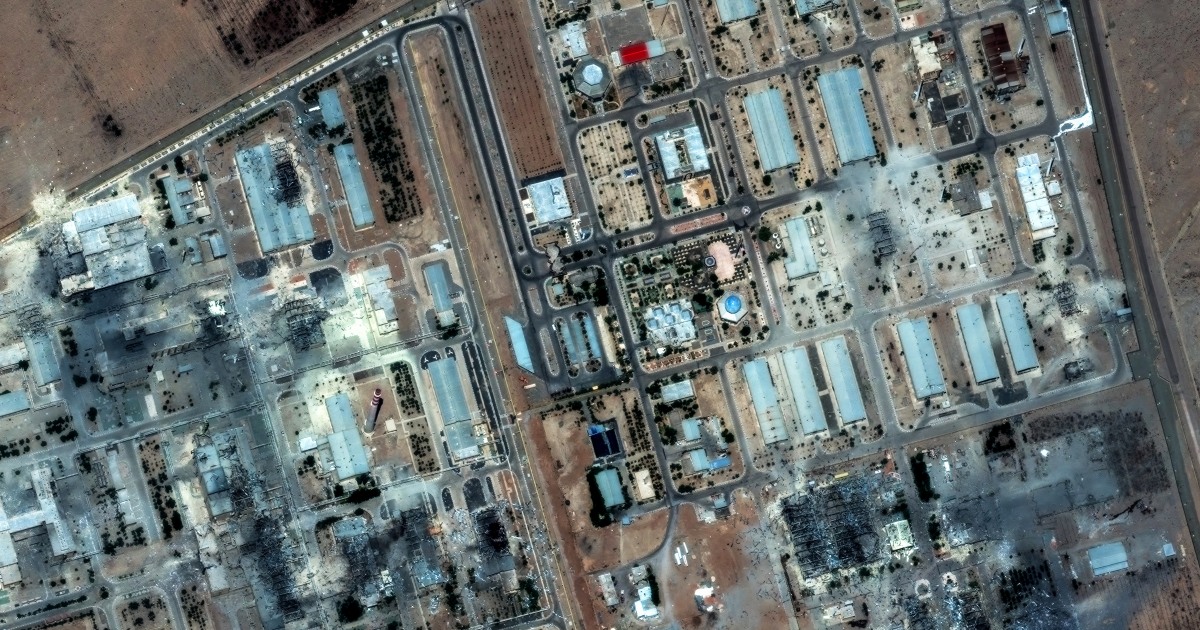

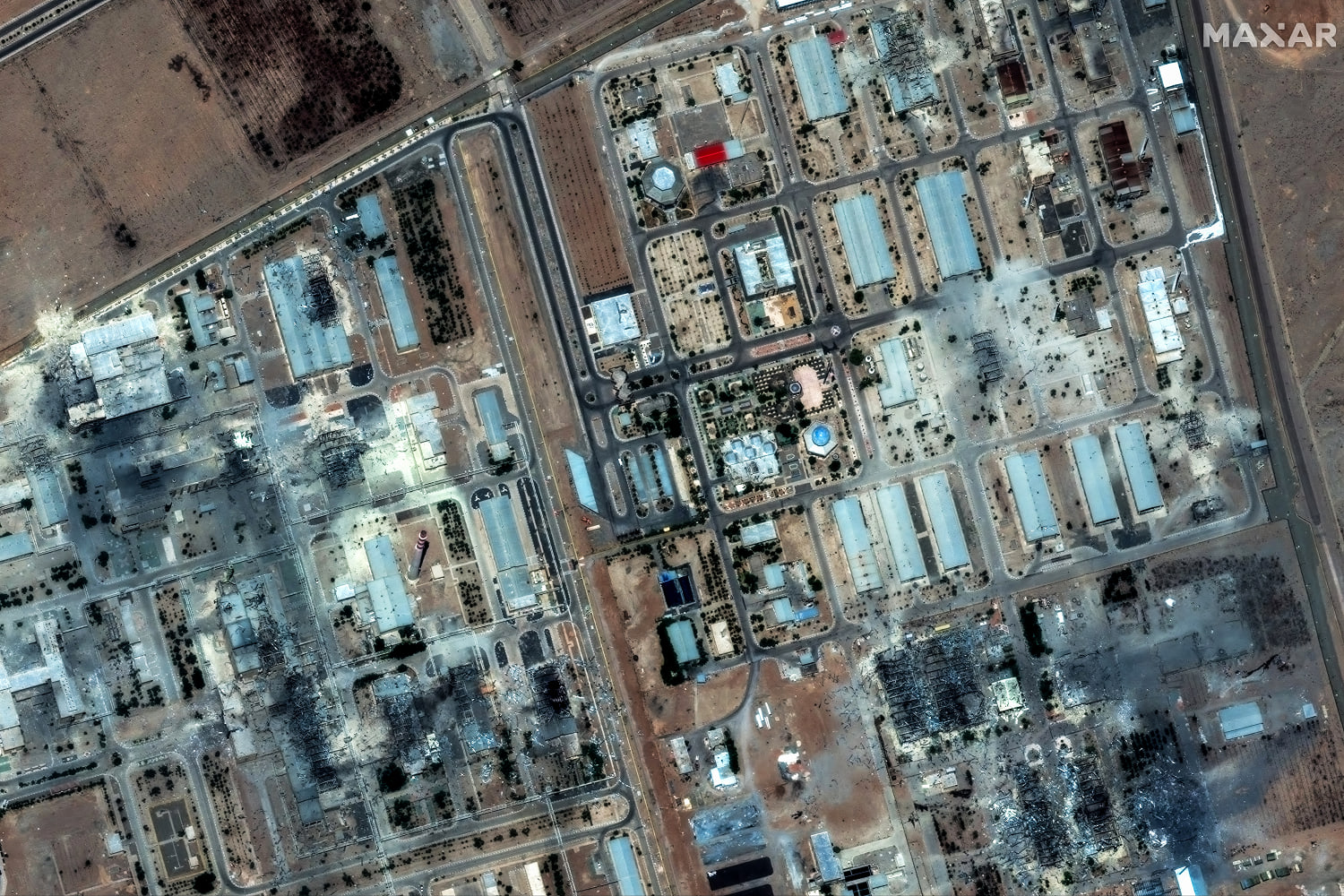
WASHINGTON — Israel believes at least some of Iran’s highly enriched uranium was buried beneath Iran’s Isfahan facility by U.S. strikes and not destroyed or moved beforehand, a senior Israeli government official said in Washington on Wednesday night. But it is effectively unreachable, the official said, because Israel is watching, and if it believes Iran is trying to dig up the material, it will not hesitate to conduct new strikes.
Asked about Israel’s conclusion regarding the uranium at Isfahan, White House spokeswoman Anna Kelly told NBC News in a statement: “As President Trump has said many times, Operation Midnight Hammer totally obliterated Iran’s nuclear facilities. The entire world is safer thanks to his decisive leadership.”
In a lengthy briefing with reporters Wednesday night, the senior Israeli government official said Israel decided to attack Iran’s nuclear facilities because of intelligence it had that Tehran had begun rapidly and secretly proceeding to weaponize its enriched uranium after Israel’s targeted assassination of Hezbollah leader Hassan Nasrallah in September.
The official said that Israel had shared the intelligence with President Donald Trump but was preparing to strike with or without a green light or participation from the United States and that American support was not a condition for Israel’s decision to strike Iran’s nuclear facilities.
The official would not specify the source of the intelligence.
Iran denies that it wants to build a nuclear weapon. In an interview with NBC News a day before the U.S. strikes, Iranian Foreign Minister Abbas Araghchi said every country has the right to enrich uranium for peaceful purposes.
“This is an achievement of our own scientists. It’s a question of national pride and dignity,” he said.
Asked about National Intelligence Director Tulsi Gabbard’s having testified before Congress in March that the U.S. intelligence community “continues to assess that Iran is not building a nuclear weapon and Supreme Leader Khamenei has not authorized the nuclear weapons program he suspended in 2003,” the Israeli official dismissed the question, viewing the assessment as not serious.
According to the official, Israel believes Iran’s nuclear program has now been set back up to two years.
An initial assessment by the U.S. Defense Intelligence Agency leaked late last month found that the U.S. strikes on Isfahan and two other sites may have set back the program only several months.
The question of how damaged Iran’s nuclear program was — along with how much its timeline toward building a nuclear weapon should it ever decide to do so was delayed — has been a politically charged one. Trump and his administration have denounced the leak of the DIA assessment and the outlets that first reported it.
The day after the initial DIA assessment was first reported, CIA Director John Ratcliffe said in a statement that “a body of credible intelligence” indicated the program was “severely damaged.”
“This includes new intelligence from an historically reliable and accurate source/method that several key Iranian nuclear facilities were destroyed and would have to be rebuilt over the course of years,” he said.


