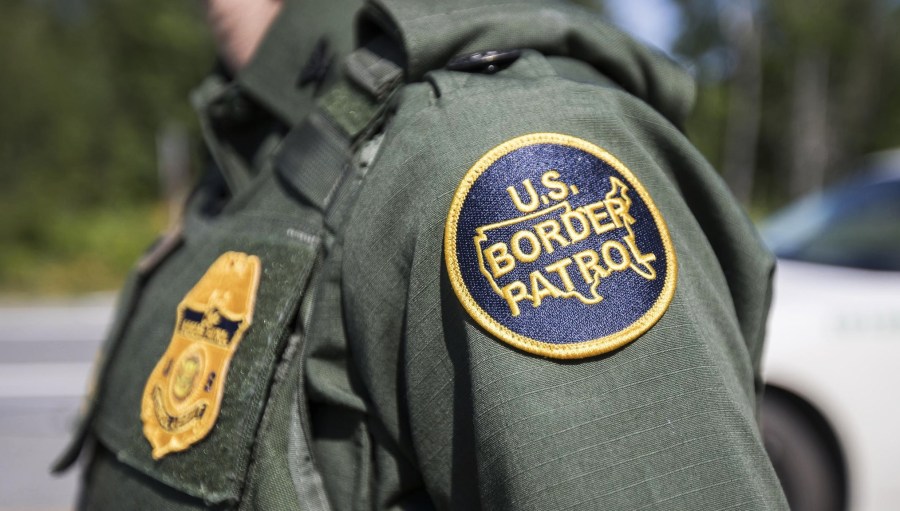


() Suspected cartel drones are breaching restricted United States airspace daily, with more than 60,000 detected between July and December of last year, according to the Department of Homeland Security.
To counter the threat, some law enforcement agencies are turning to surveillance blimps, known as aerostats, equipped with radar and high-altitude cameras.
U.S. Customs and Border Protection confirmed the devices are currently deployed along the Texas border in Zapata, Eagle Pass and Rio Grande City as part of the Tethered Aerostat Radar System (TARS), which has been recently expanded. Though the program has existed for years, it now includes increased cooperation with Mexican authorities to fight transnational criminal organizations’ use of drones.
“We’re doing things with the Mexican government, the Mexican armed forces, and law enforcement, trusted, vetted partners,” said Michael Torphy, unit chief for the FBI’s Critical Incident Response Group.
“We’re sending people down there to train them on drone exploitation and the principles, again, not the specifics, but the principles of effective counter UAS, and we’re delivering best practices to them to keep them safer, to fight the war,” Torphy continued.
The aerostats, capable of detecting objects up to 200 miles away, account for just 2% of CBP’s total radar assets but are responsible for nearly half of all detections.
Cartels are no longer just trafficking people and drugs across the border. They’re flying drones to scout patrols, monitor agents and coordinate crossings. Some drones even smuggle contraband like firearms and narcotics.
In one deadly case last August, Mexican officials confirmed a drone dropped explosives that killed two soldiers.
With surveillance blimps rising and cartel drones advancing, the border has become a new battleground in a fast-evolving fight with serious national security stakes.
“They alarm me from being the person responsible for homeland defense,” said Gen. Gregory M. Guillot, commander of U.S. Northern Command. “I haven’t seen any of them manifest in a threat to the level of national defense, but I see the potential only growing.”
Steven Willoughby, deputy director of the DHS’s counter-drone program, warned, “It’s only a matter of time before law enforcement or Americans are targeted in the border region.”
Lawmakers are now sounding the alarm about future attacks. They fear that unless action is taken, drone attacks could escalate to public spaces or high-profile events, like the 2028 Olympics in Los Angeles.


