

ATLANTA (AP) — Health Secretary Robert F. Kennedy Jr.’s new vaccine advisers sparked confusion on Friday regarding this year’s COVID-19 vaccinations by opting not to specifically recommend them for any group, ultimately leaving the decision up to individuals.
Until now, the vaccinations had been recommended as a routine step in the fall for nearly all Americans — just like a yearly flu vaccine.
The Food and Drug Administration had already limited this year’s shots from Pfizer, Moderna, and Novavax for those over 65 or younger individuals at increased risk due to the virus.
In an unusual move, the Centers for Disease Control and Prevention’s advisers decided against recommending the vaccines even for high-risk populations, such as seniors. They instead suggested that people make their own decisions after consulting with a medical professional, like a doctor, nurse, or pharmacist.
The panel also recommended that the CDC strengthen the language regarding claims of vaccine risks, despite opposition from external medical groups that emphasized the shots’ established safety from billions of doses given worldwide.
The divided panel ended up narrowly avoiding a push for states to require a prescription for the vaccine, as some advisers argued such a requirement would hinder access to vaccination.
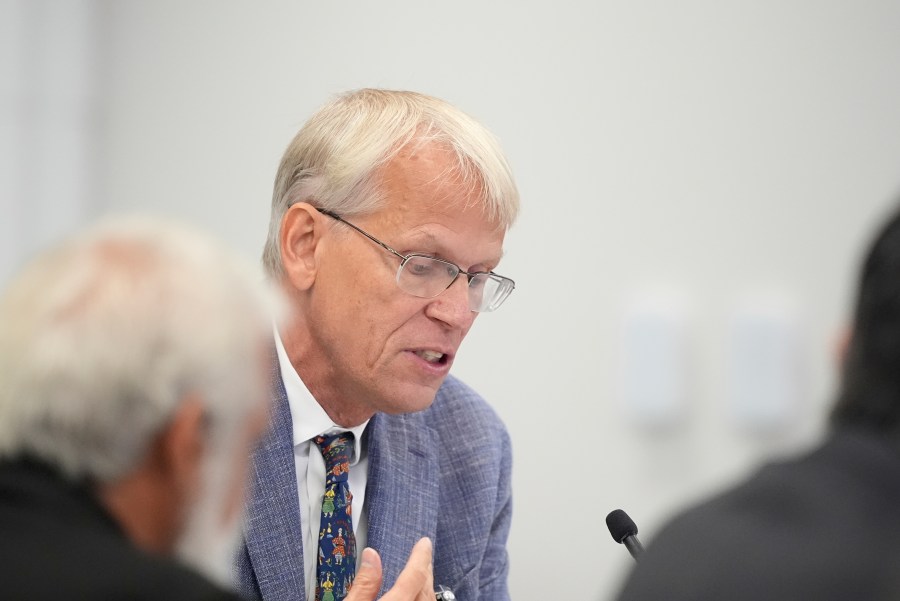
“I have to wait a year” to see his primary care provider, said panelist Dr. Cody Meissner of Dartmouth College. “It’s essentially going to be a barrier.”
The meeting represented the latest example of Kennedy’s monthslong effort to reshape the nation’s vaccine policies to match his long-standing suspicions about the safety and effectiveness of well-established shots.
Independent public health experts reacted with relief that the panel didn’t add more roadblocks to vaccination, but they said the lack of a recommendation will prove confusing for people who don’t know if a shot might benefit them.
“The good news is anyone can get this vaccine. The bad news is that no one is encouraged to get it even if you’re in a high-risk group,” said Dr. Paul Offit, a Children’s Hospital of Philadelphia vaccine researcher and former government adviser who has sparred with Kennedy for years.
Dr. Sean O’Leary of the American Academy of Pediatrics said the panel’s daylong debate involved clear efforts to sow distrust about vaccines that would have “real-time impacts on American children.”
But he said people could instead follow guidelines from his and other medical groups that still make specific recommendations for the vaccines.
“It was a very, very strange meeting,” O’Leary said.
Several states have announced policies to try to assure that access, worried about Friday’s decision. And a group representing most health insurers, America’s Health Insurance Plans, said earlier this week that its members will continue covering the shots through 2026.
The panel’s decision still must go to the CDC’s interim director, Jim O’Neill, for sign-off. A former investor, critic of health regulations and Kennedy’s deputy at HHS, O’Neill recently took the lead at the agency following the firing of its Senate-confirmed director, Susan Monarez.
COVID-19 remains a public health threat. CDC data released in June shows the virus resulted in 32,000 to 51,000 U.S. deaths and more than 250,000 hospitalizations last fall and winter. Most at risk for hospitalization are seniors and young children, especially those who were unvaccinated.
The COVID-19 vaccines are not perfect, but CDC data shows they provide the strongest protection against severe infection and death, even if people still become infected. Likewise, people can get COVID-19 repeatedly as the virus continues to evolve.
Like flu vaccines, COVID-19 shots now are being updated yearly, but only about 44% of seniors and 13% of children were up-to-date on the coronavirus vaccinations last year, the CDC said.
The meeting was more freewheeling and chaotic than in the past. Many committee members challenged CDC’s data, and raised questions about studies in mice or other concerns that the agency’s own safety surveillance hadn’t deemed credible.
The panel did recommend that the CDC add more information about risks and uncertainties to vaccine sheets that are given to patients.
“I don’t think the effects on access are as dramatic as they could have been,” said Dr. Jesse Goodman of Georgetown University, a former FDA vaccine chief. “But there’s a lot that’s uncertain and the negative effect on public trust will continue.”
One risk that already is on the vaccines’ label is a rare side effect called myocarditis, a kind of heart inflammation, that was discovered in the early days of vaccination in 2021. On Friday, a scientist studying whether people with certain genes are uniquely susceptible to that risk told the panel the Trump administration had canceled his grant before the research could be finished.
The COVID-19 debate was only one issue the panel tackled during its two-day meeting. In other steps:
— The advisers postponed a decision on whether to end a longstanding CDC recommendation that all newborns be vaccinated at birth against a liver virus, hepatitis B.
The panel had been considering whether to recommend delaying that initial vaccination — something doctors and parents already can choose to do — but pulled back amid criticism from independent pediatric and infectious disease specialists who say the vaccine is safe and has helped infant infections drop sharply.
— On Thursday, the panel recommended a new restriction on another childhood vaccine.
They recommended that for children under 4, their first dose of protection against MMR — measles, mumps and rubella — and chickenpox should be in separate shots, not a combination version known as MMRV. Since 2009, the CDC has said it prefers separate shots for initial doses of those vaccines and 85% of toddlers already do.
On Friday, the committee also recommended that the government’s Vaccines for Children program — which covers vaccine costs for about half of U.S. kids — align its guidance with that narrower MMRV usage.
President Donald Trump was asked Friday if he was comfortable with the CDC advisers’ recommendation or if he’d like Americans to take the shots that were developed under his Operation Warp Speed at the height of the pandemic. Trump, who got the virus in October 2020 before the vaccine was available, said he remained “very proud” of Operation Warp Speed, and was not upset that Kennedy was skeptical of the vaccine.
“I had the vaccine and I was very happy with it,” Trump said.
___
Neergaard reported from Washington. Associated Press writers Matt Perrone in Washington and JoNel Aleccia in Temecula, California, contributed to this report.
___
The Associated Press Health and Science Department receives support from the Howard Hughes Medical Institute’s Department of Science Education and the Robert Wood Johnson Foundation. The AP is solely responsible for all content.