

An unexpected announcement came through the radio from an air traffic control tower near Los Angeles just days into the federal government shutdown: “The tower is closed due to staffing issues.”
With insufficient air traffic controllers available to manage flights at Hollywood Burbank Airport, the tower ceased operations for nearly six hours on October 6, leaving pilots to manage their navigation independently. Average flight delays reached two-and-a-half hours, marking one of the initial clear signs that the shutdown was beginning to impact the nation’s aviation infrastructure.
The shutdown, which started on October 1, has led the Federal Aviation Administration to report a shortage of controllers in various locations across the United States, including airports in Boston and Philadelphia as well as control centers in Atlanta and Houston. This has resulted in flight delays at airports such as those in Nashville, Dallas, and Newark, among others.
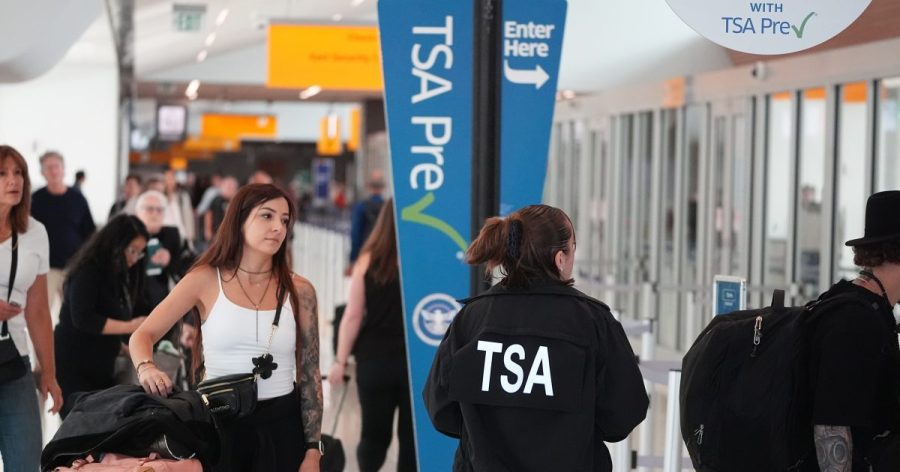
There has also been a rise in unexpected absences among security screeners at some airports. The union representing Transportation Security Administration employees states that while these absences haven’t yet caused major disruptions, they caution that longer wait times at security checkpoints might soon occur after workers received their last paychecks over the weekend.
Experts and union representatives highlight that these interruptions emphasize the aviation system’s vulnerability due to chronic understaffing and outdated systems. They warn that these vulnerabilities could expand further if the shutdown continues and essential aviation personnel remain unpaid.
“It’s like having a drought the year after you had a drought,” Greg Raiff, CEO of Elevate Aviation Group, told The Associated Press.
Problems have persisted for years
These issues aren’t entirely new. In 2019, the aviation system faced significant strain during a 35-day government shutdown — the longest in U.S. history — which occurred during President Donald Trump’s first term.
Around the three-week mark, air traffic controllers, many of them working up to 60 hours a week, sued the government over their missed paychecks. One terminal at the Miami International Airport was forced to close because security screeners were calling out sick in large numbers. Some even quit altogether.
“Here we are so many years later, and the problems have not been addressed,” said aviation attorney Ricardo Martinez-Cid, a Florida Bar-certified expert on aviation law who regularly represents crash victims. “Now we’re in a worse position when we had been put on notice. We had the opportunity to address it.”
Since then, the country has faced repeated warnings. In January, a mid-air crash over the Potomac River involving a commercial jet and a military helicopter killed 67 people. A series of equipment failures and radar outages this year also highlighted the need for upgrades.
Controller shortage at a ‘critical’ point
Before the latest shutdown, both the FAA and TSA were already dealing with staffing shortages. That includes a shortage of about 3,000 air traffic controllers.
Nick Daniels, president of the National Air Traffic Controllers Association, has said staffing levels have reached a “critical” point, the lowest in decades. The shortage is so severe that even a few air traffic controllers missing work can disrupt operations at already understaffed facilities.
“And on top of that,” he said, “they’re working with unreliable equipment.”
The shutdown began just as the FAA was starting to make some progress on addressing the shortage of controllers and modernizing the outdated equipment they rely on that keeps disrupting flights when it malfunctions.
The agency says it topped its goal of hiring 2,000 controllers this year after streamlining the application process at its academy in Oklahoma City, but it will take years still to eliminate the shortage. And it had just begun looking for companies to help oversee a $12.5 billion effort to overhaul its aging and complex technology systems.
Now, the shutdown is delaying those long-needed efforts. And union leaders say the staffing shortages may be worse by the time the government reopens.
Shutdown could increase gaps in staffing
Johnny Jones, secretary-treasurer of the American Federation of Government Employees chapter representing TSA workers, expressed concern that the shutdown could drive even more security screeners to leave the agency, especially given the uncertainty that the workers already have faced this year. That includes the Trump administration’s attempts to revoke their collective bargaining rights.
Daniels, meanwhile, warned it could stoke fear among newer controllers and trainees who might reconsider the career entirely to avoid working in future shutdowns.
It’s a long-standing concern. In 2019, after the 35-day shutdown ended, a congressional committee hearing dug into the impacts on air travel.
“All of these air traffic controllers and aviation safety professionals were used as pawns in a political fight that had nothing to do with aviation. This is wrong and must not be allowed to happen again,” warned the union leader representing air traffic controllers at the time.
At the hearing, there were also bipartisan calls for reform to keep the FAA funded “without interruption, even when the rest of the government shuts down,” as one lawmaker put it. Stories were shared of controllers and TSA agents taking on extra jobs to pay rent, mortgage and other bills despite working longer shifts to fill the gaps in staffing.
Lawmakers and industry officials who testified agreed: The shutdown made the aviation system less safe.
“We implore all involved, please heed not only our warnings but the entire stakeholder community’s warnings. This vicious budgetary cycle of stops and starts with little to no stability or predictably has simply got to stop,” said Nick Calio, then-president and CEO of Airlines for America, an industry trade group representing airlines including Delta, United and Southwest.
And yet the system remains vulnerable to shutdowns seven years later, Martinez-Cid said.
“We’re long overdue for a wake-up call.”


