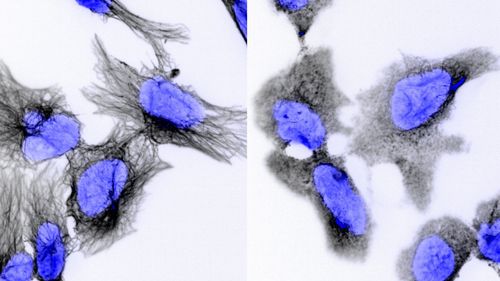

Neuroblastoma is a deadly cancer that can affect children as young as two-years-old. A new study by the Garvan Institute may have found a drug that can help cure it.
Share this @internewscast.com

A medication, already approved for cancer treatment, might now offer a new lifeline for children battling a severe form of cancer, according to recent Australian research.

Neuroblastoma, a cancer developing from nerve cells located in glands above the kidneys or along the spine, chest, and abdomen, commonly affects children. Tragically, it proves fatal in 90% of cases when the cancer relapses.

This grim outlook is particularly prevalent in high-risk cases of neuroblastoma. In these situations, 15% of children do not respond to initial treatments, and of those who do, half experience a return of the cancer.
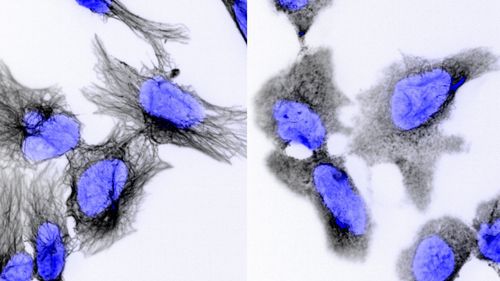
Neuroblastoma is a deadly cancer that can affect children as young as two-years-old. A new study by the Garvan Institute may have found a drug that can help cure it.
Neuroblastoma is a deadly cancer that can affect children as young as two-years-old.(Garvan Institute)

The challenge arises because chemotherapy drugs typically target a cellular mechanism known as the JNK pathway to destroy cancer cells.

However, when tumors recur, the JNK pathway’s function may falter, rendering treatments ineffective and allowing the cancer to spread with potentially fatal outcomes.

“The statistics for families when patients reach this stage are truly heartbreaking,” stated Associate Professor David Croucher.

However, researchers at the Garvan Institute have found a drug called romidepsin can help reduce tumour growth and the chances of the deadly cancer returning, helping more children survive.

The drug is already approved to treat other cancers like lymphomas, and the result of the study published in Science Advances is promising, according to researchers.

“This represents a big step forward,” Croucher said.

“By finding drugs that don’t depend on the JNK pathway, we can still trigger cancer cell death even when this usual route is blocked.”

The trials were conducted on animal models, and the next step is to use clinical trials.

Crocuher insists the benefits will be of the families who could be helped fight the devastating disease.

“Behind every statistic is someone’s loved one,” Croucher said. “Understanding these molecular mechanisms gives us hope we can develop more effective treatments for patients and their families who currently face limited options – and that’s what drives us every day.”


Share this @internewscast.com
You May Also Like

Iran Vows Intense Retaliation Amid Escalating US Tensions and Nationwide Student Protests

In brief Videos of protests in Iran show students chanting and burning…
Dr Simon Gordon

Renowned Surgeon Faces Allegations of Unwarranted Endometriosis Procedures

A prominent Melbourne surgeon is under investigation over allegations he performed unnecessary…
Sydney to Newcastle high-speed rail to be 'shovel-ready' in two years

High-Speed Rail Link Between Sydney and Newcastle Set to Reach ‘Shovel-Ready’ Status in Two Years

The federal government has poured another $230 billion into planning for a…

Detectives Investigate Mysterious Death at Swanston Mental Hospital

In Brief A man is under police guard after a body was…

BAFTAs Controversy: Understanding Tourette Syndrome and the Public’s Reaction

In Brief John Davidson says he’s “deeply mortified” after shouting an “involuntary…
Andrew Mountbatten-Windsor arrested on suspicion of misconduct in public office

Albanese Supports Move to Remove Former Prince Andrew from Royal Lineup

Despite being eighth in line for the British throne, Andrew Mountbatten-Windsor’s potential…
'BUYER BEWARE': Trump's new tariff threat after court smackdown

Trump Responds to Court Setback with New Tariff Warning

US President Donald Trump has threatened to impose bigger tariffs on countries…

Developer Announces Plans for Trump’s Tower on Gold Coast, Set to Become Australia’s Tallest Building

In brief A property developer says he has signed a deal with…
New Zealand's Prime Minister has said he will back any plans to remove Andrew Mountbatten-Windsor from the line of royal succession. It comes as British ministers are understood to be considering legislation to remove Andrew from the line of succession once a police investigation has concluded. Christopher Luxon's announcement that he would support removing the shamed former prince came after Australia's Prime Minister Anthony Albanese vowed to do the same. A spokesperson for Mr Luxon, New Zealand's premier, said: 'If the UK Government proposes to remove Andrew Mountbatten-Windsor from the order of succession, New Zealand would support it. The UK Government has said any proposals would come after the police investigation concludes.'

New Zealand Approves Historic Move: Prince Andrew Removed from Royal Line of Succession

New Zealand’s Prime Minister has expressed his willingness to endorse any initiative…
Life bans imposed over wild brawl at OzTag championships

Lifetime Bans Issued Following Intense Altercation at OzTag Championships

In an unprecedented decision, a father and son have been permanently banned…

Australia’s Skyline Revolution: Trump Tower Set to Soar as the Nation’s Tallest Landmark on Gold Coast

In brief A property developer says he has signed a deal with…
Major Aussie tourist destination battered by torrential rain, flash flooding

Significant Australian Tourist Hub Faces Severe Weather with Torrential Rain and Flash Flooding

Residents have been evacuated and holidaymakers are on edge after a torrential…