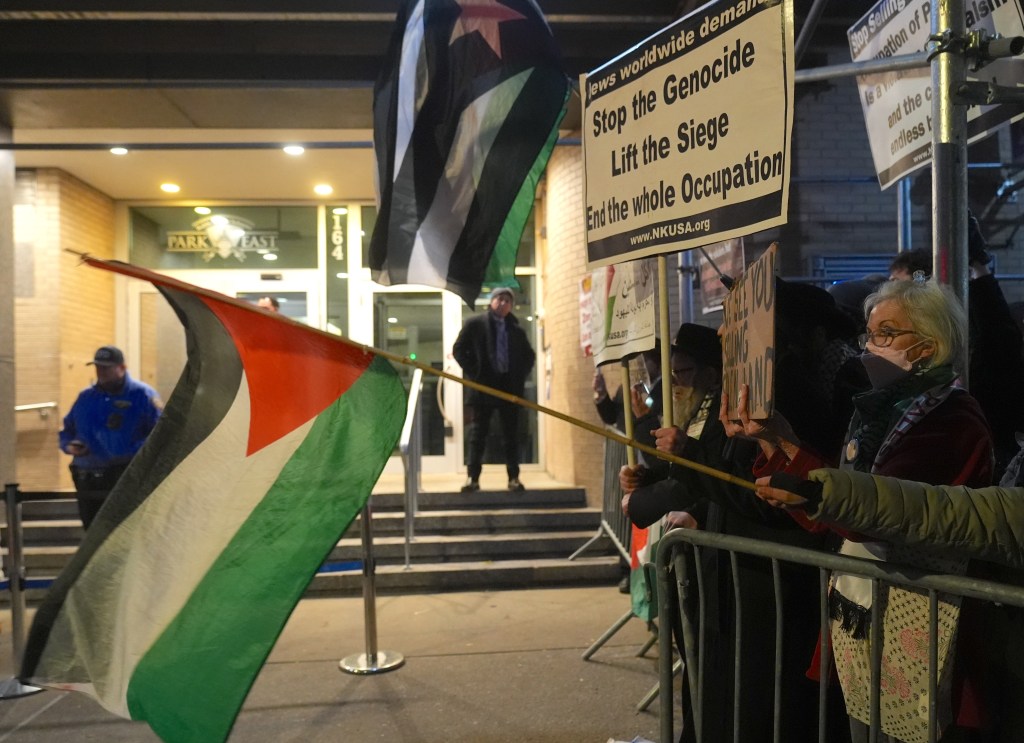


Amid rising tensions, synagogues have become the latest focal point for anti-Israel demonstrators. A recent protest at Park East Synagogue in Manhattan’s Upper East Side turned violent, with demonstrators directing hostile slurs at Jewish attendees, including phrases like “death to the IDF,” “From New York to Gaza, Globalize the Intifada,” and other offensive language. Responding to the incident, Zohran Mamdani’s press secretary issued a statement suggesting synagogue members might have breached international law.
This event, coupled with Mamdani’s response, is deeply concerning, echoing historical patterns of antisemitic actions. Moreover, the situation potentially breaches legal boundaries established to protect religious communities.
The Freedom of Access to Clinic Entrances Act (FACE Act), enacted in 1994 with bipartisan support, is designed to prevent intimidation, interference, and threats at reproductive health facilities. In 2000, the law was expanded to safeguard those practicing religious freedom at places of worship. This legislation ensures individuals can engage in religious activities without fear or obstruction.
Legal protections under the FACE Act extend to all faiths, including Christianity, Judaism, and Islam, granting them the right to worship without fear of harassment or coercion. While the right to protest is constitutionally upheld, it does not permit actions that constitute threats, intimidation, or obstruction of access to religious sites.
Protests cross a legal threshold when they deter or prevent worshippers from entering religious venues or create an environment of fear for their safety. While demonstrators have the right to voice their opinions, they cannot resort to menacing behavior at synagogue doors. Such conduct is not protected under the guise of protest; it is unlawful interference, and the Constitution does not defend it. Moreover, religious worship as a form of free expression is compromised when congregants face harassment.
Some have contended that the event hosted by Nefesh B’Nefesh at the synagogue was not strictly religious, arguing this exempts the protesters from violating the FACE Act. This perspective is flawed. The “free exercise of religion” encompasses participation in religious gatherings, educational sessions, community practices, and activities driven by religious beliefs.
Traditional Jewish law treats the return to the Land of Israel — the focus of this event — as a religious obligation and, unequivocally, a spiritual activity rooted in faith. Courts applying the FACE Act will recognize that “religious exercise” includes conduct motivated by sincerely held beliefs, regardless of whether the activity resembles formal worship. By any reasonable measure, the Park East Synagogue event falls squarely within that protected category.
What makes this incident even more troubling is that the legal clarity of the FACE Act was publicly undermined by Mamdani. When Mamdani’s press secretary claimed that the Nefesh B’nefesh event was “in violation of international law,” she was not merely sharing the mayor’s political opinion. As the leader of New York City, his words have heavy implications.
In one sentence, a spokeswoman for Mamdani undermined the legitimacy of protected religious conduct. This gave protesters a greenlight for antisemitic conduct, sending them a signal that conduct against religious institutions can be morally or politically justified. But the law is not up to the interpretation of Mamdani. Politicians do not have the authority to determine which religious gatherings are protected by federal law.
And this is a critical part of the story: a federal civil rights protection was not only ignored, it was challenged by a man who will soon be responsible for upholding it.
Not only is Mamdani not upholding the law for New Yorkers, but he is making matters worse. His comments have helped to delegitimize Jewish religious practice, greenlight antisemitism, and allow violations of the FACE Act to continue, so long as they are consistent with the mayor’s ideological stance.
The past few years have seen the highest number of religious hate crimes ever recorded. The time to protect our religious institutions and those who practice is now. And there is precedent: this past September, the Department of Justice sued protesters who threatened and intimidated Jewish worshipers outside of a synagogue in West Orange, N.J. So for those who are calling for more laws or changes: the law is already there, and it’s ready to protect us. Our new mayor needs to uphold it.
Marcus is the chairman and CEO of The Louis D. Brandeis Center for Human Rights Under Law and the former assistant secretary for civil rights at the U.S. Department of Education under two administrations.