Share this @internewscast.com
Top Taliban officials have been sanctioned and banned from travelling to Australia as the federal government increases pressure on the militant group.
Australia has placed the measures on three Taliban ministers and Afghanistan’s chief justice, which means Australians from Saturday will be prohibited from supplying them with arms or similar services, and using or dealing with their assets and funds.
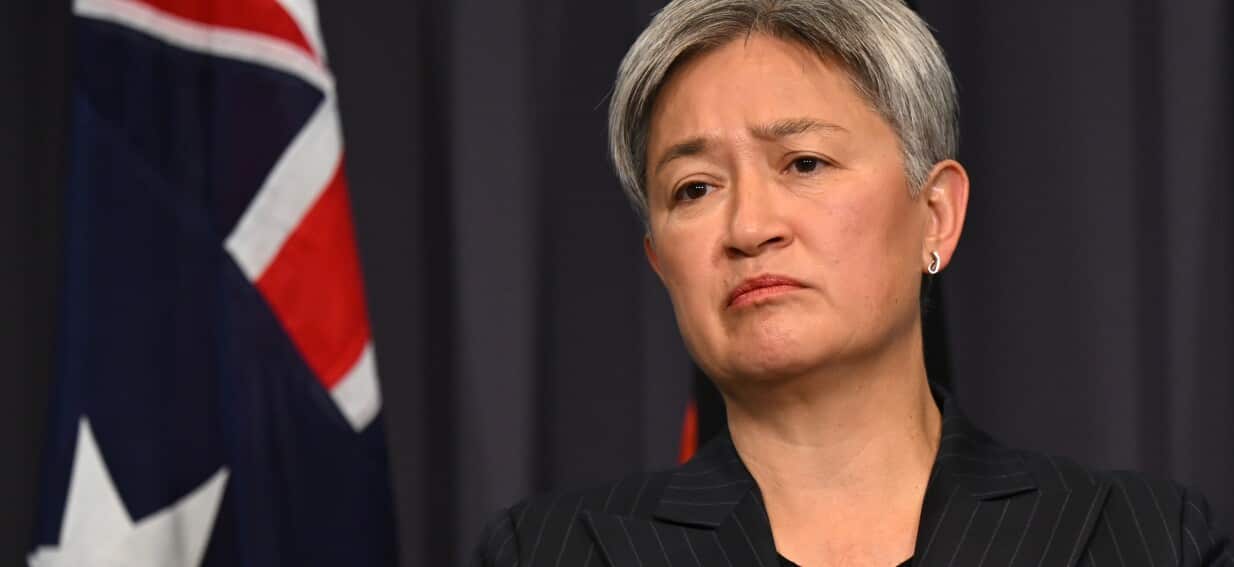
“The Taliban continues to demonstrate contempt for the rights, freedoms and welfare of the Afghan people, particularly women and girls,” she said in a statement.
“The Australian government remains deeply concerned at the deteriorating situation in Afghanistan.
The ongoing challenges faced by Afghans under Taliban rule continue to draw international concern. “Our thoughts are with those suffering under the Taliban’s oppression, as well as the Afghan community in Australia,” stated a spokesperson, highlighting the global solidarity for those affected.
Australia has already sanctioned 140 individuals and entities under the United Nations Security Council’s Taliban framework.
Since the fall of Kabul in 2021, the Taliban have deepened their attack on the rights of women and girls since taking over Afghanistan, according to Human Rights Watch.
According to a recent report from a prominent non-profit organization, the Taliban regime has intensified its grip on civic freedoms. The report details increasing restrictions on public expression, a surge in censorship activities, and the detention of activists. Additionally, it underscores the dire circumstances confronting LGBTQI individuals in Afghanistan, who find themselves in increasingly precarious situations under the current regime.
Australia has provided more than $260 million for humanitarian assistance to Afghanistan since 2021 and another $50 million has been allocated.
It established a new framework in order to sanction the three Taliban officials, who were the first to be listed under this measure.
The federal government has similar sanctions in place for other countries, including Iran, Russia and North Korea.