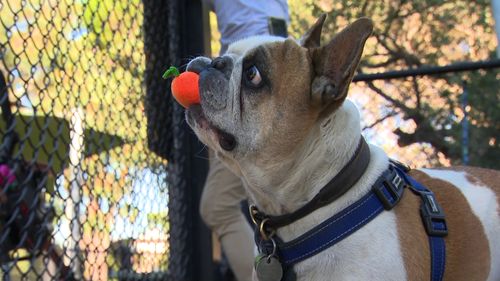

Nearly half of all Pugs, along with French and British Bulldogs, are plagued by a chronic respiratory ailment known as Brachycephalic Obstructive Airway Syndrome (BOAS). This condition gradually hinders their ability to breathe, eat, exercise, and sleep properly.
In its most severe form, BOAS can tragically reduce a dog’s lifespan by up to four years.
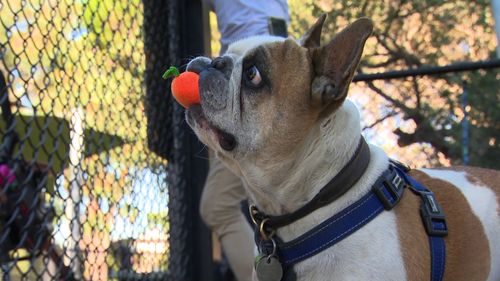
The root of the problem lies in decades of selective breeding aimed at achieving the popular flat-faced look. This has inadvertently resulted in significant breathing difficulties for these breeds, according to experts.
Dogs suffering from BOAS, such as a Pug named Pugtato, often require surgical intervention to alleviate their symptoms. These procedures typically involve widening the nostrils and removing excess throat tissue to improve airflow.
Pugtato’s owner, Joanna Herceg, recounted her distressing experience, saying, “He was absolutely struggling to breathe, and I actually thought he was going to die.” Despite losing seven or eight kilograms, Pugtato continued to face breathing challenges.
“He dropped seven or eight kilograms but still he was struggling.
“The surgery improved him a little bit but he still wasn’t good.”
Out of options, Pugtato was one of six pugs and bulldogs to take part in an early trial of a new oral treatment for dogs who struggled to complete a brisk three-minute walk.
Developed by biotech company Snoretox and RMIT University in Melbourne, the SnoreTox-1 trial is hoping to provide a less-invasive alternative to help with breathing.
The dogs were sedated before an injection of Snoretox-1 was given under their tongue.
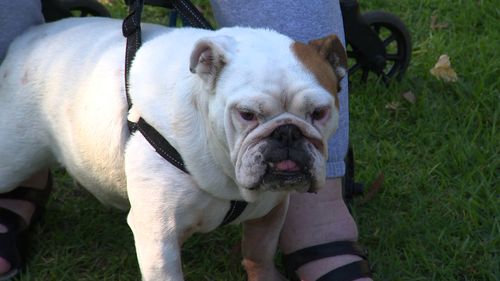
The trial found owners began noticing reduced breathing noise and effort when walking after just 10 days.
For Pugtato, it was even quicker.
”We did the Snoretox injection and literally within a few days I started to notice his breathing improving,” Herceg said.
“He went from a dog who struggled everyday and was really loud…to a dog that’s active, happy, plays and his breathing’s drastically improved”
The SnoreTox-1 technology is described as “the opposite of Botox” and works by strengthening airway muscles to help support the throat to maintain airflow.
“What it does is the opposite of Botox. It makes the muscles at the floor of the mouth a little stronger, ” Snoretox Managing Directorâ¯and RMIT Adjunct Professor Tony Sasse said.
It has been in development for 15 years.
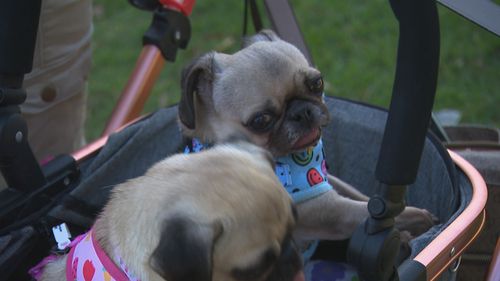
For some of the dogs the treatment lasted more than six months.
Now researchers are hoping to ramp up trials in the middle of the year, with the aim of eventually getting the treatment approved for wider use.
“Further research and regulatory approvals are required before the treatment can be offered more widely, but these positive results provide an early indication that we are on the right path,” Sasse said.
NEVER MISS A STORY: Get your breaking news and exclusive stories first by following us across all platforms.