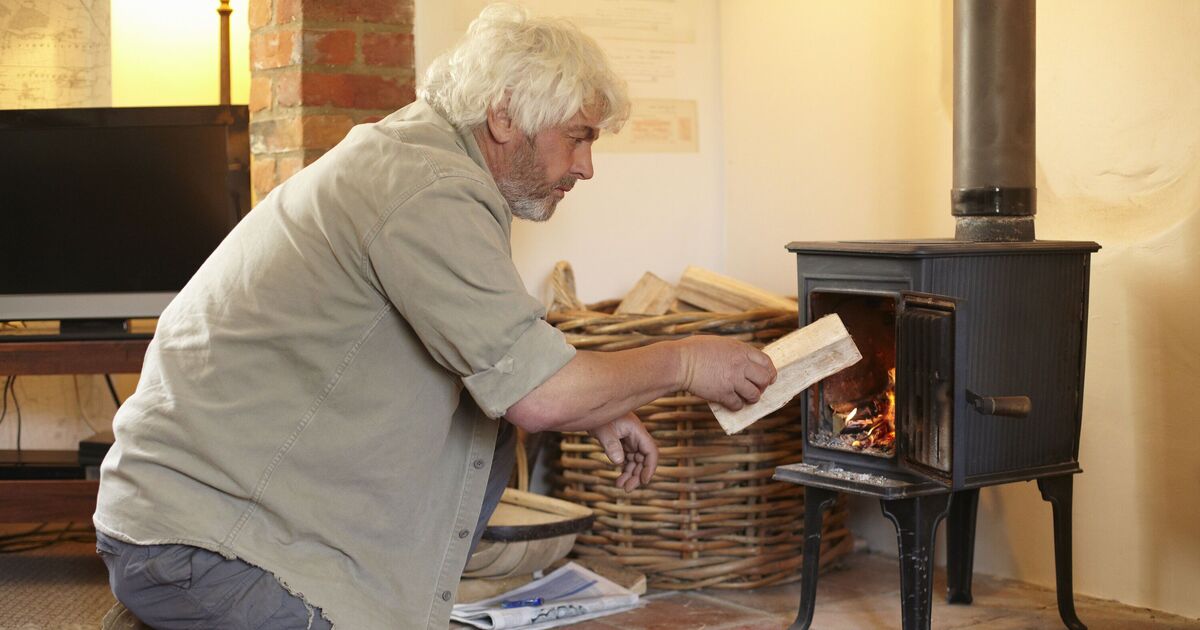

As winter approaches and energy costs continue to soar, a growing number of British households are relying on wood-burning stoves to keep their homes warm. However, researchers at the University of Surrey have issued a cautionary note regarding the potential health risks associated with these stoves. Their findings indicate that even the latest “eco-friendly” or “clean” models can release fine particles into indoor air at levels comparable to traffic pollution and, on occasion, cigarette smoke.
In a study conducted by the university’s Global Centre for Clean Air Research (GCARE), researchers monitored homes in Guildford that utilized various wood-burning stoves along with a selection of clean solid fuels. These included seasoned and kiln-dried logs, wood briquettes, and smokeless coal. They measured ultrafine particles, fine particulate matter (PM2.5), black carbon, and carbon monoxide levels within living rooms, discovering that all forms of wood burning led to “short bursts of very high pollution indoors.”
Among the different heating methods tested, open fireplaces emerged as the most polluting, increasing PM2.5 exposure to levels seven times higher than those produced by modern stoves.
Nonetheless, even contemporary eco-design stoves were found to emit “sharp spikes of toxic particles” whenever they were lit, refueled, or allowed to extinguish.
These microscopic particles pose significant health risks as they can penetrate deep into the lungs and enter the bloodstream, potentially leading to strokes, heart disease, lung cancer, and diabetes, according to experts.
Professor Prashant Kumar, co-director of the Institute for Sustainability, highlighted the potential misconceptions surrounding modern stoves. “With rising energy prices, many households will be turning to solid fuel heating during the colder months, often assuming that modern stoves offer a cleaner, safer alternative,” he explained.
“However, our findings show that this shift comes at the cost of indoor air quality, with potentially serious health implications, considering people spend up to 90% of their time indoors.
“Public health advice, ventilation guidance, and building design standards must adapt to keep pace with these changing heating habits.”
Abidemi Kuye, PhD researcher at the GCARE, said: “Even in homes using ‘cleaner’ stoves and fuels, we saw pollutant levels rise well beyond safe limits – especially when ventilation was poor, or stoves were used for long periods.
“Many people simply don’t realise how much indoor air quality can deteriorate during routine stove use.
“This research shows the need for greater awareness and simple behavioural changes that can reduce exposure.”