Share this @internewscast.com


Australia’s new laws banning children under 16 from social media are reshaping international debate, attracting interest from European regulators while drawing resistance from major United States technology firms.
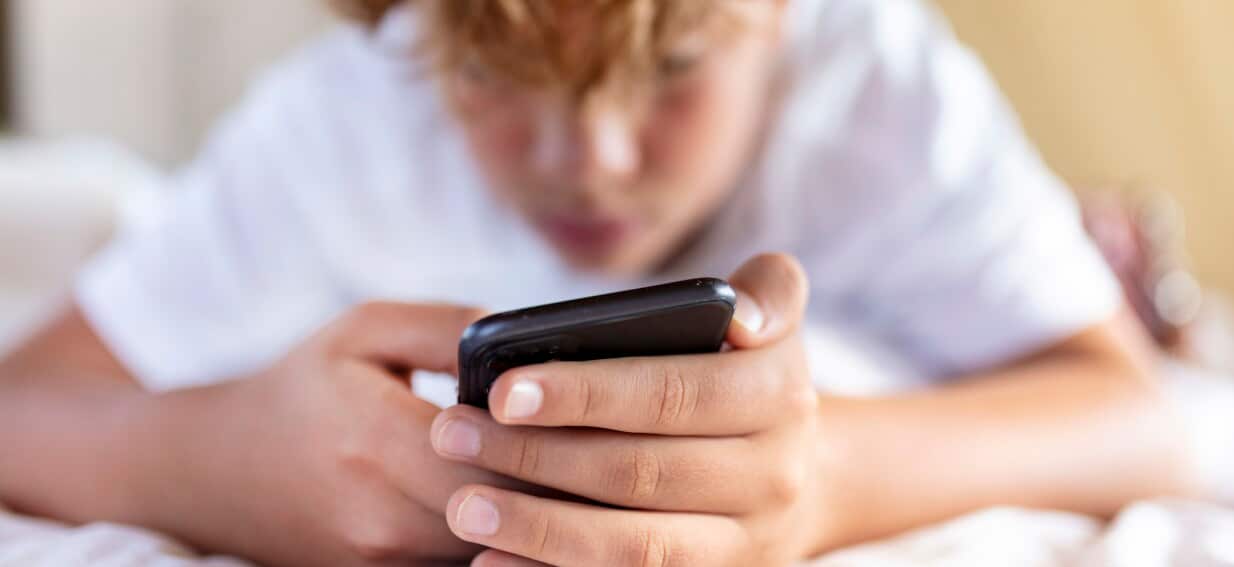
The legislation, which comes into force today, requires platforms including TikTok, Instagram, Snapchat, YouTube and Reddit to take reasonable steps to block children from accessing their services or face fines of up to $49.5 million per breach.
Meta has already started deleting hundreds of thousands of under-age accounts in response.

Though designed as a domestic measure, this policy is casting a wide diplomatic net as international governments and industry groups evaluate what Australia’s stance indicates about its regulatory strategy and global influence.

In Europe, the European Commission is crafting a regional age-verification tool in collaboration with five member nations. This app aims to enable users to confirm their age without directly sharing personal data with platforms. However, critics note that, unlike Australia’s regulations, these measures in the EU would lack binding authority.

Across Europe, governments and institutions are tightening restrictions on children’s social media use, with Australia’s laws increasingly viewed as a reference point.
Denmark has pledged to restrict under-15s from social media without parental consent, while France, Italy, Spain and Norway are all advancing similar policies.

“It’s a move that resonates with the public — most adults are on board with it,” some observers have noted.

European Commission president Ursula von der Leyen has publicly welcomed Australia’s approach as “plain common sense”.
“We all agree that young people should reach a certain age before they smoke, drink, or access adult content. The same can be said for social media,” she said.
Senior lecturer and researcher in communications at Edith Cowan University, Catherine Archer, said the Albanese government is likely celebrating the international recognition it has attracted.
“As we all know, they went to the United Nations with this and made quite a strong stand on it,” she said.

However, this initiative has sparked criticism, particularly from libertarian and conservative circles in the United States, who are wary of its implications for the tech sector.

Polling indicates that most Australian adults support the ban. However, a Resolve Political Monitor survey for the Nine newspapers found that only about 35 per cent of respondents were confident social media companies could effectively block users under 16, and fewer than one in three believed the ban would be fully enforced.
While the shift has improved Australia’s standing with liberal progressive audiences in parts of Europe, it has weakened its reputation among others, according to Charles Miller, a senior lecturer in the Australian National University’s School of Politics and International Relations.

The Computer & Communications Industry Association, based in the US, has voiced “serious concerns” about the impact on freedom of speech and access to information. They argue that such regulations might impose excessive penalties on American companies, while sweeping restrictions could hinder innovation.

Proponents argue that this reform will allow children to reclaim time for more enriching activities, such as learning a musical instrument, practicing a new language, or engaging in sports.

The strongest opposition to the ban has come from the United States technology sector, where industry groups representing Meta, Netflix, Disney, Alphabet and others have lodged formal complaints with the US Trade Representative.
“The Elon Musk’s and the Peter Thiels of the tech world who have the ear of the Trump administration — they do not like this at all and I think it’s [been] underestimated how much it could actually become a problem for relations between Australia and the United States,” Miller said.

The US-based Computer & Communications Industry Association has raised “serious concerns for industry about freedom of expression and information,” saying such a framework “risks applying disproportionate penalties to US firms, while overbroad and blanket restrictions could stifle creativity”.

While Archer said those arguments reflect the commercial interests at stake, she acknowledged that the ban could excessively restrict how young people access news and participate in civic life.
“[People under 16] largely get their information through social media … That’s been an avenue that they have been able to use and that’s not going to be open to them in as much detail or depth as it has been,” she said.
The lobby group also criticised Australia’s new streaming investment rules, which will require major platforms to spend either 10 per cent of local expenditure or 7.5 per cent of Australian revenue on Australian-made programs.
Another US lobby body, the International Intellectual Property Alliance, said there was “no evidence” the Australian market required intervention to sustain local production.
The government has described the social media ban as a world first.
“In one week, Australia will become the first country in the world to ban under 16’s from having social media accounts,” communications minister Annika Wells told the National Press Club last week.
“With one law, we can protect Generation Alpha from being sucked into purgatory by predatory algorithms described by the man who created the feature as ‘behavioural cocaine’.

“Through one reform, more kids will have their time back to learn an instrument or a language, or walk their dog, master a torpedo punt or the perfect lob pass.”

Security, culture politics and the alliance with Washington

The fallout from Australia’s social media ban is now intersecting with shifts in United States security thinking, where cultural and speech regulation is increasingly being treated as a strategic issue, experts say.
Miller pointed to the recently released US national security strategy, which he said contains significant “culture war content”, despite its traditional focus on military threats.

“Although you would think it’s security in terms of missiles, guns, bombs and military aggression, you actually find that there’s an awful lot in it which might be described as culture war content,” he said.

One example is the way the strategy frames European content regulation as a free speech threat.
“The document advocates for the United States to pull away from Europe because of what they describe as European countries infringing on freedom of speech,” he said, citing restrictions on social media content and Brussels’ recent fining of X, which Musk owns.

While those issues may appear distant from conventional security concerns, Miller said they now carry strategic weight within the Trump administration and the US tech sector.


“It seems rather strange to us that they would become security issues,” he said, “but in the mindset of the Trump administration — and especially its supporters in the tech industry — they actually can become a problem for security relations as well.”
He said there was no current indication the Australian ban itself had become a flashpoint in the alliance.
“But similar policies pursued by European countries are now finding their way into the rhetoric of American policymakers towards Europe,” he added, warning the same dynamics could eventually extend to Australia.

Share this @internewscast.com
You May Also Like
Bondi Beach shootings

Sydney’s Festive Event Plans in Limbo Following Tragic Bondi Incident

Sydney’s festive celebrations are among the most famous in the world. From…

Outrage Erupts as Donald Trump Faces Backlash for Insensitive Remarks Following Rob Reiner’s Passing

United States president Donald Trump has faced fierce backlash after he mocked…
A Hanukkah menorah stands by a floral tribute as people gather to pay their respects near the Bondi Pavilion at Bondi Beach today.

Australia Maintains ‘Probable’ Terror Alert Post-Bondi Attack: Understanding the Implications

Before the recent attack, officials had set Australia’s national terror alert to…
Temperatures are tipped to climb across many of Australia's capital cities this week as a hot air mass moves across the country.

Blistering Temperatures to Sweep Australia as Hot Air Mass Approaches

Australia’s capital cities are set to experience a rise in temperatures this…
'Look for the helpers': Powerful acts of heroism shaped the Bondi terror tragedy

Unsung Heroes Emerge in Wake of Bondi Tragedy: Inspiring Acts of Courage and Kindness

Fred Rogers often shared a poignant message for those grappling with the…

Heroic Bondi Terror Attack Survivor Ahmed Al-Ahmed Embarks on Extensive Recovery Journey Post-Surgery

The hero shop owner who disarmed one of the alleged Bondi gunmen…
Reuven Morrison was killed in the Bondi attack.

Bravery Under Fire: Victim Commended as Second Hero to Confront Gunman

The grieving daughter of Bondi Beach shooting victim Reuven Morrison has revealed…
Bystanders shown fighting with accused Bondi gunmen in new footage

Shocking New Footage Reveals Bystanders Battling Alleged Gunmen in Bondi Incident

Warning: This story contains graphic details and images. Today, a new video…

Media Mogul Jimmy Lai Found Guilty in Landmark Hong Kong National Security Case

Hong Kong’s High Court on Monday found tycoon and pro-democracy campaigner Jimmy…

Donald Trump Files Multibillion-Dollar Lawsuit Against BBC

United States president Donald Trump has sued the BBC for defamation over…
How current Australian gun laws covering rifles and shotguns work

Understanding Australia’s Rifle and Shotgun Regulations: A Comprehensive Guide to Current Gun Laws

In the aftermath of the recent shooting at Bondi, the spotlight has…
Bill O'Byrne travelled from Kelmscott to Perth Airport on December 6 but was missing by 2pm that same day after he did not make his flight to Karratha.

Missing FIFO Worker Tragically Discovered Deceased After Missing Flight

A young FIFO worker, aged 25, who went missing after failing to…