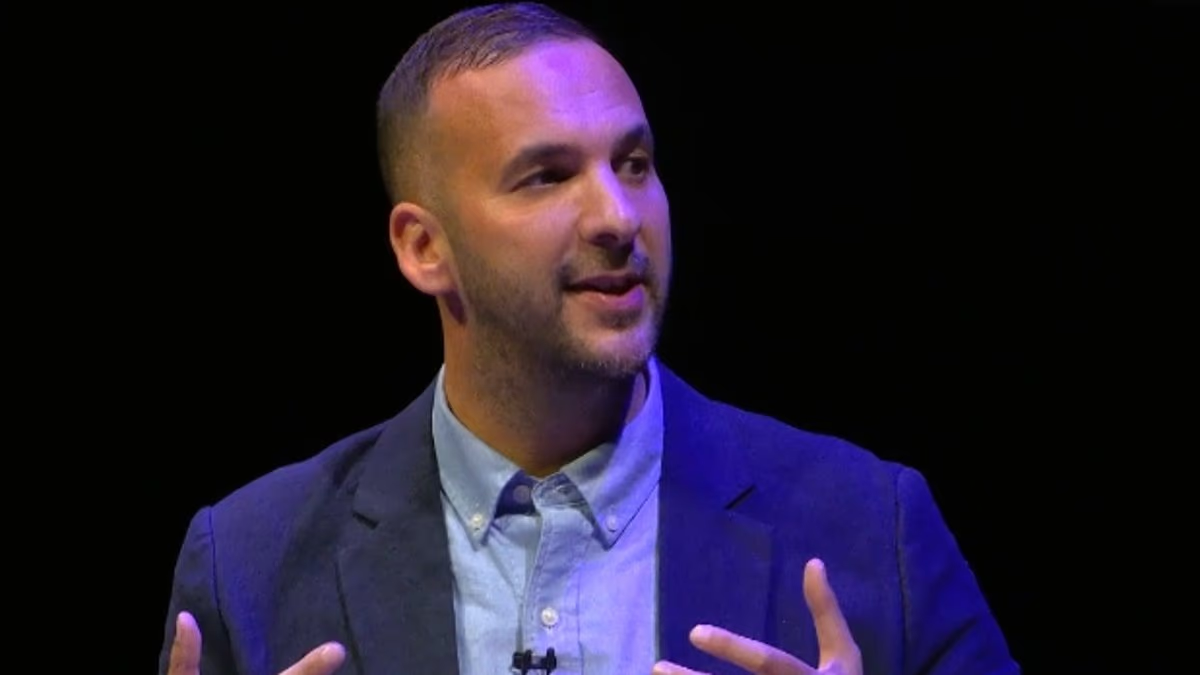

As the holiday season approaches and Christmas cards start arriving in mailboxes, a specialist is encouraging individuals to be aware of a subtle sign of dementia that might be revealed through these festive greetings. In the UK, dementia affects approximately one million people, yet over a third of them remain undiagnosed.
Michael Berkley-Blezard, a care expert from Elmfield’s Old Sarum Manor, points out that changes in handwriting in cards can be an overlooked symptom of dementia. He explains, “When someone begins to struggle with reading and writing, despite having no past issues, it could be an early sign of dementia. This might manifest as altered handwriting in something as simple as a birthday card.”
Typical indicators of dementia include an inability to recall names and faces, disorientation in familiar areas, and misplacing personal items or forgetting their usual locations.
Moreover, Berkley-Blezard emphasized four additional, less recognized symptoms that warrant a doctor’s appointment.
A loss of enjoyment in foods once relished might indicate an underlying problem. He elaborated, “Sensory changes aren’t always linked to dementia symptoms and, therefore, often go unreported.”
These sensory changes might manifest as heightened sensitivity to noise, altered perceptions of smells, or even changes in how food tastes, which could lead a loved one to lose interest in meals they previously enjoyed.
Shuffling when walking and having more trips and falls can also be a sign of dementia, along with poor spatial awareness and depth perception.
And struggling to find the right word could also indicate a problem. Mr Berkley-Blezard said: “This can look like stuttering when trying to get a sentence out, stopping a sentence mid-way through or jumbling up similar words such as saying ‘jumper’ when they mean ‘jacket’. This is known as ‘aphasia’ and can also affect names not just generic words.”
The final lesser-known symptom he highlighted was losing track of time and being late to appointments or meetings. This can be linked to memory loss or the inability to read an analogue clock.
Mr Berkley-Blezard added: “If you start to notice any of these signs in your loved ones, try and have a conversation with them about what you have noticed and suggest booking a doctor’s appointment to discuss the symptoms. This will help guide you and your loved one with how to move forward.
“At this point, it is also a good idea to start having conversations on care options that are available and exploring alternative living arrangements.
“As your loved one’s symptoms worsen and they struggle to do more and more, a residential care home may be able to give them the support and care that they require.”