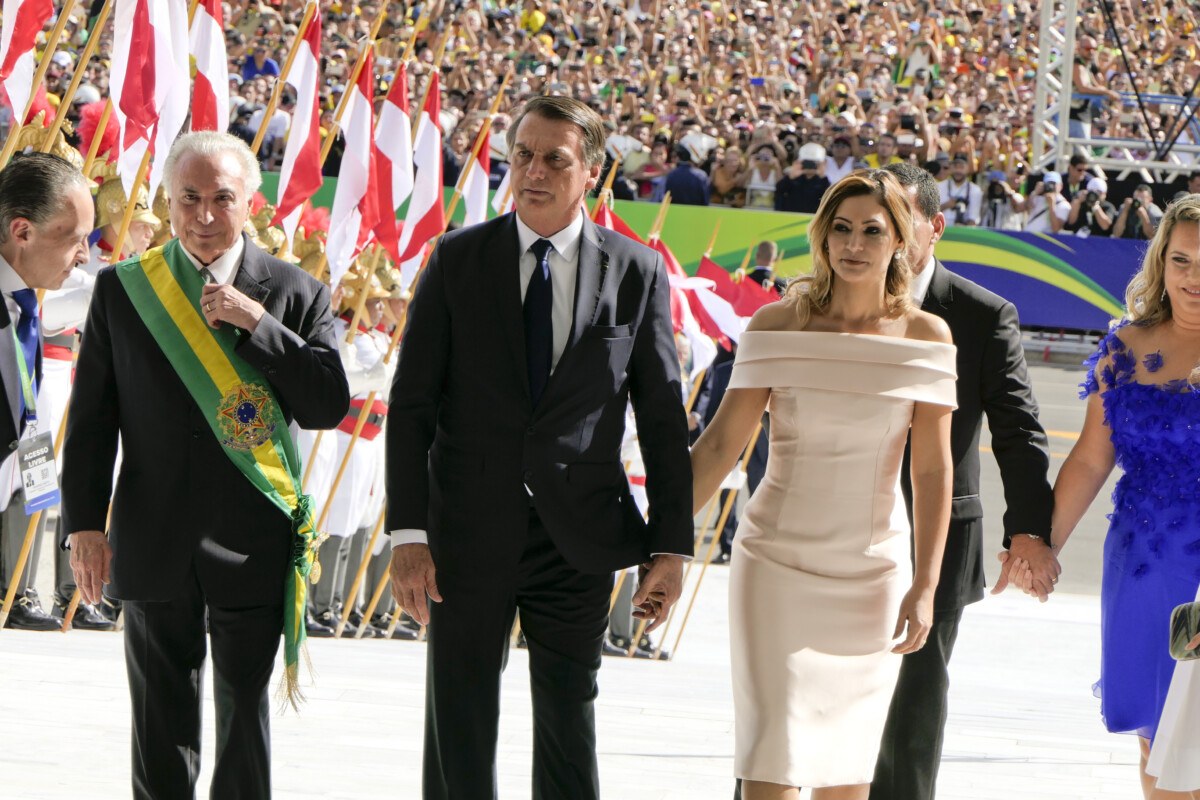

The Trump administration has lifted sanctions on Brazilian Supreme Court Judge Alexandre de Moraes, who led the investigation and conviction of former President Jair Bolsonaro on coup-plot charges.
In a significant policy shift, the U.S. has lifted sanctions on Brazilian Supreme Court Justice Alexandre de Moraes, a move that reverses actions taken during Trump’s presidency. Previously, de Moraes was targeted over allegations of judicial overreach against Jair Bolsonaro, a staunch Trump ally once known as the “Trump of the Tropics.” This decision follows Brazil’s lower house decision to reduce Bolsonaro’s sentence, prompting the Treasury to reconsider the sanctions as conflicting with U.S. foreign policy goals.
Gleisi Hoffmann, Brazil’s Minister of Institutional Relations, hailed the removal of sanctions as a triumphant moment for Brazil and President Lula. She described the decision as a “significant setback” for the Bolsonaro family, accusing them of betraying Brazil and its judicial system. Previously, in July, the Trump administration had sanctioned de Moraes and his affiliates under the Global Magnitsky Act, citing abuses of judicial power. These sanctions, including those on de Moraes’ wife and her Lex Institute, were lifted on Friday.
U.S. Deputy Secretary of State Christopher Landau reacted positively to Brazil’s legislative developments on the platform X, remarking that the U.S. has consistently been wary of judicial processes being used to escalate political conflicts in Brazil. He noted that the recent bill is a promising step towards rectifying these issues. A senior official from Trump’s era mentioned that this change aligns with the efforts to improve the “lawfare conditions” in Brazil, especially after the lower house passed the amnesty bill. The bill awaits Senate approval and a potential signature from President Luiz Inácio Lula da Silva, Bolsonaro’s political adversary, which might lead to further political tensions.
This rapid policy reversal, occurring merely five months after the sanctions were imposed, suggests a shift in approach by Trump’s Treasury Department. The new stance appears to mirror the Biden administration’s earlier policies, which tended to support Brazil’s judicial actions against right-wing figures like Bolsonaro without resorting to aggressive measures.
Eduardo Bolsonaro, son of the former president and a key lobbyist in the U.S., expressed disappointment over the reversal, blaming it on a lack of unity among Brazil’s right-wing groups. He vowed to keep pushing for his father’s cause, including efforts to secure his release from prison.
Overall, this quick turnaround, just five months after the sanctions were imposed, suggests that Trump’s Treasury Department is now adopting a stance similar to the Biden administration’s previous approach, which generally supported Brazil’s judicial actions against conservatives like Bolsonaro without such confrontational measures.