
Atmospheric rivers are powerful streams of moisture that traverse the sky, bringing with them the potential for heavy rain or snowfall when they reach land.
Let’s delve into the details of this fascinating meteorological phenomenon:
So, where do these atmospheric rivers originate?
According to the National Oceanic and Atmospheric Administration (NOAA), these moisture-laden air currents typically begin in tropical regions. The warm temperatures in these areas cause water vapor to ascend into the atmosphere. Once there, high-altitude winds transport this moisture to more northern and southern parts of the globe.
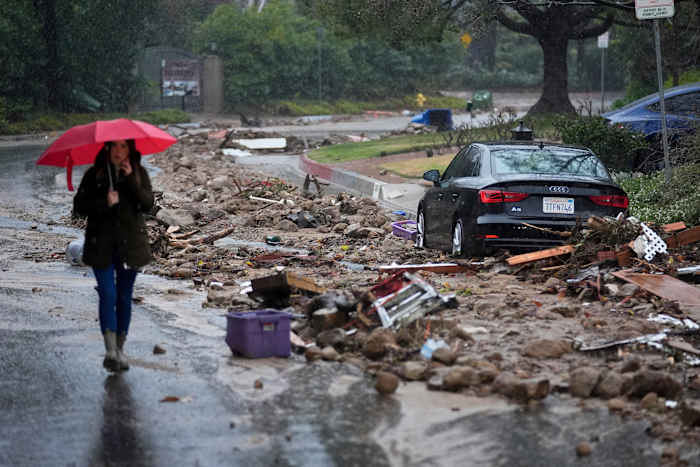
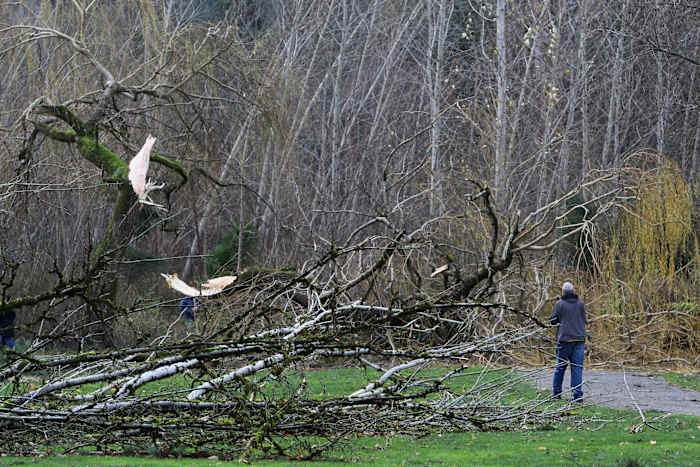
Although atmospheric rivers occur worldwide, they are particularly significant along the West Coast of the United States. Here, they contribute between 30% and 50% of the area’s yearly precipitation, playing a crucial role in maintaining water supplies. However, they can also unleash powerful storms that lead to flooding and mudslides, as noted by NOAA.
These rivers in the sky are formed by winds linked to cyclones and typically stretch across widths of 250 to 375 miles (400 to 600 kilometers). Their journey is guided by the surrounding weather patterns.
Many atmospheric river events are weak. But the powerful ones can transport extraordinary amounts of moisture. Studies have shown they can carry seven to 15 times the average amount of water discharged daily by the Mississippi River, according to the U.S. Geological Survey.
They’re also getting bigger, wetter and more frequent as Earth’s atmosphere warms, according to a 2025 study.
What happens when an atmospheric river reaches land?
When the moisture-laden air moves over mountain ranges such as the Sierra Nevada along the California-Nevada line, the water vapor rises and cools, becoming heavy precipitation that falls as rain or snow, according to NOAA.
While traditional cold winter storms out of the north Pacific build the Sierra snowpack, atmospheric rivers tend to be warm. Snow may still fall at the highest elevations but rain usually falls on the snowpack at lower elevations. That can quickly prompt melting, runoff and flooding and decrease the snowpack needed for California’s water supply.
What is a pineapple express?
It is a nickname for a strong atmospheric river that originates in the tropical Pacific near Hawaii.
Where did the term atmospheric river come from?
The name came from research published in the 1990s by scientists Yong Zhu and Reginald E. Newell of the Massachusetts Institute of Technology. Atmospheric rivers are often referred to as ARs.
Copyright 2025 The Associated Press. All rights reserved. This material may not be published, broadcast, rewritten or redistributed without permission.